Chapter Summaries
1 Kings 3 — Solomon’s Choice and God’s Gift of Wisdom
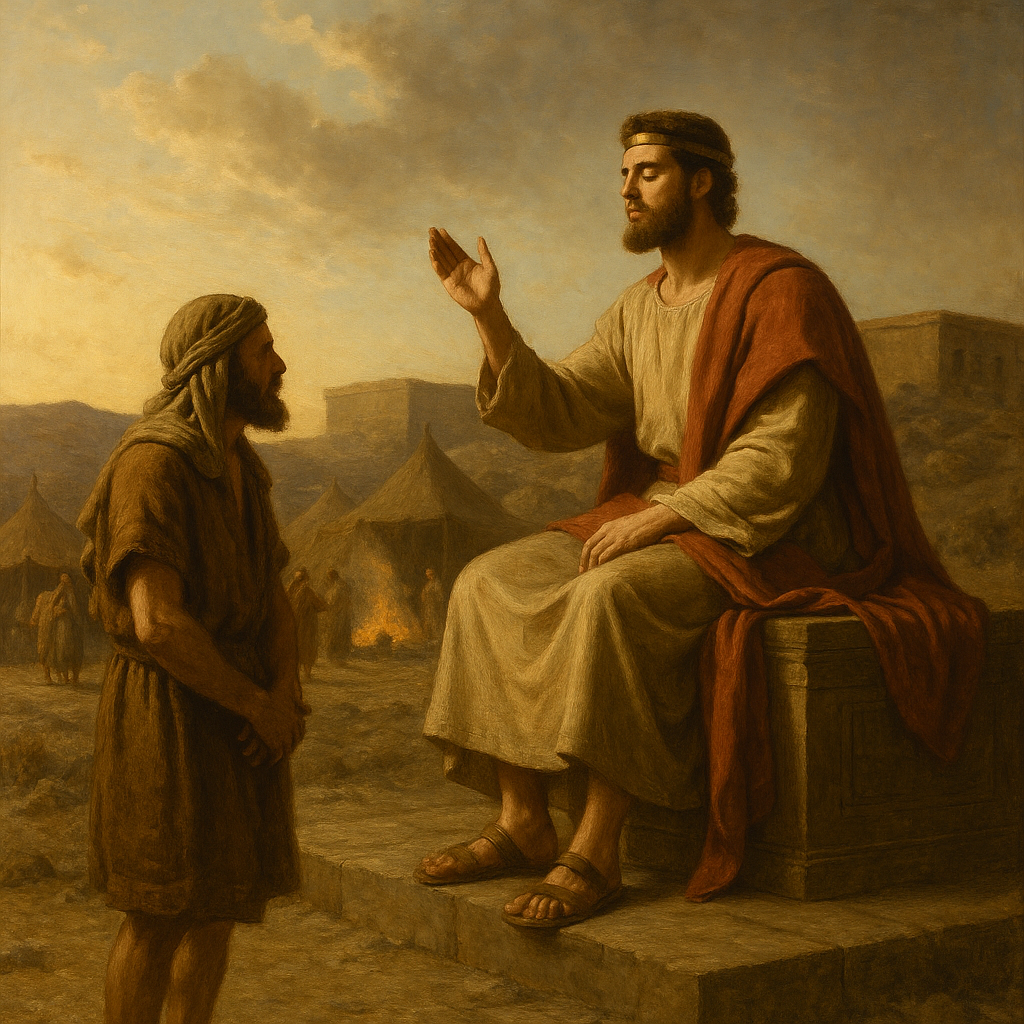
 Solomon strengthens his kingdom through marriage to Pharaoh’s daughter and worships the LORD, though the people are still offering sacrifices in high places because the temple has not yet been built (3:1–2). At Gibeon, Solomon offers a great sacrifice, and the LORD appears to him in a dream, saying, “Ask what I shall give thee” (3:5).
Instead of asking for long life, riches, or victory over enemies, Solomon asks for “an understanding heart to judge thy people” (3:9). This request pleases God, who grants him wisdom beyond all others, along with riches and honor (3:12–13). God also promises length of days if Solomon walks in obedience (3:14).
Immediately, Solomon’s God-given wisdom is demonstrated through the famous judgment between two women claiming the same living child (3:16–28). His righteous discernment causes all Israel to fear the king, recognizing that “the wisdom of God was in him, to do judgment.”
1 Kings 4 — The Organization and Prosperity of the Kingdom
This chapter describes the official structure of Solomon’s government, showing that his wisdom was not merely intellectual but administrative and practical. Israel is divided into twelve provisioning districts, each providing food for the royal household one month a year.
Solomon’s peaceful reign is emphasized:
“Judah and Israel dwelt safely, every man under his vine and under his fig tree” (4:25). This reflects fulfillment of God’s covenant blessings.
His wisdom surpasses that of all the east country and Egypt (4:30). Solomon speaks 3,000 proverbs, writes 1,005 songs, and teaches on nature and creation (4:32–33). Kings and rulers from many lands come to hear his wisdom.
1 Kings 5 — Preparation for Building the House of the LORD
With peace established, Solomon prepares to fulfill David’s final charge—to build the temple. Hiram king of Tyre, who had been a friend to David, rejoices in Solomon’s reign and agrees to supply cedar and fir trees from Lebanon (5:6–10).
Solomon organizes a massive labor force:
-
30,000 sent to Lebanon
-
70,000 burden bearers
-
80,000 stonecutters
This chapter shows that the temple is not a sudden project, but a carefully prepared work, built in peace, order, and obedience to God.
Key People and Places
-
Solomon — Son of David; king of Israel; recipient of divine wisdom.
-
The LORD (Jehovah) — Appears to Solomon and establishes the covenant blessing.
-
Pharaoh’s Daughter — Symbol of political alliance; later becomes spiritually problematic.
-
Hiram, King of Tyre — Gentile ruler who assists in temple construction.
-
Gibeon — Location where God appeared to Solomon in a dream.
-
Jerusalem — Capital of Israel and future site of the temple.
-
Lebanon — Source of the timber for the house of God.
Main Doctrinal or Spiritual Themes
-
God Honors Humble Requests — Solomon’s desire for wisdom rather than self-gain is central.
-
Wisdom Is a Gift from God — Not merely learned, but divinely imparted.
-
Government Under God’s Authority — Solomon’s administration reflects divine order.
-
Peace as a Platform for God’s Work — The temple is prepared during national peace.
-
Conditional Blessing — Long life and favor depend on continued obedience (3:14).
Practical Applications or Lessons
-
Seek God’s Wisdom Above All — Earthly success is empty without spiritual discernment.
-
Spiritual Priorities Shape the Future — Solomon’s early humility defined the beginning of his reign.
-
Order and Preparation Matter to God — The temple was not rushed, but deliberately planned.
-
Peace Must Be Used for God’s Glory — Times of rest are meant for building God’s work.
-
Obedience Sustains Blessing — God’s promises are secure, but personal blessing follows faithfulness.
Comments are closed