CHAPTER SUMMARIES
2 Samuel 4 — The Murder of Ishbosheth
After Abner’s death (2 Sam 3), the house of Saul collapses. Two captains of raiding bands under Ishbosheth—Baanah and Rechab—take matters into their own hands. Thinking they would gain favor with David, they secretly enter Ishbosheth’s house during “the heat of the day” (4:5) and murder him on his bed. They bring his head to David at Hebron and claim the LORD had avenged David of Saul’s line.
But David rejects their wicked actions. Just as he condemned the slaying of Saul and the death of Abner, he again refuses to benefit from bloodshed. He declares Ishbosheth’s murder to be a crime and orders justice executed upon Baanah and Rechab (4:12). Their hands and feet are cut off—symbolic justice for wicked works and treacherous walking—and Ishbosheth is honorably buried.
Doctrinal Significance:
God’s anointed king does not rise through human plotting but through God’s providence. David refuses to grasp the kingdom by fleshly means.
2 Samuel 5 — David Becomes King Over All Israel & Captures Jerusalem
The tribes of Israel finally come to David in Hebron, acknowledging that he was the one who “led out and brought in Israel” under Saul (5:2) and affirming God’s word that he would shepherd His people. David is anointed king over all Israel at age thirty, reigning forty years total (5:4–5).
David then captures Jerusalem from the Jebusites. The stronghold of Zion becomes “the city of David” (5:7). David strengthens the city, receives help from Hiram king of Tyre, and recognizes that the LORD had established him for Israel’s sake (5:12).
The Philistines attack, but David twice seeks the LORD before engaging them. God grants victory both times—first by direct combat, then by a divinely orchestrated ambush signaled by “a sound of a going in the tops of the mulberry trees” (5:24). Obedience and dependence bring triumph.
 2 Samuel 6 — The Ark Brought Toward Jerusalem; Uzzah’s Death; David’s Worship
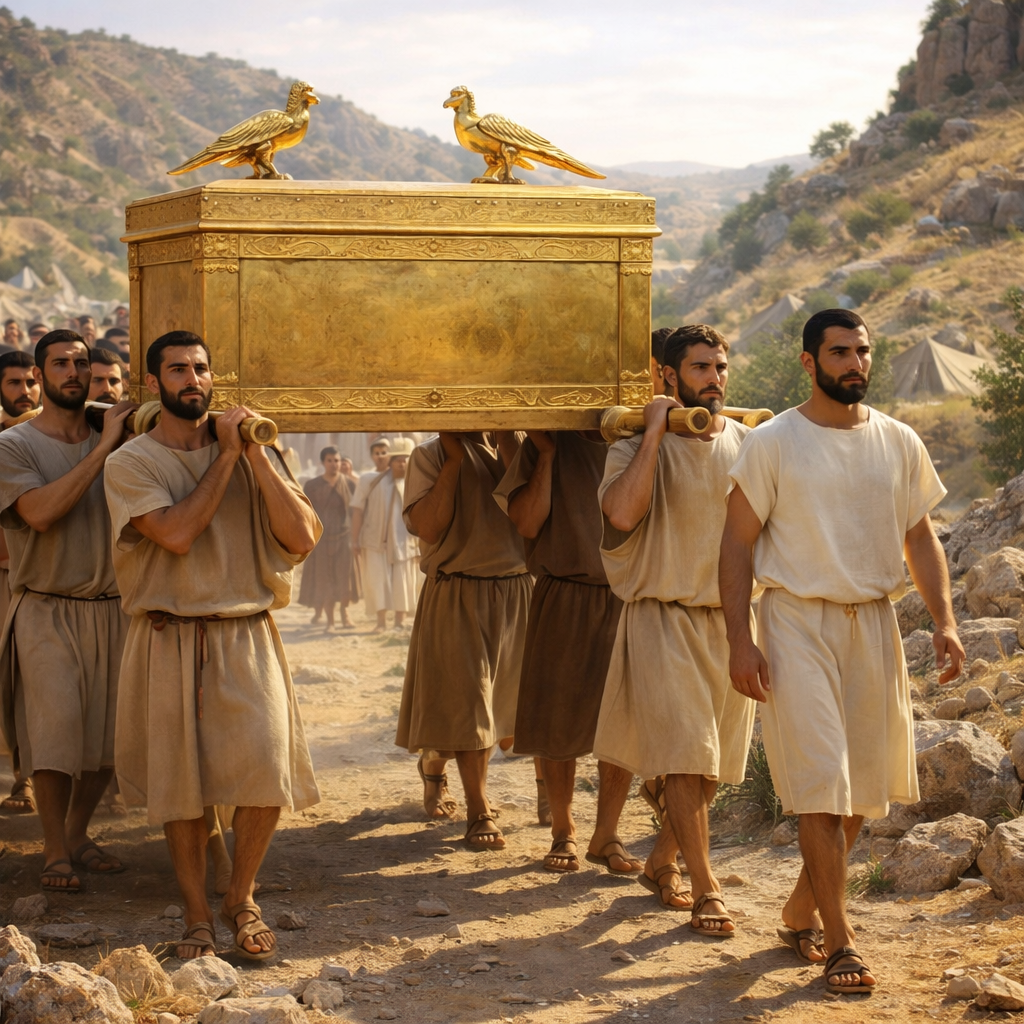
David gathers chosen men to bring the ark from Baale of Judah. But the ark is placed on a cart instead of being carried by the Levites as prescribed (Num. 4; 7). When the oxen shake the cart, Uzzah touches the ark and is struck dead for his irreverence (6:7). The procession halts; David becomes afraid of the LORD’s holiness.
The ark remains three months in the house of Obed-edom, whose household God blesses greatly. With renewed reverence and proper order, David brings the ark into Jerusalem. He dances before the LORD “with all his might” (6:14), wearing a linen ephod—an expression of humility and joyful worship. Michal despises him for this, and the chapter ends with her becoming barren (6:23), symbolizing the spiritual barrenness of prideful, formalistic religion.
2 Samuel 7 — The Davidic Covenant
David desires to build a house for God, seeing that he dwells in a cedar palace while the ark is in a tent. Nathan initially agrees, but God sends correction: David will not build the house—God will build him a house.
Here God establishes the Davidic Covenant, one of the great covenants of Scripture. God promises:
-
To make David’s name great (7:9)
-
To appoint a place for Israel to dwell securely (7:10)
-
To set up David’s seed after him (7:12)
-
That his son would build the house (fulfilled in Solomon) (7:13)
-
To establish David’s throne “for ever” (7:13, 16)
This covenant anticipates Christ, the Son of David, whose kingdom is everlasting.
David responds in humble praise, saying, “Who am I, O Lord GOD?” (7:18). He magnifies God’s grace, promises, and faithfulness.
KEY PEOPLE AND PLACES
David — God’s chosen king, characterized by justice, humility, and worship.
Ishbosheth — Son of Saul; a weak ruler murdered unjustly.
Baanah & Rechab — Murderers judged for wickedness.
Joab — David’s military commander, influential in the kingdom’s stability.
Uzzah — Levite involved with the ark; judged for irreverent contact.
Obed-edom — His home is blessed for receiving the ark.
Nathan the Prophet — God’s spokesman who delivers the Davidic Covenant.
Jerusalem / Zion — Becomes the central city of David’s kingdom.
The Ark of the Covenant — Symbol of God’s presence; its handling teaches reverence and holiness.
MAIN DOCTRINAL OR SPIRITUAL THEMES
1. God’s Holiness Must Be Reverenced
Uzzah’s judgment demonstrates that God’s holiness does not tolerate casual treatment of sacred things.
2. God’s Sovereignty in Establishing Leaders
David repeatedly refuses to seize the kingdom by violence; instead, God raises him up in His time.
3. Obedience Brings Blessing
David seeks the LORD before war; when he follows divine instruction, victory comes.
4. The Davidic Covenant and the Promise of Christ
God’s everlasting covenant with David points to Christ the eternal King (Luke 1:32–33).
5. Pride Leads to Barrenness
Michal’s disdain for David’s wholehearted worship represents a hardened, fruitless heart.
PRACTICAL APPLICATIONS OR LESSONS
1. Do God’s Work in God’s Way
Handling the ark improperly cost Uzzah his life. Believers must follow Scripture precisely.
2. Do Not Use Sinful Means to Reach a Good End
Baanah and Rechab thought their treachery would benefit David; God rejects all “ends justify the means” thinking.
3. Seek God’s Direction Before Major Decisions
David inquired of the LORD twice in chapter 5; believers should likewise submit every major choice to prayer and Scripture.
4. God Honors Humble Worship
David rejoiced before the LORD; Christians should worship with sincerity rather than human pride or formality.
5. Trust God’s Promises—He Keeps Covenant
The Davidic Covenant assures us God’s promises are steadfast. Christ’s reign is sure and eternal.
Comments are closed