CHAPTER SUMMARIES
 Judges 17 — Micah’s Idolatry and the Hired Levite
The chapter introduces the beginning of the moral collapse of Israel in the time when “there was no king in Israel” (17:6).
A man named Micah, dwelling in mount Ephraim, confesses theft of 1,100 shekels of silver from his mother. After returning it, she consecrates part of the silver to make a graven image and a molten image (17:3). Micah builds a “house of gods,” fashions an ephod and teraphim, and consecrates his own son to be a priest (17:5), directly violating the Mosaic priesthood.
A wandering Levite from Bethlehem-Judah arrives, and Micah hires him to be his household priest (17:7–12). Micah proudly believes that by obtaining a Levite, “the LORD will do me good” (17:13), revealing the corruption of worship and a superstitious approach to religion.
Judges 18 — The Danites Steal Micah’s Priest and Idols
The tribe of Dan, still seeking an inheritance (18:1), sends five spies to survey territory. They find Laish, a quiet, peaceful city lacking allies (18:7). Returning to their brethren, they recommend an attack.
As the Danite force travels, they stop at Micah’s house, recognize the Levite’s voice, and offer him a position as priest over an entire tribe rather than a single household. The Levite is pleased and joins them (18:19–20).
The Danites then steal Micah’s graven image, molten image, ephod, and teraphim, and continue northward. When Micah pursues them, they threaten him, leaving him powerless (18:21–26).
The Danites conquer Laish, burn it, rebuild it, and rename it Dan (18:27–29). They set up Micah’s images and install Jonathan (a descendant of Moses according to the KJV marginal reading “Manasseh”) and his sons as priests until the captivity of the land (18:30–31). Thus idolatry becomes established in northern Israel.
Judges 19 — The Levite, His Concubine, and the Sin of Gibeah
This chapter shows one of the darkest events in Israel’s history.
A Levite from mount Ephraim retrieves his estranged concubine from Bethlehem-Judah. After a lengthy stay with her father, they begin their return journey. Choosing to avoid Jebus (Jerusalem), they lodge instead in Gibeah of Benjamin (19:10–15).
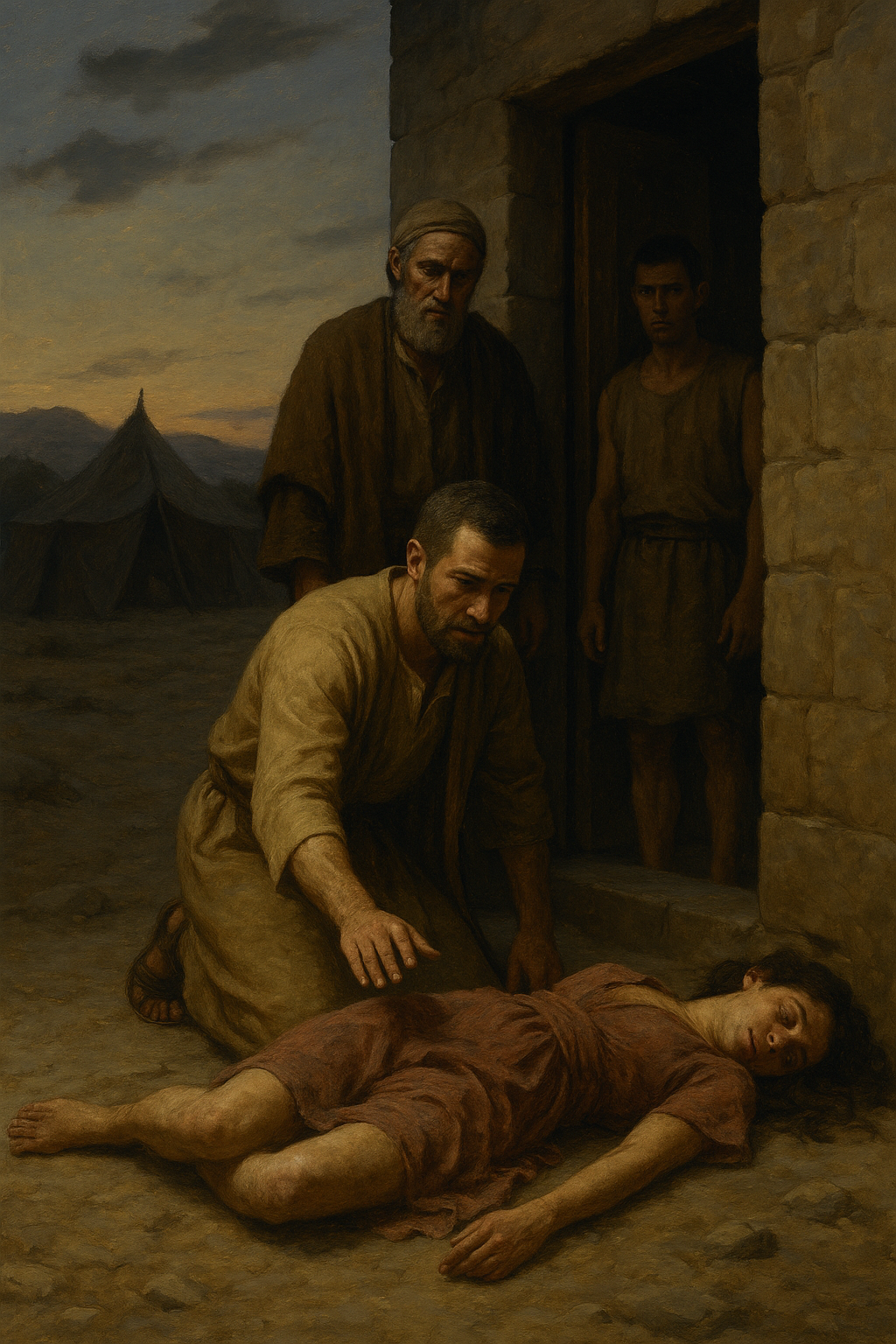
An elderly man shows hospitality, but “sons of Belial” surround the house and demand the Levite be brought out for vile purposes (19:22), echoing the wickedness of Sodom. To protect his guest, the host resists; the Levite ultimately sends out his concubine, and she is brutally abused all night (19:25). She dies at the door where she fell.
In grief and righteous outrage, the Levite divides her body into twelve pieces and sends them throughout Israel (19:29). All Israel is horrified, declaring that such a thing has never been seen since they came out of Egypt (19:30), preparing the way for the national conflict in the following chapters.
KEY PEOPLE AND PLACES
People
-
Micah — An Ephraimite who creates idols and establishes a false priesthood in his home.
-
Micah’s Mother — Funds and encourages the making of the idols.
-
The Young Levite — A wandering Levite who becomes priest to Micah, then to the tribe of Dan.
-
The Danite Spies and Warriors — Seek new territory and establish idolatry in Dan.
-
The Ephraimite Levite (Judges 19) — Husband of the concubine; his actions trigger the national crisis.
-
The Concubine — Tragically abused and murdered by the wicked men of Gibeah.
-
The Old Man in Gibeah — Provides hospitality in contrast to the wickedness of the city.
-
The Men of Gibeah (sons of Belial) — Perpetrators of the vile sin that leads to civil war.
Places
-
Mount Ephraim — Micah’s home; also home of the Levite in chapter 19.
-
Bethlehem-Judah — Origin of both Levites in these chapters.
-
Laish / Dan — Peaceful northern city captured and renamed by the Danites.
-
Gibeah (Benjamin) — Location of the horrific sin that brings national judgment.
MAIN DOCTRINAL OR SPIRITUAL THEMES
1. The Danger of Man-Made Religion
Micah’s “house of gods” illustrates the corruption that occurs when men create their own systems of worship rather than obeying the Lord’s commands.
2. The Consequences of Every Man Doing What Is Right in His Own Eyes
Repeated in these chapters (17:6; 18:1; 19:1), Israel’s moral collapse flows from rejecting God’s authority.
3. The Necessity of God-Ordained Leadership
Without righteous leadership—spiritual or civil—idolatry spreads, injustice prevails, and society collapses.
4. The Importance of Hospitality and Protection of the Vulnerable
The old man in Gibeah reflects righteous hospitality, standing in stark contrast to the violent wickedness of the city.
5. The Corrosive Power of Unrestrained Wickedness
From Micah’s casual idolatry to Gibeah’s shocking depravity, sin intensifies when unchecked.
6. The Certainty of Divine Judgment
These chapters set the stage for national chastening as sin becomes public, gross, and unrestrained.
PRACTICAL APPLICATIONS OR LESSONS
1. Worship Must Be According to God’s Word
Micah’s sincere intentions did not make his worship acceptable. God defines true worship; man has no authority to invent it.
2. Reject the Temptation to Define Morality Personally
The phrase “every man did that which was right in his own eyes” remains a warning against relativism and self-defined righteousness.
3. Guard Against Small Compromises
Micah’s seemingly small acts of idolatry eventually corrupted an entire tribe. Sin spreads if not confronted early.
4. Show Hospitality, Compassion, and Protection
The old man of Gibeah demonstrates the godly virtue of caring for travelers and strangers—something believers are still called to practice.
5. Understand That Private Sin Eventually Becomes Public Scandal
What began in Micah’s house ends in national crisis; sin never remains isolated.
6. Stand Against Wickedness, Even When It Is Widespread
The men of Gibeah represent societal collapse; believers must stand opposed to evil even when it becomes culturally tolerated.
Comments are closed