Chapter Summaries
Psalm 54
Historical Background:
The title connects this Psalm to the time “when the Ziphims came and said to Saul, Doth not David hide himself with us?” (1 Samuel 23:19; 26:1). David is betrayed by his own countrymen while fleeing from Saul.
 Major Flow of the Chapter:
- Appeal to God’s Name and Strength (vv. 1–3):
“Save me, O God, by thy name, and judge me by thy strength.” David does not appeal to his innocence before men, but to God’s character and covenant name. The enemies are described as “strangers” and “oppressors,” men who “have not set God before them.” - Confidence in Divine Help (vv. 4–5):
“Behold, God is mine helper.” Though betrayed, David’s trust is unshaken. He leaves vengeance to the Lord: “He shall reward evil unto mine enemies.” - Promise of Praise (vv. 6–7):
Deliverance leads to worship: “I will freely sacrifice unto thee: I will praise thy name, O LORD; for it is good.”
Doctrinal Note:
God’s covenant name represents His unchanging character. David rests not in circumstances, but in who God is.
Psalm 55
Context:
Likely connected to Absalom’s rebellion and Ahithophel’s betrayal (2 Samuel 15–17).
Major Flow:
- Deep Emotional Distress (vv. 1–8):
David’s heart is “sore pained,” and fear overwhelms him. He longs to “fly away, and be at rest.” - Betrayal by a Companion (vv. 12–14):
“It was not an enemy that reproached me… but it was thou, a man mine equal.” This foreshadows the betrayal of Christ (John 13:18). - Call for Judgment (vv. 15–19):
David entrusts judgment to God: “Let death seize upon them.” - Cast Thy Burden (v. 22):
“Cast thy burden upon the LORD, and he shall sustain thee.” This is the spiritual turning point of the Psalm. - Final Confidence (v. 23):
“But I will trust in thee.”
Doctrinal Insight:
Believers are permitted to pour out anguish honestly before God, yet must end in faith and surrender.
Psalm 56
Historical Background:
“When the Philistines took him in Gath” (1 Samuel 21). David feigns madness before Achish.
Major Flow:
- Oppression and Fear (vv. 1–2):
“Mine enemies would daily swallow me up.” - Faith in Fear (vv. 3–4):
“What time I am afraid, I will trust in thee.” Faith does not deny fear; it overcomes it. - God’s Care (v. 8):
“Put thou my tears into thy bottle: are they not in thy book?” A beautiful picture of divine compassion. - Confidence in God’s Word (vv. 9–11):
“In God have I put my trust: I will not be afraid what man can do unto me.” - Thanksgiving Anticipated (vv. 12–13):
Deliverance results in walking “before God in the light of the living.”
Psalm 57
Historical Background:
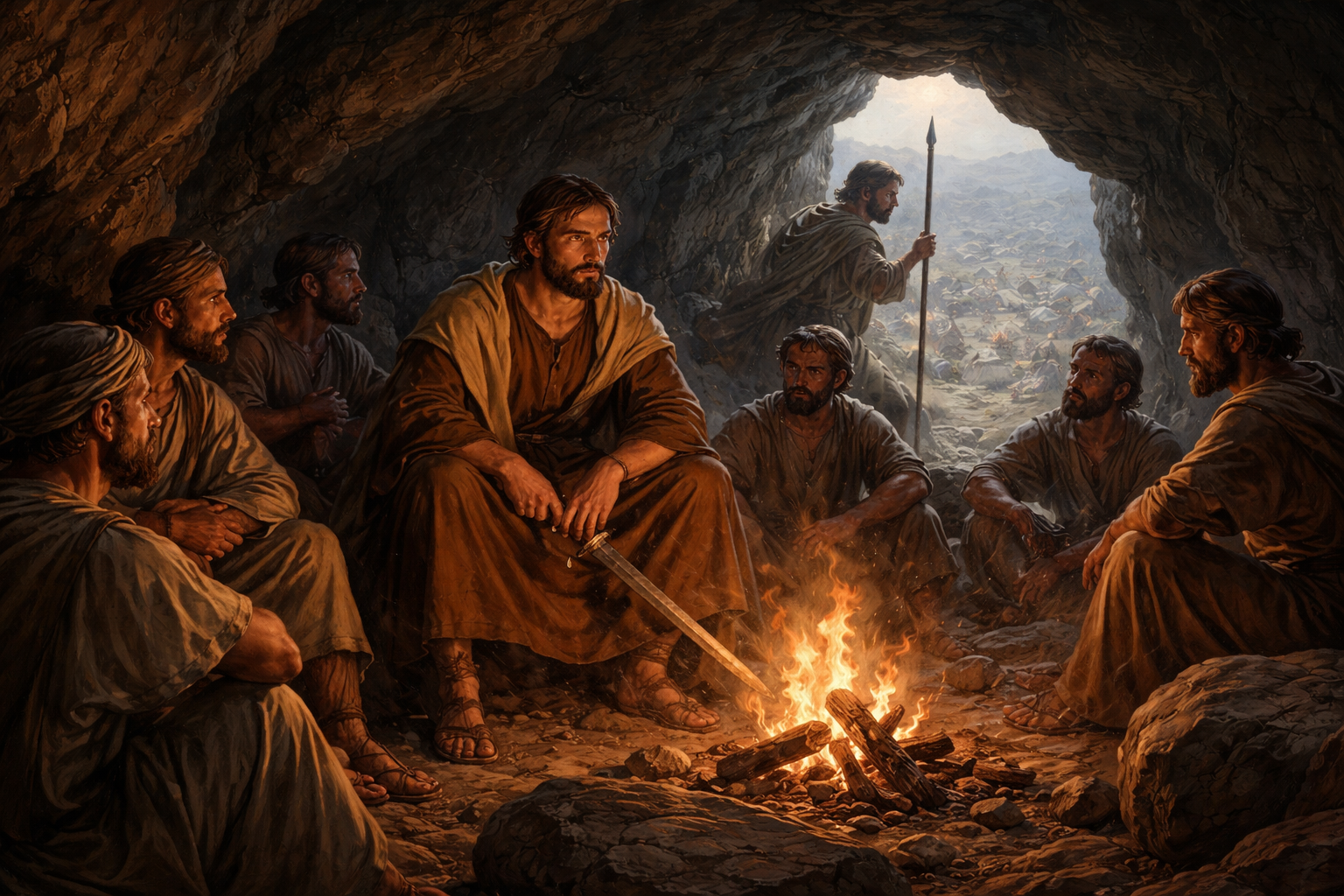
“When he fled from Saul in the cave” (likely Adullam, 1 Samuel 22).
Major Flow:
- Seeking Refuge (vv. 1–3):
“Yea, in the shadow of thy wings will I make my refuge.” - Surrounded by Danger (v. 4):
“My soul is among lions.” - Repeated Exaltation (vv. 5, 11):
“Be thou exalted, O God, above the heavens.” - Awakened Praise (vv. 7–10):
“My heart is fixed, O God.” Even in a cave, David sings.
Spiritual Truth:
Circumstances do not determine worship. A cave can become a sanctuary.
Psalm 58
Theme:
A denunciation of unjust rulers.
Major Flow:
- Condemnation of Wicked Judges (vv. 1–5):
“Do ye indeed speak righteousness, O congregation?” Their corruption is described vividly. - Prayer for Judgment (vv. 6–9):
Strong imprecatory language, asking God to break their power. - Vindication of the Righteous (vv. 10–11):
“Verily there is a reward for the righteous: verily he is a God that judgeth in the earth.”
Doctrinal Emphasis:
God’s justice is certain, even when earthly systems fail.
Psalm 59
Historical Background:
“When Saul sent, and they watched the house to kill him” (1 Samuel 19).
Major Flow:
- Cry for Deliverance (vv. 1–5):
David is innocent: “Not for my transgression.” - Description of Enemies (vv. 6–7):
Compared to howling dogs roaming at night. - God’s Sovereignty (v. 8):
“But thou, O LORD, shalt laugh at them.” - Praise in the Morning (vv. 16–17):
“I will sing of thy power… for thou hast been my defence.”
Application:
The believer may sleep under threat but awake singing.
Psalm 60
Historical Setting:
Connected to battles against Edom and Syria (2 Samuel 8).
Major Flow:
- National Distress (vv. 1–3):
“O God, thou hast cast us off.” - Banner for the Truth (v. 4):
“Thou hast given a banner to them that fear thee, that it may be displayed because of the truth.” - God’s Ownership of the Nations (vv. 6–8):
“Gilead is mine… Moab is my washpot.” - Victory Through God Alone (vv. 11–12):
“Through God we shall do valiantly.”
Doctrine:
National blessing depends on divine favor.
Psalm 61
Theme:
A prayer from exile or distance.
Major Flow:
- Cry from the Ends of the Earth (vv. 1–2):
“When my heart is overwhelmed: lead me to the rock that is higher than I.” - God as Refuge (vv. 3–4):
“A strong tower from the enemy.” - Prayer for the King (vv. 6–7):
Possibly messianic implications of an enduring throne. - Lifelong Praise (v. 8):
“So will I sing praise unto thy name for ever.”
Christological Note:
The enduring throne anticipates the greater Son of David.
Key People and Places
- David – The anointed king, often persecuted but trusting in God.
- Saul – King of Israel pursuing David unjustly.
- Ziph – Region whose inhabitants betrayed David.
- Gath – Philistine city where David was seized.
- Cave of Adullam – Place of refuge during Saul’s pursuit.
- Absalom – David’s rebellious son (implied context Psalm 55).
- Ahithophel – Betrayer and counselor to Absalom (implied).
- Edom, Moab, Syria – Nations mentioned in Psalm 60.
Main Doctrinal or Spiritual Themes
- God as Refuge and Defense – Strong tower, shadow of wings, helper.
- Trust in the Midst of Fear – “What time I am afraid, I will trust in thee.”
- Divine Justice – God judges wicked rulers.
- Sovereignty Over Nations – Nations belong to God.
- Messianic Hope – Enduring throne in Psalm 61.
- Personal Integrity Under Persecution – David maintains innocence.
- Praise as a Weapon of Faith – Worship even in caves and crises.
Practical Applications or Lessons
- When betrayed, appeal to God’s character—not personal revenge.
- Fear is not sin when it drives us to trust.
- Cast burdens on the Lord daily.
- Even hidden seasons (like caves) are places of growth and worship.
- Leave judgment in God’s hands.
- National strength depends on righteousness.
- When overwhelmed, look to the “rock that is higher than I.”
- Commit to lifelong praise regardless of circumstances.
Comments are closed