Chapter Summaries
Psalm 105 — God’s Covenant Faithfulness Remembered
Psalm 105 is a psalm of praise calling God’s people to remember the mighty works of the LORD. It begins with worship: “O give thanks unto the LORD; call upon his name: make known his deeds among the people” (Psalm 105:1). The psalm urges Israel to “remember his marvellous works that he hath done” (Psalm 105:5).
The flow of the chapter follows Israel’s history from the patriarchs to the possession of Canaan. God’s covenant with Abraham, Isaac, and Jacob is central: “Unto thee will I give the land of Canaan, the lot of your inheritance” (Psalm 105:11). This was not merely a national legend or human agreement; it was God’s sworn covenant.
The psalm then recounts Joseph’s suffering and exaltation. Joseph was “sold for a servant,” and “whose feet they hurt with fetters” (Psalm 105:17–18), yet God used his affliction to preserve life. This is a strong biblical example of God’s providence. Men meant evil, but God overruled it for good.
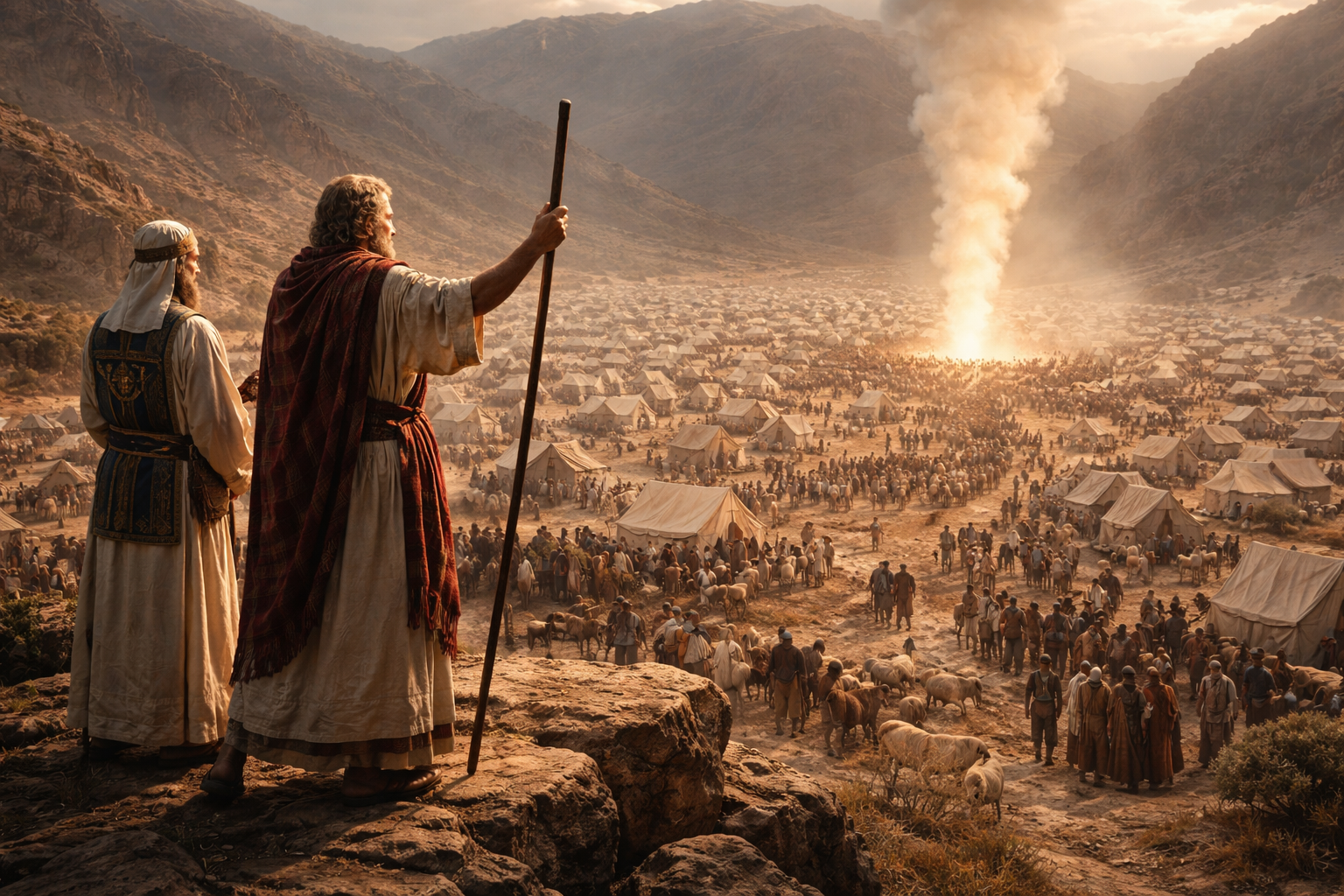
The chapter continues with Israel’s bondage in Egypt, the raising up of Moses and Aaron, and the plagues upon Egypt. God judged Egypt with darkness, blood, frogs, flies, lice, hail, locusts, and the death of the firstborn. These judgments were not accidents of nature; they were divine acts against a rebellious nation and its false gods.
The psalm closes with the Exodus, wilderness provision, and entrance into the promised land. God gave them “the lands of the heathen” (Psalm 105:44). The purpose was moral and spiritual: “That they might observe his statutes, and keep his laws. Praise ye the LORD” (Psalm 105:45).
Doctrinally, Psalm 105 emphasizes that God keeps His promises literally. The land promise to Israel should not be spiritualized into the Church. God made a covenant with Abraham’s seed, and He fulfilled His word in history.
Psalm 106 — Israel’s Sin and God’s Mercy
Psalm 106 is a companion to Psalm 105, but with a different emphasis. Psalm 105 highlights God’s faithfulness; Psalm 106 confesses Israel’s unfaithfulness. It opens with praise: “O give thanks unto the LORD; for he is good: for his mercy endureth for ever” (Psalm 106:1). Yet the chapter quickly turns to confession: “We have sinned with our fathers, we have committed iniquity, we have done wickedly” (Psalm 106:6).
The psalm recounts Israel’s repeated rebellion. At the Red Sea, they “provoked him at the sea, even at the Red sea” (Psalm 106:7), yet God saved them “for his name’s sake” (Psalm 106:8). Their deliverance was not because of their merit, but because of God’s mercy and covenant faithfulness.
In the wilderness, Israel lusted, envied Moses and Aaron, made the golden calf at Horeb, despised the pleasant land, murmured, joined themselves unto Baalpeor, and provoked God at the waters of strife. The chapter shows the terrible progression of sin: unbelief leads to murmuring, murmuring leads to rebellion, rebellion leads to idolatry, and idolatry leads to judgment.
One notable moment is the intercession of Moses: God “said that he would destroy them, had not Moses his chosen stood before him in the breach” (Psalm 106:23). Another is the zeal of Phinehas: “Then stood up Phinehas, and executed judgment: and so the plague was stayed” (Psalm 106:30). This is not a lesson in compromise, but in holy obedience when sin threatens the congregation.
The latter part of the psalm describes Israel’s failure in Canaan. They did not destroy the nations as the LORD commanded, but “were mingled among the heathen, and learned their works” (Psalm 106:35). Their sin became so grievous that they “sacrificed their sons and their daughters unto devils” (Psalm 106:37). God’s anger was kindled, and He gave them into the hand of the heathen.
Yet the chapter ends in mercy. “Nevertheless he regarded their affliction, when he heard their cry” (Psalm 106:44). God remembered His covenant and repented “according to the multitude of his mercies” (Psalm 106:45). The closing prayer is: “Save us, O LORD our God, and gather us from among the heathen” (Psalm 106:47).
Psalm 106 teaches that God is merciful, but His mercy never excuses sin. Biblical mercy calls sinners back to repentance, obedience, and separation from idolatry.
Psalm 107 — The Redeemed Called to Praise the LORD
Psalm 107 opens Book Five of the Psalms and begins with a great call to thanksgiving: “O give thanks unto the LORD, for he is good: for his mercy endureth for ever” (Psalm 107:1). The next verse gives the central theme: “Let the redeemed of the LORD say so, whom he hath redeemed from the hand of the enemy” (Psalm 107:2).
The chapter presents several scenes of human distress and divine deliverance.
First, there are wanderers in the wilderness. They are hungry, thirsty, and unable to find a city to dwell in. “Then they cried unto the LORD in their trouble, and he delivered them out of their distresses” (Psalm 107:6). God leads them “forth by the right way” (Psalm 107:7).
Second, there are prisoners sitting “in darkness and in the shadow of death” (Psalm 107:10). Their affliction is tied to rebellion: “Because they rebelled against the words of God, and contemned the counsel of the most High” (Psalm 107:11). Yet when they cry unto the LORD, He brings them out and breaks their bands.
Third, there are fools afflicted because of sin: “Fools because of their transgression, and because of their iniquities, are afflicted” (Psalm 107:17). This is a sober reminder that not all suffering is innocent suffering. Some trouble is the fruit of rebellion. Yet the mercy of God is still available: “He sent his word, and healed them, and delivered them from their destructions” (Psalm 107:20).
Fourth, there are sailors in a storm. They “go down to the sea in ships” and see “the works of the LORD” in the deep (Psalm 107:23–24). When the storm rises, “they reel to and fro, and stagger like a drunken man, and are at their wits’ end” (Psalm 107:27). Then they cry unto the LORD, and He makes “the storm a calm” (Psalm 107:29).
A repeated refrain appears throughout the chapter: “Oh that men would praise the LORD for his goodness, and for his wonderful works to the children of men!” This refrain teaches that deliverance should produce public thanksgiving.
The latter part of Psalm 107 shows God’s sovereign rule over nations, land, rulers, and the poor. He can turn “rivers into a wilderness” and also turn “the wilderness into a standing water” (Psalm 107:33, 35). He brings down princes and sets the poor on high. The final verse gives the wise conclusion: “Whoso is wise, and will observe these things, even they shall understand the lovingkindness of the LORD” (Psalm 107:43).
Psalm 107 is especially rich for preaching and devotion. It shows sinners in need, sufferers in trouble, wanderers without direction, captives in bondage, fools chastened for sin, and mariners helpless before the storm. In every case, the answer is the same: cry unto the LORD.
Key People and Places
Abraham — The father of the Hebrew nation, recipient of God’s covenant promise concerning the land of Canaan.
Isaac — The promised son through whom the covenant line continued.
Jacob / Israel — The covenant heir whose descendants became the nation of Israel.
Joseph — Sold into Egypt, afflicted, then exalted by God to preserve life during famine.
Moses — God’s chosen servant who led Israel out of Egypt; also shown as an intercessor in Psalm 106.
Aaron — Moses’ brother and priestly figure, used with Moses in Egypt, yet also connected with Israel’s wilderness failures.
Pharaoh and Egypt — Egypt represents bondage, oppression, and the proud power judged by God.
Ham — “The land of Ham” is a poetic reference to Egypt.
Dathan and Abiram — Rebels against Moses’ God-given authority, remembered in Psalm 106.
Phinehas — A man of zeal who acted against open sin, and “that was counted unto him for righteousness” (Psalm 106:31).
Canaan — The promised land given to Israel by covenant.
Red Sea — The place where Israel doubted, but God delivered them by His mighty power.
Horeb — The place associated with the golden calf rebellion.
Baalpeor — A place of idolatry and immorality where Israel joined itself to false worship.
Meribah / Waters of Strife — The place where Israel provoked the LORD and Moses was affected by their rebellion.
The Wilderness — A place of testing, chastening, provision, and revelation of Israel’s heart.
The Sea — In Psalm 107, a place where men see both human helplessness and God’s power over creation.
Main Doctrinal or Spiritual Themes
1. God’s covenant faithfulness
Psalm 105 shows that God remembers His covenant. His promises to Abraham, Isaac, and Jacob were not forgotten. This supports the literal faithfulness of God to Israel and fits the dispensational distinction between Israel and the Church.
2. Divine providence
Joseph’s suffering was not meaningless. God sent him before Israel to preserve life. The believer may not always understand present affliction, but God is never absent from the circumstances of His people.
3. God’s judgment against rebellion
Psalm 106 makes clear that unbelief, murmuring, idolatry, and compromise bring chastening. God is longsuffering, but He is not indifferent to sin.
4. The danger of forgetting God
Israel repeatedly forgot God’s works. Forgetfulness led to unbelief, and unbelief led to disobedience. Remembering the LORD’s works strengthens faith and guards the heart.
5. Separation from idolatry and the heathen
Psalm 106 warns against being “mingled among the heathen” and learning their works. God’s people are to be distinct, holy, and obedient.
6. The mercy of God
All three psalms magnify mercy. God delivered Israel from Egypt, spared them despite rebellion, and rescues the distressed who cry unto Him.
7. The power of prayer
Psalm 107 repeatedly says, “Then they cried unto the LORD in their trouble.” God hears the cry of the needy, the chastened, the bound, the fearful, and the helpless.
8. The authority and power of God’s Word
Psalm 107:20 says, “He sent his word, and healed them.” God works by His Word. For the believer, confidence must remain in the preserved Word of God, not in human wisdom or religious novelty.
9. Thanksgiving as a duty of the redeemed
“Let the redeemed of the LORD say so” is not merely emotional expression; it is a spiritual obligation. Those whom God has saved should openly praise Him.
Practical Applications or Lessons
Remember what God has done.
A believer should rehearse the works of God often. Forgetfulness weakens faith, but remembrance stirs worship and obedience.
Do not measure truth by the majority.
Israel’s history shows that the majority was often wrong. Faithfulness is measured by obedience to God’s Word, not by popular agreement.
Beware of murmuring.
Psalm 106 shows that complaining is not a small matter. Murmuring against God’s provision reveals unbelief in God’s character.
Do not compromise with the world.
Israel’s mingling with the heathen led to idolatry and moral corruption. The believer must maintain biblical separation in doctrine, worship, conduct, and affections.
Cry unto the LORD in trouble.
Psalm 107 gives hope to wanderers, captives, fools, and storm-tossed men. The first right response to distress is not despair, but prayer.
Give public thanks for deliverance.
The redeemed should not be silent. God’s mercy deserves testimony: “Let the redeemed of the LORD say so.”
Take sin seriously, but do not despair of mercy.
Psalm 106 is honest about sin, and Psalm 107 is abundant in mercy. A conservative biblical view does not excuse sin, but it does point sinners to the LORD who saves and restores.
Trust God’s providence in affliction.
Joseph’s fetters came before his exaltation. God may use painful circumstances to accomplish His wise and holy purpose.
Honor godly intercession and holy zeal.
Moses stood in the breach. Phinehas acted against open sin. God’s people need both prayerful intercession and obedient courage.
Understand history biblically.
These psalms teach that history is not random. God rules nations, judges rebellion, keeps covenant, humbles the proud, and delivers the redeemed.
How useful was this post?
Click on a star to rate it!
Average rating 0 / 5. Vote count: 0
No votes so far! Be the first to rate this post.
We are sorry that this post was not useful for you!
Let us improve this post!
Tell us how we can improve this post?
Comments are closed