Chapter Summaries
 Psalm 1 — The Two Ways
The book opens by contrasting the blessed man with the ungodly. The righteous man does not walk in the counsel of the ungodly, nor stand in the way of sinners, nor sit in the seat of the scornful, but delights in the law of the LORD and meditates in it day and night. He is likened to a fruitful tree planted by rivers of water. The ungodly, by contrast, are like chaff driven by the wind and will not stand in the judgment. The psalm establishes a foundational truth: there are only two paths—righteousness and wickedness—and God governs the end of both.
Psalm 2 — The Reign of God’s Anointed
This psalm addresses the rebellion of nations against the LORD and His anointed. Earthly rulers imagine they can cast off divine authority, but God laughs at their defiance and declares His King set upon Zion. The psalm culminates in a warning to rulers to “kiss the Son” lest they perish, while affirming that all who trust in Him are blessed. Conservative Baptist interpretation sees this as both a historical psalm concerning Davidic kingship and a clear Messianic prophecy fulfilled in Christ, without allegorical excess.
Psalm 3 — Confidence in God Amid Trouble
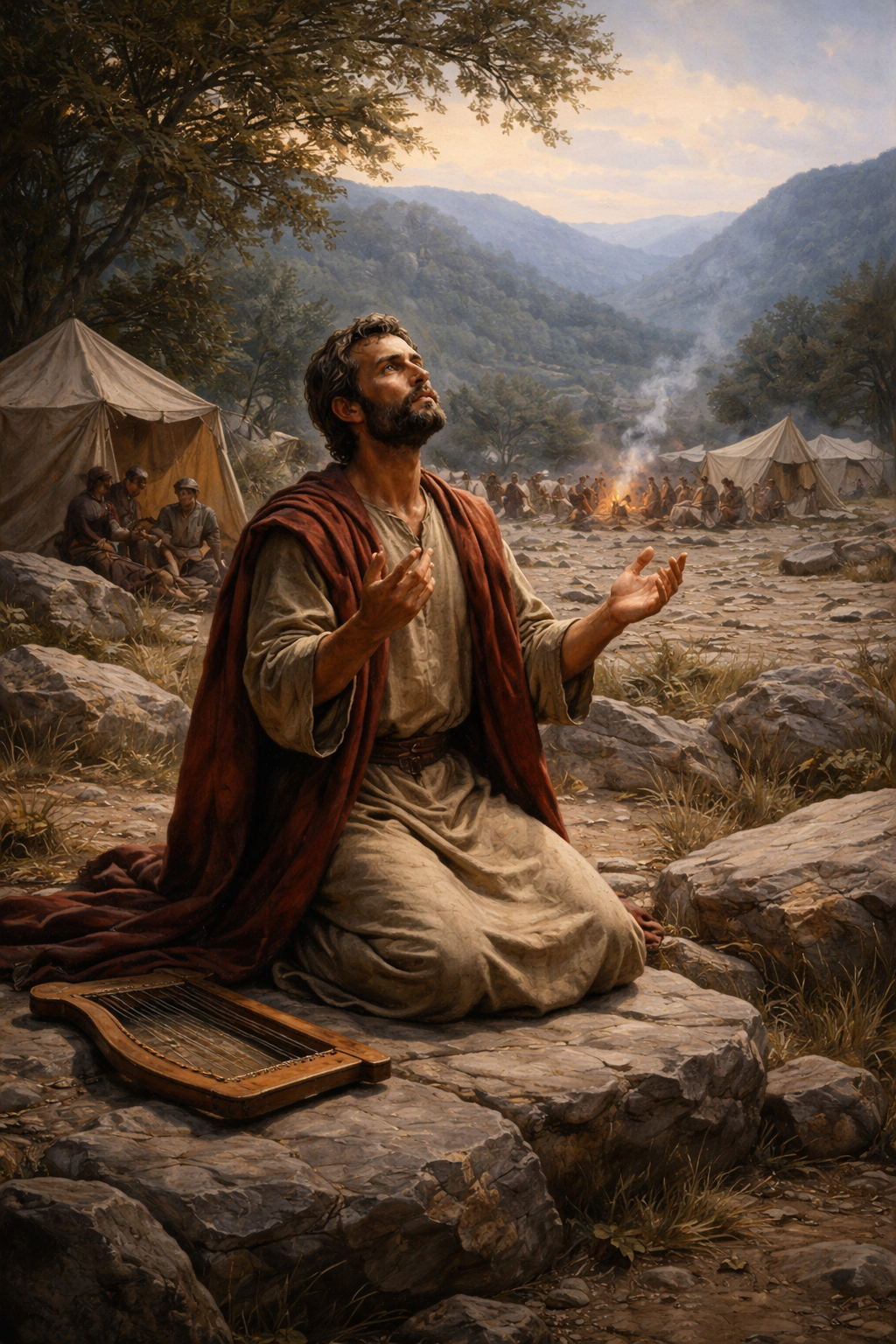
Written during David’s flight from Absalom, this psalm records personal distress: many rise against him and say there is no help for him in God. Yet David confesses that the LORD is his shield, his glory, and the lifter up of his head. He lies down and sleeps in peace, trusting the LORD for deliverance. Salvation belongs to the LORD alone.
Psalm 4 — Peace Through Righteous Trust
David contrasts the vanity of those who seek lies with the security of those who trust the LORD. He exhorts men to stand in awe and not sin, to commune with their own hearts, and to offer righteous sacrifices. True joy and peace are found not in abundance but in the LORD’s countenance.
Psalm 5 — Prayer for Guidance and Justice
David appeals to God as King and Judge, recognizing that God does not delight in wickedness. The LORD hates evil, lying, and bloodthirstiness. David seeks divine guidance and rejoices that God will bless the righteous and surround them with favor as with a shield.
Psalm 6 — Repentance and Mercy
One of the penitential psalms, Psalm 6 records deep personal anguish, possibly connected to chastening. David pleads for mercy, acknowledges his weakness, and weeps in repentance. He concludes with confidence that the LORD has heard his supplication.
Psalm 7 — God the Righteous Judge
David appeals to God for vindication against false accusations. He affirms that God judges righteously and will bring the wicked’s mischief upon his own head. The psalm upholds divine justice and moral accountability.
Psalm 8 — The Majesty of God and the Place of Man
David marvels at the glory of God revealed in creation. Though man is small in comparison to the heavens, God has crowned him with glory and honor and given him dominion over creation. The psalm exalts the LORD’s name and anticipates the ultimate fulfillment of this dominion in Christ.
Psalm 9 — Thanksgiving for Righteous Judgment
David praises God for defeating enemies and upholding justice. The LORD is portrayed as a refuge for the oppressed and a righteous Judge who will not forget the cry of the humble. God’s sovereignty over nations is emphasized.
Psalm 10 — The Cry Against the Prosperity of the Wicked
This psalm addresses the apparent success of the wicked and their denial of God. The wicked boast, oppress the poor, and live as though God does not see. The psalmist cries for God to arise and judge, affirming that the LORD does behold mischief and will defend the fatherless and oppressed.
Key People and Places
- David — Primary human author; king of Israel, writing from personal experience of persecution, repentance, and faith.
- The LORD (Jehovah) — Central focus of all psalms as Creator, Lawgiver, Judge, and Savior.
- The Anointed / the Son (Psalm 2) — Refers to God’s chosen King; understood conservatively as Messianic, fulfilled in Christ.
- Zion — God’s holy hill, representing His chosen place of rule and covenant presence.
- The Nations / Heathen — Gentile powers opposing God’s authority and purposes.
Main Doctrinal or Spiritual Themes
- The absolute authority of God over individuals and nations
- The moral divide between the righteous and the wicked
- The blessedness of obedience to God’s law
- Messianic kingship and God’s eternal rule
- God as righteous Judge, defender of the oppressed
- Prayer, repentance, and trust as proper responses to affliction
- Divine justice—certain though sometimes delayed
Practical Applications or Lessons
- Believers must choose the righteous path daily, delighting in and meditating on God’s Word.
- Earthly power is temporary; submission to God’s authority is the only safe course.
- In distress, the child of God may cry out honestly, yet rest confidently in the LORD.
- Repentance and humility invite God’s mercy and restoration.
- The apparent success of the wicked is fleeting; God’s judgment is sure.
- True joy, peace, and security are found not in circumstances, but in trusting the LORD.
Comments are closed