 Matthew 11–12 records a growing contrast between the clear works and words of Jesus Christ and the increasing unbelief of those who witnessed them. John the Baptist seeks confirmation concerning Christ; Jesus publicly honors John; unrepentant cities are warned; and Christ graciously calls the burdened to Himself. Chapter 12 then records disputes over the sabbath, Christ’s healing power, the Pharisees’ accusation that His works were satanic, His warning concerning blasphemy against the Holy Ghost, the sign of Jonas, and His teaching concerning true spiritual relationship.
These chapters reveal both the grace of Christ toward needy sinners and the serious accountability that comes with rejecting revealed truth.
Chapter Summaries
Matthew 11 — John the Baptist, Unbelief, Judgment, and Christ’s Invitation
1. Jesus continues preaching and teaching — Matthew 11:1
After instructing His twelve disciples in Matthew 10, Jesus Himself continues His ministry:
“he departed thence to teach and to preach in their cities.” — Matthew 11:1
The wording emphasizes that Christ was actively teaching and preaching while His disciples carried out the commission He had given them.
2. John the Baptist sends two disciples to Jesus — Matthew 11:2–6
John is explicitly said to be “in the prison” when he hears of “the works of Christ” (Matthew 11:2). He sends two disciples to ask:
“Art thou he that should come, or do we look for another?” — Matthew 11:3
Jesus does not merely give them an unsupported assertion. He points them to what they are hearing and seeing:
“The blind receive their sight, and the lame walk, the lepers are cleansed, and the deaf hear, the dead are raised up, and the poor have the gospel preached to them.” — Matthew 11:5
These works testify concerning who Christ is.
Jesus concludes:
“And blessed is he, whosoever shall not be offended in me.” — Matthew 11:6
Textual restraint: Scripture does not explicitly state John’s inward motive for sending the question. It would therefore go beyond the text to state dogmatically that John had completely lost confidence, that he was merely asking for his disciples’ benefit, or that some particular emotional condition caused the question. Matthew tells us what John heard, what he asked, and how Jesus answered.
3. Jesus gives His testimony concerning John — Matthew 11:7–15
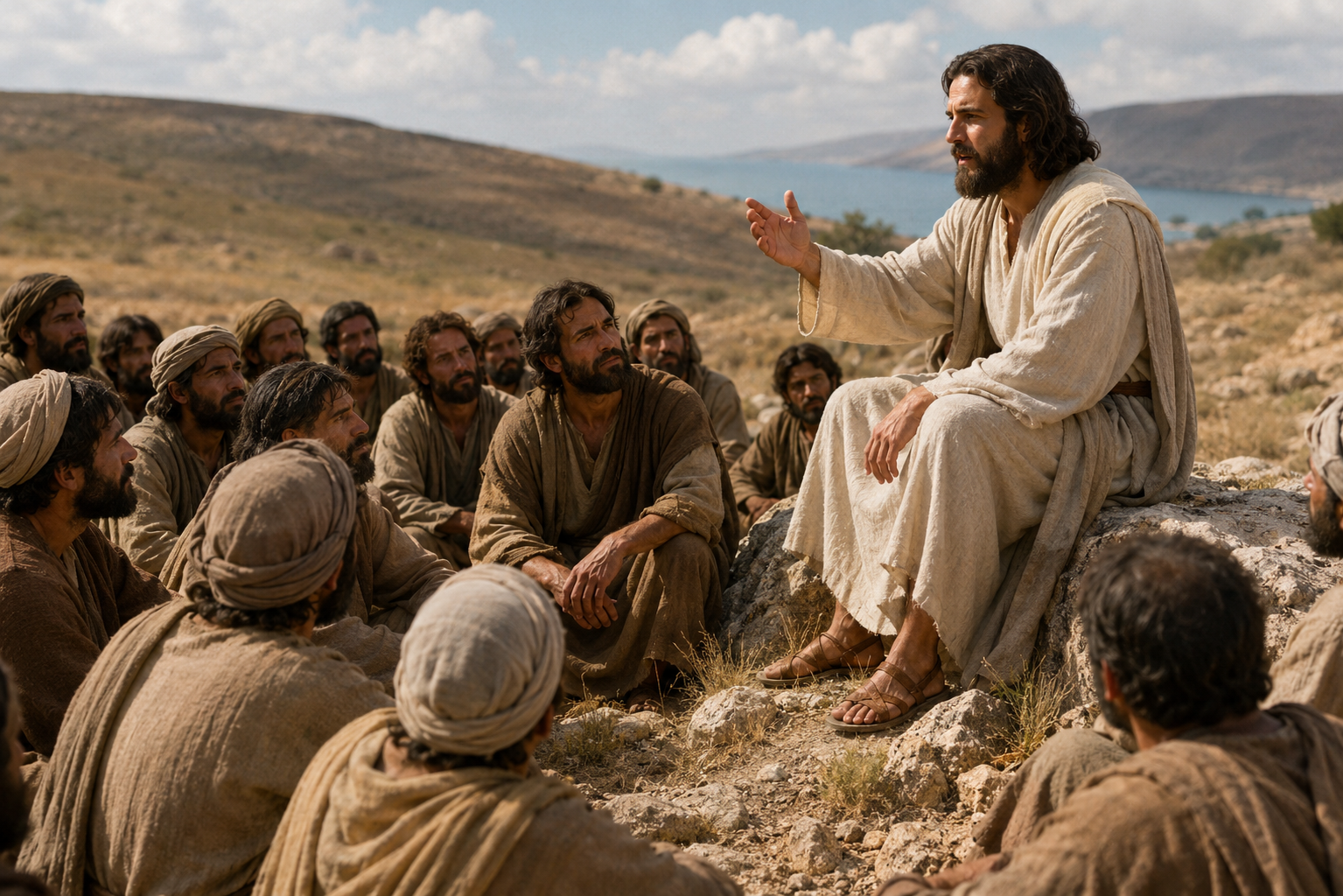
After John’s disciples leave, Jesus speaks to the multitude concerning John. He rejects the idea that John was merely a weak, unstable man:
“What went ye out into the wilderness to see? A reed shaken with the wind?” — Matthew 11:7
Neither was John a courtly preacher seeking luxury:
“Behold, they that wear soft clothing are in kings’ houses.” — Matthew 11:8
Jesus identifies him as more than an ordinary prophet and applies the prophecy of the forerunner to him:
“Behold, I send my messenger before thy face, which shall prepare thy way before thee.” — Matthew 11:10
Christ then makes an extraordinary statement:
“Among them that are born of women there hath not risen a greater than John the Baptist.” — Matthew 11:11
John therefore occupies a remarkable place in God’s revealed program.
Yet Jesus adds:
“notwithstanding he that is least in the kingdom of heaven is greater than he.”
The verse plainly establishes a distinction between John’s greatness and the privilege associated with the kingdom. Care should be taken not to construct details that the verse itself does not provide.
“The kingdom of heaven suffereth violence” — Matthew 11:12
Jesus says:
“And from the days of John the Baptist until now the kingdom of heaven suffereth violence, and the violent take it by force.”
This is a difficult statement, and the verse itself does not explicitly define every aspect of the “violence.” The surrounding context certainly includes strong opposition surrounding John, Christ, and the kingdom proclamation.
It should not be used to teach that eternal salvation is obtained by forceful human effort. Elsewhere the KJV plainly teaches:
“For by grace are ye saved through faith; and that not of yourselves: it is the gift of God: Not of works…” — Ephesians 2:8–9
4. John and “Elias” — Matthew 11:13–15
Jesus says of John:
“And if ye will receive it, this is Elias, which was for to come.” — Matthew 11:14
This does not require a doctrine of reincarnation or a claim that John was literally Elijah returned to earth.
John himself said when asked, “Art thou Elias?”:
“I am not.” — John 1:21
Luke gives the biblical explanation of John’s relationship to Elias:
“And he shall go before him in the spirit and power of Elias…” — Luke 1:17
Thus John fulfilled an Elias-like forerunner ministry “in the spirit and power of Elias.”
5. An unbelieving generation criticizes both John and Christ — Matthew 11:16–19
Jesus compares the generation to dissatisfied children. John came with an austere manner of life, and his enemies said:
“He hath a devil.” — Matthew 11:18
The Son of man came differently, and they complained:
“Behold a man gluttonous, and a winebibber, a friend of publicans and sinners.” — Matthew 11:19
Their opposite complaints expose the deeper problem. They rejected John when he practiced separation and austerity, and they criticized Christ when He associated with sinners.
Jesus concludes:
“But wisdom is justified of her children.” — Matthew 11:19
The passage warns against inventing excuses for unbelief. A heart unwilling to receive truth can criticize faithful messengers for opposite reasons.
6. Christ pronounces woe upon unrepentant cities — Matthew 11:20–24
Jesus begins:
“to upbraid the cities wherein most of his mighty works were done, because they repented not.” — Matthew 11:20
He names Chorazin, Bethsaida, and Capernaum.
Concerning Chorazin and Bethsaida, He declares that if the works done among them had been done in Tyre and Sidon:
“they would have repented long ago in sackcloth and ashes.” — Matthew 11:21
Concerning Capernaum:
“if the mighty works, which have been done in thee, had been done in Sodom, it would have remained until this day.” — Matthew 11:23
An important doctrine appears here: greater light brings greater accountability.
Christ says it will be:
“more tolerable for the land of Sodom in the day of judgment, than for thee.” — Matthew 11:24
This establishes differing degrees of accountability in judgment. Those cities had received extraordinary revelation through the personal ministry and miracles of Christ, yet remained unrepentant.
7. Divine revelation and the unique authority of the Son — Matthew 11:25–27
Jesus thanks the Father:
“because thou hast hid these things from the wise and prudent, and hast revealed them unto babes.” — Matthew 11:25
He then declares:
“All things are delivered unto me of my Father: and no man knoweth the Son, but the Father; neither knoweth any man the Father, save the Son…” — Matthew 11:27
The verse presents the unparalleled relationship between the Father and the Son.
It also warns against human pride. Mere intellectual reputation does not guarantee spiritual understanding. God’s truth must be received humbly.
This passage should not be twisted into denying genuine human responsibility, because the very next verse contains one of Scripture’s great invitations.
8. “Come unto me” — Matthew 11:28–30
Christ declares:
“Come unto me, all ye that labour and are heavy laden, and I will give you rest.” — Matthew 11:28
The invitation is centered upon Christ Himself:
“Come unto me.”
He continues:
“Take my yoke upon you, and learn of me; for I am meek and lowly in heart: and ye shall find rest unto your souls.” — Matthew 11:29
Then:
“For my yoke is easy, and my burden is light.” — Matthew 11:30
The passage does not teach salvation by religious labor. Christ calls burdened people to Himself.
The yoke also speaks of submission and discipleship: the believer does not become autonomous but learns from Christ.
Matthew 12 — The Lord of the Sabbath, Growing Opposition, and the Sign of Jonas
1. The disciples pluck ears of corn on the sabbath — Matthew 12:1–8
Jesus and His disciples pass through the corn on the sabbath day. The disciples are hungry and:
“began to pluck the ears of corn, and to eat.” — Matthew 12:1
The Pharisees accuse them:
“Behold, thy disciples do that which is not lawful to do upon the sabbath day.” — Matthew 12:2
Jesus answers from Scripture.
He refers first to David eating the shewbread when he and his companions were hungry (Matthew 12:3–4). He then refers to the priests performing their temple duties on the sabbath and being “blameless” (Matthew 12:5).
He declares:
“But I say unto you, That in this place is one greater than the temple.” — Matthew 12:6
And again:
“For the Son of man is Lord even of the sabbath day.” — Matthew 12:8
Christ therefore claims authority over the sabbath itself.
He also repeats the divine principle:
“I will have mercy, and not sacrifice.” — Matthew 12:7
The problem was not genuine obedience to Scripture. The Pharisees were condemning men whom Christ explicitly calls “the guiltless.”
2. Jesus heals the man with the withered hand — Matthew 12:9–14
Jesus enters a synagogue where there is:
“a man which had his hand withered.” — Matthew 12:10
His opponents ask whether healing on the sabbath is lawful, Matthew explicitly stating:
“that they might accuse him.”
Jesus uses the example of rescuing a sheep that falls into a pit and asks:
“How much then is a man better than a sheep?” — Matthew 12:12
His conclusion is clear:
“Wherefore it is lawful to do well on the sabbath days.”
He commands the man:
“Stretch forth thine hand.”
The man does so:
“and it was restored whole, like as the other.” — Matthew 12:13
Rather than rejoicing over the healing:
“the Pharisees went out, and held a council against him, how they might destroy him.” — Matthew 12:14
The contrast is severe: Christ gives restoration; His opponents begin planning His destruction.
3. Christ withdraws and continues healing — Matthew 12:15–21
Jesus knows of their plot and withdraws. Many follow Him:
“and he healed them all.” — Matthew 12:15
Matthew identifies Christ’s ministry with the prophecy concerning God’s chosen Servant:
“Behold my servant, whom I have chosen; my beloved, in whom my soul is well pleased…” — Matthew 12:18
The passage emphasizes His gentleness:
“A bruised reed shall he not break, and smoking flax shall he not quench…” — Matthew 12:20
And significantly:
“And in his name shall the Gentiles trust.” — Matthew 12:21
The text therefore explicitly anticipates blessing reaching Gentiles.
This does not erase biblical distinctions between Israel and the Church. Rather, it demonstrates that Gentile blessing through Christ is part of God’s revealed purpose.
4. A possessed, blind, and dumb man is healed — Matthew 12:22–30
A man described as:
“possessed with a devil, blind, and dumb”
is brought to Jesus.
Christ heals him:
“insomuch that the blind and dumb both spake and saw.” — Matthew 12:22
The people respond:
“Is not this the son of David?” — Matthew 12:23
The Pharisees answer by claiming:
“This fellow doth not cast out devils, but by Beelzebub the prince of the devils.” — Matthew 12:24
Jesus exposes the contradiction:
“Every kingdom divided against itself is brought to desolation…” — Matthew 12:25
If Satan were casting out Satan, his kingdom would be divided against itself.
Christ says:
“But if I cast out devils by the Spirit of God, then the kingdom of God is come unto you.” — Matthew 12:28
He further declares:
“He that is not with me is against me; and he that gathereth not with me scattereth abroad.” — Matthew 12:30
There is no spiritually neutral position concerning Jesus Christ.
5. Blasphemy against the Holy Ghost — Matthew 12:31–32
This solemn warning must be interpreted from its immediate context.
The Pharisees have just attributed a work performed by the Spirit of God to Beelzebub.
Jesus then says:
“All manner of sin and blasphemy shall be forgiven unto men: but the blasphemy against the Holy Ghost shall not be forgiven unto men.” — Matthew 12:31
And:
“whosoever speaketh against the Holy Ghost, it shall not be forgiven him…” — Matthew 12:32
The immediate textual context therefore connects this warning with the Pharisees’ deliberate attribution of Christ’s Spirit-wrought work to Satan.
Conservative restraint is necessary here. The passage explicitly identifies an unforgivable blasphemy against the Holy Ghost, but it should not be expanded beyond what Scripture states into the idea that an anxious sinner has automatically committed it because of a stray thought, doubt, or careless expression.
Likewise, Scripture does not explicitly state in Matthew 12 that this sin became impossible after a particular historical date. We should therefore avoid claiming more than the text gives us.
6. The tree, the fruit, and the words of the heart — Matthew 12:33–37
Jesus teaches that fruit reveals the nature of the tree:
“for the tree is known by his fruit.” — Matthew 12:33
He addresses His opponents sternly:
“O generation of vipers, how can ye, being evil, speak good things?” — Matthew 12:34
Then comes a fundamental spiritual principle:
“for out of the abundance of the heart the mouth speaketh.”
Words reveal the condition and contents of the heart.
Christ warns:
“That every idle word that men shall speak, they shall give account thereof in the day of judgment.” — Matthew 12:36
Speech therefore matters to God. Words are not spiritually insignificant.
7. The sign of the prophet Jonas — Matthew 12:38–42
Certain scribes and Pharisees ask for a sign.
Jesus answers:
“An evil and adulterous generation seeketh after a sign; and there shall no sign be given to it, but the sign of the prophet Jonas.” — Matthew 12:39
He then explicitly establishes the comparison:
“For as Jonas was three days and three nights in the whale’s belly; so shall the Son of man be three days and three nights in the heart of the earth.” — Matthew 12:40
Christ Himself therefore connects Jonah’s experience with His own coming death, burial, and resurrection.
This is not an arbitrary allegory imposed upon Jonah. Jesus Himself makes the comparison.
The men of Nineveh will rise in judgment:
“because they repented at the preaching of Jonas; and, behold, a greater than Jonas is here.” — Matthew 12:41
Likewise, the queen of the south:
“came from the uttermost parts of the earth to hear the wisdom of Solomon; and, behold, a greater than Solomon is here.” — Matthew 12:42
Christ is greater than the prophet Jonah and greater than King Solomon.
The condemning contrast is unmistakable: people with less revelation responded, while those standing in the presence of One greater than Jonah and Solomon refused Him.
8. The unclean spirit and “this wicked generation” — Matthew 12:43–45
Jesus describes an unclean spirit leaving a man, later returning and finding the house:
“empty, swept, and garnished.” — Matthew 12:44
The spirit returns with:
“seven other spirits more wicked than himself.”
Christ states the primary application explicitly:
“Even so shall it be also unto this wicked generation.” — Matthew 12:45
That final statement is important. The passage should first be interpreted according to Christ’s own stated application to “this wicked generation.”
A broader illustration concerning the insufficiency of mere external reform may be consistent with the picture, but Scripture expressly applies the warning here to that generation. We should not replace Christ’s stated application with a different primary meaning.
9. Jesus identifies His spiritual family — Matthew 12:46–50
Jesus’ mother and brethren stand outside, desiring to speak with Him.
Jesus asks:
“Who is my mother? and who are my brethren?” — Matthew 12:48
Pointing to His disciples, He says:
“Behold my mother and my brethren!” — Matthew 12:49
Then:
“For whosoever shall do the will of my Father which is in heaven, the same is my brother, and sister, and mother.” — Matthew 12:50
Christ is emphasizing the reality of spiritual relationship with those who belong to the circle of obedience to the Father.
This verse should not be made to teach salvation by human merit. The KJV elsewhere plainly teaches justification apart from works and salvation by grace through faith. Rather, obedience is consistently associated with genuine discipleship and a life responsive to God.
Key People and Places
Jesus Christ
The central Person of both chapters. His miracles authenticate His ministry; He possesses authority over the sabbath, exposes unbelief, speaks of judgment, reveals the Father, and offers rest to the burdened.
John the Baptist
The imprisoned forerunner who sends two disciples to Jesus. Christ calls him more than a prophet and says:
“Among them that are born of women there hath not risen a greater than John the Baptist.” — Matthew 11:11
John’s Disciples
Two are sent to ask Jesus whether He is “he that should come.”
The Twelve Disciples
Having received Christ’s instructions in Matthew 10, they are mentioned at the opening of Matthew 11. In Matthew 12, the disciples pluck and eat the ears of corn when hungry.
The Pharisees
They challenge Christ concerning the sabbath, plot His destruction, and accuse Him of casting out devils by Beelzebub.
Scribes
Some join the Pharisees in asking Christ for a sign in Matthew 12:38.
The Man With the Withered Hand
He is healed in the synagogue after obeying Christ’s command, “Stretch forth thine hand.”
The Blind and Dumb Man
Matthew states that he was “possessed with a devil.” Jesus heals him so that he both speaks and sees.
David
Christ refers to David’s eating of the shewbread when answering the sabbath accusation.
The Priests
Jesus cites their sabbath service in the temple while explaining the Pharisees’ faulty accusation.
Jonas
Jesus uses Jonah’s three days and three nights in the whale’s belly as the God-given sign pointing to the Son of man.
The Men of Nineveh
They repented at Jonah’s preaching and are presented as witnesses against the unbelief of Christ’s generation.
The Queen of the South
She traveled to hear Solomon’s wisdom. Jesus uses her response to rebuke those who refused One greater than Solomon.
Mary and Jesus’ Brethren
They appear at the end of Matthew 12. Jesus uses the occasion to teach concerning spiritual relationship.
Chorazin
One of the cities rebuked because mighty works had been done there without corresponding repentance.
Bethsaida
Likewise condemned for failing to repent despite great light.
Capernaum
Receives an especially severe warning because of the mighty works performed there.
Tyre and Sidon
Jesus says they would have repented “in sackcloth and ashes” had they received the same mighty works.
Sodom
Used as a comparison demonstrating the seriousness of Capernaum’s accountability.
Nineveh
The city whose inhabitants repented at Jonah’s preaching.
The Synagogue
The setting of the healing of the man with the withered hand in Matthew 12.
Main Doctrinal or Spiritual Themes
1. Jesus Christ is authenticated by His works
When John’s messengers ask concerning Christ’s identity, Jesus points to visible works and gospel preaching:
“Go and shew John again those things which ye do hear and see.” — Matthew 11:4
Biblical faith is not presented as belief in an undefined religious ideal. It rests upon the revealed Person and work of Jesus Christ.
2. Christ is greater than the prophets, the temple, Jonah, and Solomon
Matthew deliberately presents the supremacy of Christ.
He is:
- the One to whom John points,
- “greater than the temple” — Matthew 12:6,
- “greater than Jonas” — Matthew 12:41,
- “greater than Solomon” — Matthew 12:42,
- and “Lord even of the sabbath day” — Matthew 12:8.
The chapters steadily magnify the Person and authority of Jesus Christ.
3. Greater revelation brings greater accountability
Chorazin, Bethsaida, and Capernaum had seen mighty works.
Their privilege did not excuse unbelief; it increased responsibility.
This is a sobering principle for anyone repeatedly exposed to biblical truth. Hearing more Scripture without responding to it does not make a person safer.
4. Repentance is necessary
Christ rebukes the cities:
“because they repented not.” — Matthew 11:20
Nineveh is later commended because:
“they repented at the preaching of Jonas.” — Matthew 12:41
Biblical grace never makes repentance irrelevant.
At the same time, repentance must not be turned into a meritorious work that purchases salvation. Salvation remains God’s gift received by faith.
5. Human religious pride can resist abundant evidence
The Pharisees see remarkable works yet attribute them to Beelzebub.
Their problem is not lack of evidence.
Matthew 12 demonstrates how dangerous hardened unbelief can become: clear works of God may be witnessed while the heart deliberately resists their testimony.
6. Christ offers true rest
Matthew 11 does not end merely with condemnation. It ends with invitation:
“Come unto me…” — Matthew 11:28
The answer to spiritual burden is not another religious system. It is Christ.
His invitation is personal, gracious, and sufficient.
7. Mercy must not be sacrificed to man-made religious severity
Twice in this section Christ exposes a misuse of sabbath observance.
He declares:
“I will have mercy, and not sacrifice.” — Matthew 12:7
The Pharisees had reached the point where they could condemn hungry disciples and object to the healing of a disabled man while imagining themselves defenders of holiness.
Biblical separation and holiness must never become substitutes for actual obedience to God’s Word.
8. Jesus Christ possesses divine authority
His statement:
“the Son of man is Lord even of the sabbath day”
is an enormous claim.
The sabbath was established by God. Christ does not speak as a mere commentator upon it; He announces His lordship over it.
Matthew 11:27 likewise presents the unique relationship of Father and Son.
9. The Holy Ghost is directly involved in Christ’s works
Christ says:
“if I cast out devils by the Spirit of God…” — Matthew 12:28
The Pharisees’ accusation is therefore extraordinarily serious because they attribute a work Christ identifies with the Spirit of God to Beelzebub.
This provides the immediate setting for the warning about blasphemy against the Holy Ghost.
10. A man’s words reveal his heart
“Out of the abundance of the heart the mouth speaketh.” — Matthew 12:34
Speech is a spiritual matter.
Christ teaches that mankind will:
“give account thereof in the day of judgment.” — Matthew 12:36
Careless, malicious, profane, deceptive, and destructive speech should therefore never be dismissed as insignificant.
11. Christ’s resurrection is central to His sign
The great sign He gives is:
“the sign of the prophet Jonas.” — Matthew 12:39
Jonah’s experience points, by Christ’s own explicit declaration, to the Son of man being:
“three days and three nights in the heart of the earth.” — Matthew 12:40
Christianity stands upon the historical work of Christ, including His death, burial, and resurrection.
12. Gentile blessing is included in God’s revealed purpose
Matthew 12:21 explicitly says:
“And in his name shall the Gentiles trust.”
This does not require confusing Israel with the Church. The distinctions God makes elsewhere in Scripture should be retained. But the text plainly declares that Gentiles would trust in Christ’s name.
Practical Applications or Lessons
1. Bring questions to Christ and His Word
John sent his question directly to Christ.
When doubts or difficult questions arise, the believer should seek answers from what God has revealed rather than constructing conclusions from feelings or circumstances.
2. Judge spiritual claims by Scripture, not personality
John’s manner differed greatly from Christ’s, yet the unbelieving generation criticized both.
Faithfulness is not determined by whether a preacher matches someone’s preferred personality, speaking style, or social manner.
The real question is whether his message agrees with the Word of God.
3. Do not waste spiritual light
Capernaum possessed extraordinary privilege and still faced severe judgment.
Church attendance, Bible knowledge, preaching, Christian upbringing, and repeated opportunities to hear truth do not benefit someone who persistently refuses the truth received.
Privilege creates responsibility.
4. Beware religious pride
The “wise and prudent” could miss what God revealed “unto babes” (Matthew 11:25).
Education itself is not condemned. Pride is.
A learned man who will not bow to Scripture is spiritually poorer than a humble believer who receives what God has said.
5. Come personally to Christ
Jesus did not say merely, “Come to a philosophy,” “Come to a religious institution,” or “Come to a ceremony.”
He said:
“Come unto me.”
Salvation rests in Jesus Christ, not human merit.
6. Learn Christ’s meekness and lowliness
Christ says:
“learn of me; for I am meek and lowly in heart.” — Matthew 11:29
Biblical strength is not pride, arrogance, or self-exaltation. The perfect Lord Himself describes His heart as meek and lowly.
7. Never use religious rules as an excuse for cruelty
The Pharisees could discuss sabbath regulations while seeking grounds to accuse Christ for healing a man.
Correct doctrine should produce obedience, mercy, holiness, and love of truth—not cold-hearted self-righteousness.
8. Doing good is never contrary to true holiness
Christ states:
“it is lawful to do well on the sabbath days.” — Matthew 12:12
True holiness is never opposed to genuine good commanded or approved by God.
9. There is no neutral ground concerning Christ
“He that is not with me is against me.” — Matthew 12:30
Jesus does not present Himself as one religious option among many.
Every person ultimately stands either with Christ or against Him.
10. Guard your speech by guarding your heart
Since:
“out of the abundance of the heart the mouth speaketh,”
lasting improvement in speech requires more than vocabulary control. The heart must be governed by God and filled with His Word.
11. Do not continually demand more signs when God has given His Word
The scribes and Pharisees requested another sign despite the works already before them.
Their demand was not presented as commendable faith.
Believers should rest upon what God has revealed rather than constantly demanding extraordinary experiences before they will obey Him.
12. External improvement without inward reality is insufficient
Matthew 12:43–45 explicitly applies the returning unclean spirit illustration to:
“this wicked generation.”
A legitimate secondary warning is that outward order must never be confused with inward spiritual life. A life may appear “swept, and garnished,” yet religious appearance cannot substitute for a true relationship with God.
That secondary application should remain subordinate to Christ’s explicit application to His generation.
13. Spiritual relationship with Christ produces obedience
Jesus says:
“whosoever shall do the will of my Father which is in heaven…”
This does not establish salvation by works. Rather, genuine spiritual allegiance to Christ is not merely verbal. It has practical expression in obedience to the Father.
Overall Message of Matthew 11–12
Matthew 11–12 presents increasing revelation and increasing responsibility.
John’s messengers are directed to Christ’s works. John is vindicated as God’s messenger. Cities receiving extraordinary light are warned because they refuse repentance. The burdened are invited directly to Christ. Then religious opposition intensifies: the Pharisees challenge Christ over the sabbath, object to mercy, plot His destruction, and finally attribute a work of the Spirit of God to Beelzebub.
Against that unbelief, Christ declares Himself Lord of the sabbath, greater than the temple, greater than Jonah, and greater than Solomon. He points forward to His own burial and resurrection and declares that Gentiles will trust in His name.
The chapters therefore leave the reader with a clear dividing line: Christ must be received according to who Scripture reveals Him to be. Greater light demands a response, religious profession cannot substitute for faith and obedience, and true rest is found in Jesus Christ.
Comments are closed