
Chapter Summaries
Jeremiah 22
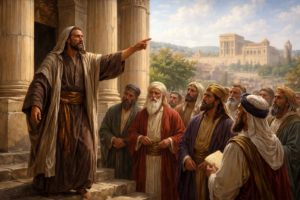 Jeremiah 22 opens with a direct message to the king of Judah and to the royal house of David. The LORD commands the king to “Execute ye judgment and righteousness, and deliver the spoiled out of the hand of the oppressor” (Jer. 22:3, KJV). He also forbids oppression of “the stranger, the fatherless, and the widow,” and condemns the shedding of innocent blood. The chapter makes plain that national stability was tied to moral obedience. If the king obeyed, the dynasty would continue with blessing; if not, judgment would fall upon the palace and the city.
The house of David is warned that though it seemed lofty and secure like “Gilead” and “the head of Lebanon,” God would make it “a wilderness” if it persisted in rebellion (Jer. 22:6). This is a solemn reminder that outward privilege does not cancel inward accountability. Jerusalem had the temple, the throne, and covenant mercies, yet those blessings increased responsibility rather than excused sin.
The chapter then turns to specific kings. First, the people are told not to weep chiefly for the dead king, but for the one carried away captive, referring to Shallum, also called Jehoahaz, the son of Josiah (Jer. 22:10–12). He would not return from captivity. Then Jeremiah denounces Jehoiakim for building his house by unrighteousness, using forced labor, and living in luxury while neglecting justice. He is contrasted with his father Josiah, who “did judgment and justice” and therefore “it was well with him” (Jer. 22:15). Josiah’s reign is presented as an example of true godliness in leadership: he knew the LORD, and that knowledge showed itself in righteousness toward others.
Jehoiakim, however, is described as covetous, violent, and oppressive. Because of this, his burial would be dishonorable: “He shall be buried with the burial of an ass” (Jer. 22:19). The prophecy emphasizes that earthly pomp cannot protect a man who defies God.
The latter section addresses Coniah (also called Jehoiachin or Jeconiah). Though he were “the signet upon my right hand,” God says He would pluck him thence (Jer. 22:24). He and his mother would be cast into another country. The repeated cry, “O earth, earth, earth, hear the word of the LORD” (Jer. 22:29), gives the chapter a weighty, courtroom-like ending. Coniah is declared childless in the sense of successful royal succession on David’s throne in Judah, for “no man of his seed shall prosper, sitting upon the throne of David, and ruling any more in Judah” (Jer. 22:30). This does not destroy the Davidic covenant; rather, it shows that the immediate royal line had come under divine chastening and awaited God’s own righteous solution.
Jeremiah 23
Jeremiah 23 begins with a fierce denunciation of false shepherds: “Woe be unto the pastors that destroy and scatter the sheep of my pasture! saith the LORD” (Jer. 23:1). In this context, “pastors” refers chiefly to rulers, spiritual leaders, and those entrusted with the care of God’s people. Instead of feeding and protecting the flock, they scattered it. God therefore declares that He Himself will visit judgment upon those shepherds and will gather the remnant of His flock from all countries where they have been driven (Jer. 23:2–3).
Then comes one of the great Messianic promises in Jeremiah: “I will raise unto David a righteous Branch” (Jer. 23:5). This coming King shall “reign and prosper, and shall execute judgment and justice in the earth.” His name is given as “THE LORD OUR RIGHTEOUSNESS” (Jer. 23:6). This is a glorious prophecy of the Messiah. From a conservative Baptist reading, this points forward to the Lord Jesus Christ, the true Son of David, who alone fulfills righteous kingship perfectly. Where Judah’s kings failed, Christ will succeed. Where human shepherds scattered, He gathers. Where sinners lack righteousness, He becomes righteousness for His people.
The promise also looks ahead to a future restoration of Israel so remarkable that it will eclipse even the memory of the Exodus in popular language: men will speak of the LORD who brought up and led the seed of the house of Israel from the north country and from all countries (Jer. 23:7–8). This shows both God’s faithfulness to Israel and the certainty of His covenant purposes.
The remainder of the chapter exposes the corruption of false prophets. Jeremiah says his heart is broken because of them (Jer. 23:9). The land is full of adulterers, the prophets are profane, and even in God’s house wickedness is found. The prophets of Samaria had erred through Baal, but the prophets of Jerusalem were even worse because they strengthened evildoers and made no one return from wickedness (Jer. 23:13–14).
God warns the people not to listen to those prophets who speak “a vision of their own heart, and not out of the mouth of the LORD” (Jer. 23:16). They preach peace to those who despise God and assure the rebellious that “No evil shall come upon you.” This is one of the most dangerous forms of false religion: giving assurance where there is no repentance, and comfort where God has pronounced judgment.
By contrast, the true word of God is powerful and penetrating. The LORD asks, “Is not my word like as a fire? saith the LORD; and like a hammer that breaketh the rock in pieces?” (Jer. 23:29). False prophets stole words from one another, used their tongues deceitfully, and claimed divine authority without having been sent (Jer. 23:30–32). The chapter closes with a warning against treating the message of God lightly as a “burden.” Since the people mocked the word, they themselves would become a burden under judgment and be cast out of God’s presence (Jer. 23:33–40).
Key People and Places
Jeremiah
The prophet called by God to preach to Judah during its final years before Babylonian judgment. He speaks with courage against kings, princes, priests, and prophets.
The king of Judah / house of David
The immediate audience in Jeremiah 22. The royal line was held accountable to rule with justice and righteousness.
Josiah
A godly king held up as a positive example. He “did judgment and justice,” defended the poor and needy, and manifested true knowledge of God by righteous conduct.
Shallum (Jehoahaz)
Son of Josiah. Taken captive and prophesied never to return to Judah.
Jehoiakim
Condemned for oppression, covetousness, self-indulgence, and injustice. His reign illustrates leadership without the fear of God.
Coniah (Jehoiachin / Jeconiah)
A king of Judah who would be cast out into captivity. His judgment marks the collapse of Judah’s royal hopes at the human level.
Pastors / Shepherds
In Jeremiah 23, these are primarily the leaders of the nation, including civil and religious shepherds, who failed to care for God’s people.
False prophets
Men who claimed divine authority but spoke their own imaginations. They comforted the wicked and contradicted the true word of the LORD.
The righteous Branch
A Messianic title pointing to the promised Son of David, fulfilled in the Lord Jesus Christ. He is the perfect King and the true righteousness of His people.
Jerusalem
The center of royal and religious life in Judah, yet deeply corrupted by sin, hypocrisy, and false prophecy.
Lebanon / Gilead
Used figuratively to describe the apparent grandeur and strength of the royal house, which nevertheless could not stand against divine judgment.
The north country / all countries
Refers especially to the lands of dispersion and captivity, including Babylon, from which God promises future regathering.
Main Doctrinal or Spiritual Themes
1. God requires righteousness in leadership
Jeremiah 22 shows that rulers are not free to govern by selfishness or oppression. God measures leaders by justice, mercy, and truth. Authority is a stewardship, not a license for abuse.
2. Privilege increases accountability
The house of David had immense privilege, but judgment fell because privilege without obedience becomes greater condemnation. Temple nearness, religious title, or spiritual heritage cannot substitute for holiness.
3. The knowledge of God shows itself in practical righteousness
Josiah’s example is crucial: “he judged the cause of the poor and needy.” Then God says, “Was not this to know me?” (Jer. 22:16). Biblical knowledge is not mere theory. It produces moral fruit.
4. False shepherds scatter, but God gathers
Jeremiah 23 contrasts corrupt leaders with the LORD Himself. Human shepherds failed, but God will not abandon His flock. He will gather, preserve, and restore His people.
5. Christ is the righteous Branch
The promise of “THE LORD OUR RIGHTEOUSNESS” is one of the clearest Christ-centered texts in Jeremiah. Man’s kings fail; God’s King succeeds. The believer’s hope is not in earthly rulers but in the Messiah.
6. God’s righteousness is the sinner’s only hope
The title “THE LORD OUR RIGHTEOUSNESS” teaches more than Christ’s kingship. It points to the truth that righteousness is found in the Lord, not in man. This harmonizes well with New Testament truth that sinners are justified through Christ, not by works.
7. False preaching is a grave sin
Jeremiah 23 strongly condemns prophets who speak from their own hearts, steal messages, promise peace to rebels, and use religion to strengthen sinners in disobedience. God takes preaching seriously.
8. The Word of God is living and forceful
God’s word is “like as a fire” and “like a hammer.” It does not merely decorate the mind; it exposes, breaks, purges, and judges. True preaching carries divine force because it faithfully delivers God’s word.
Practical Applications or Lessons
1. Leadership must be exercised in the fear of God
Whether in the home, church, or civil life, authority must be joined to righteousness. A leader who ignores justice and truth may impress men outwardly, but he stands under God’s searching eye.
2. External success is not proof of divine favor
Jehoiakim had buildings, luxury, and visible power, yet God pronounced woe upon him. Prosperity without righteousness is a dangerous illusion.
3. Compassion for the weak is part of real godliness
Jeremiah 22 ties knowing God to defending the poor, needy, oppressed, stranger, widow, and fatherless. A believer who walks with God should reflect His concern for those who are vulnerable.
4. God’s people must test preachers by Scripture
Jeremiah 23 warns against smooth words, flattering assurance, and man-made visions. Believers should not accept a message simply because it is emotional, popular, or confident. It must agree with the written word of God.
5. Peace without repentance is a false peace
False prophets told sinners all would be well while they continued in rebellion. That danger remains. Any message that minimizes sin, softens judgment, or offers comfort without repentance is spiritually deadly.
6. Christ alone is our righteousness
Jeremiah 23:6 points the heart away from self and toward the Lord Jesus Christ. No sinner can stand before God in his own merit. Salvation and acceptance are found only in the righteous Branch.
7. God will judge corrupt shepherds
Those who misuse spiritual office, mishandle truth, or scatter God’s people should tremble. The Lord sees false ministry and will deal with it.
8. God remains faithful even when men fail
These chapters are dark with judgment, but they are not without hope. When kings fail, prophets lie, and the nation crumbles, God still preserves His covenant purpose and points forward to Christ.
Comments are closed