Chapter Summaries
Isaiah 52
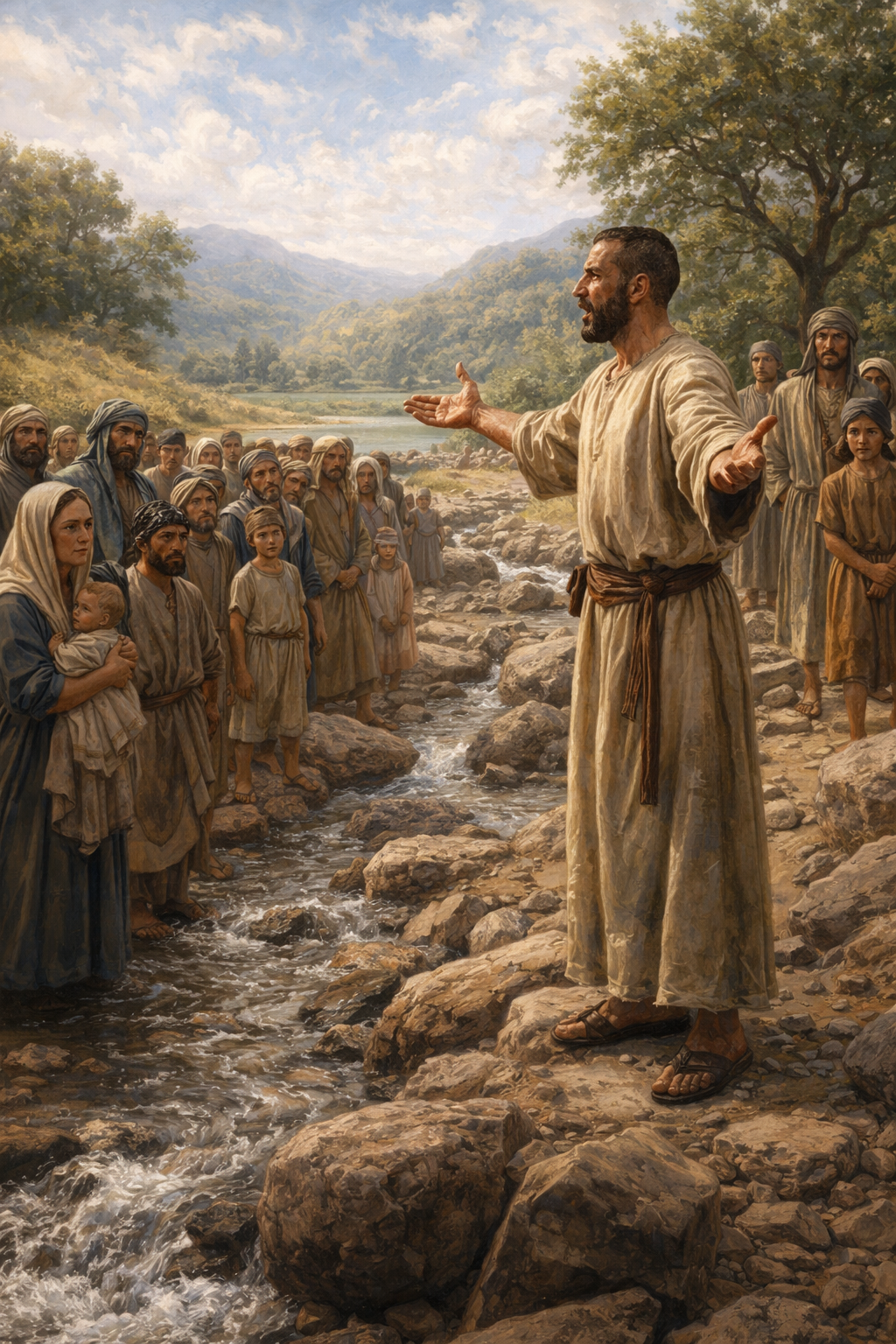
 The chapter opens with a call to Zion: “Awake, awake; put on thy strength, O Zion; put on thy beautiful garments, O Jerusalem” (52:1). Jerusalem is told to shake herself from the dust and loose herself from the bands of her neck, because the LORD will redeem His people “without money” (52:3). The thought is both immediate and prophetic. Israel had known bondage in Egypt and oppression under Assyria, and the Babylonian captivity was either present in view or soon approaching in Isaiah’s prophecy. Yet the deliverance ultimately points beyond a mere political return. God is showing that His people belong to Him by covenant, and He will act for His own name’s sake when that name has been blasphemed among the nations (52:5).
Then comes a beautiful gospel note: “How beautiful upon the mountains are the feet of him that bringeth good tidings, that publisheth peace” (52:7). In the near context, this is the joyful announcement of Zion’s deliverance and the return of the LORD to Zion. In broader biblical light, this also anticipates the proclamation of the gospel, which Paul applies in Romans 10. The watchmen lift up the voice together because “the LORD hath made bare his holy arm in the eyes of all the nations” (52:10). This is not merely a local rescue; it reveals God’s saving power before the world.
The chapter closes by transitioning into the suffering Servant prophecy. The LORD says, “Behold, my servant shall deal prudently, he shall be exalted and extolled, and be very high” (52:13). But before exaltation comes humiliation: “his visage was so marred more than any man” (52:14). This plainly prepares for Isaiah 53. The Servant is despised, disfigured, and astonishing to the nations, yet kings shall shut their mouths at him (52:15). Conservative Baptist interpretation rightly sees this as a direct prophecy of the Messiah, fulfilled in Jesus Christ, especially in His sufferings and ultimate exaltation.
Isaiah 53
This is one of the clearest Old Testament chapters on the substitutionary atonement of Christ. The prophet begins, “Who hath believed our report? and to whom is the arm of the LORD revealed?” (53:1). The Messiah comes in lowliness, “as a root out of a dry ground,” with “no form nor comeliness” that would attract fleshly admiration (53:2). He is “despised and rejected of men; a man of sorrows, and acquainted with grief” (53:3). Israel, and mankind generally, misjudged Him.
The heart of the chapter is substitution. “Surely he hath borne our griefs, and carried our sorrows” (53:4). “He was wounded for our transgressions, he was bruised for our iniquities” (53:5). “The LORD hath laid on him the iniquity of us all” (53:6). This is not merely an example of suffering, nor merely sympathy with human pain. It is penal, vicarious, redemptive suffering. The Servant bears what sinners deserve. This fits perfectly with historic Baptist preaching on the cross: Christ died in the sinner’s place, satisfying divine justice.
The chapter also emphasizes His silent submission: “he is brought as a lamb to the slaughter” (53:7). He was cut off “for the transgression of my people” (53:8). Though innocent, He was assigned with the wicked and yet “with the rich in his death” (53:9), remarkably fitting the burial of Christ. Verse 10 says, “Yet it pleased the LORD to bruise him,” not because the Father delighted in pain itself, but because the divine purpose of redemption would be accomplished through the sacrifice of the Son. The chapter ends in triumph: He shall “see his seed,” “prolong his days,” and “justify many” (53:10-11). The suffering Servant is also the risen and victorious Redeemer.
Isaiah 54
After the atonement of chapter 53 comes the blessing secured by that atonement. Zion is addressed as a barren woman who will sing because her children shall be more than before (54:1). This speaks of enlargement, restoration, and future blessing. In immediate prophetic context it concerns Israel’s restoration, but the spiritual principle also reaches into the wider work of God in redemption. The LORD tells Zion to “enlarge the place of thy tent” (54:2), showing expansion and increase.
The covenant mercies of God are highlighted. Though Zion had known affliction and chastening, the LORD says, “with great mercies will I gather thee” (54:7). “For a small moment have I forsaken thee; but with great mercies will I gather thee.” This is not a denial of discipline, but a declaration that divine wrath against covenant people is not His final word. He compares His promise to the days of Noah: as He swore the waters would not again cover the earth, so He declares His covenant peace will not depart (54:9-10). This is a rich statement of divine faithfulness.
The closing verses speak of a future security and righteousness: “No weapon that is formed against thee shall prosper” (54:17). In proper interpretation, this is chiefly about the covenant standing and preservation of the people of God under His favor, not a promise that no believer will ever suffer earthly trouble. The chapter is full of comfort: the God who redeemed also restores, builds, beautifies, and secures His people.
Isaiah 55
This chapter is a gracious gospel invitation. “Ho, every one that thirsteth, come ye to the waters” (55:1). The invitation is wide and urgent. Those with no money are invited to come, buy, and eat. This vividly illustrates salvation by grace, not by human merit or works. Men are naturally spending for “that which is not bread” and laboring for “that which satisfieth not” (55:2). The LORD calls them away from vanity to true life.
Verse 3 says, “Incline your ear, and come unto me: hear, and your soul shall live.” The blessings are connected to “the sure mercies of David,” pointing to the Davidic covenant and ultimately to the greater Son of David, the Messiah. Verses 6-7 press the sinner to repentance: “Seek ye the LORD while he may be found, call ye upon him while he is near: let the wicked forsake his way.” This is one of Scripture’s clearest invitations to turn from sin and receive mercy. God abundantly pardons.
Verses 8-9 remind us that God’s thoughts and ways are higher than ours. This especially fits the gracious plan of redemption, which man would never devise. Then the chapter compares God’s word to rain and snow that water the earth and accomplish His purpose (55:10-11). This is a foundational truth for preaching and missions: God’s word is effectual and never returns void in accomplishing His intent. The chapter ends with joy, peace, and creation itself rejoicing (55:12-13), showing the blessed fruit of divine salvation and restoration.
Isaiah 56
This chapter begins with a call to righteousness: “Keep ye judgment, and do justice” (56:1), because God’s salvation is near to come and His righteousness to be revealed. The emphasis is that those who truly belong to the Lord will manifest covenant faithfulness. Verse 2 blesses the man who keeps the sabbath and keeps his hand from evil. In the Old Testament setting, sabbath observance was a covenant sign for Israel; the deeper principle is reverence toward God and obedient separation from evil.
A striking feature of the chapter is the welcome extended to outsiders. The son of the stranger and the eunuch are told not to despair if they join themselves to the LORD (56:3-7). The eunuch, formerly limited under ceremonial law in certain respects, is promised “a place and a name” better than of sons and daughters if he keeps God’s covenant. The foreigner who loves the name of the LORD is also welcomed. God says, “mine house shall be called an house of prayer for all people” (56:7). This shows that while Israel had a unique covenant role, the saving purpose of God was never intended to remain ethnically narrow. Gentiles who come by faith are brought near.
The latter part of the chapter shifts sharply into rebuke. Israel’s watchmen are called blind, ignorant, dumb dogs that cannot bark, shepherds that cannot understand (56:10-11). Instead of protecting the flock, they serve themselves. This is a severe indictment of corrupt spiritual leadership. They are greedy, sleepy, careless, and given to pleasure. The warning is timeless: when leaders lose spiritual discernment and personal holiness, the people suffer.
Key People and Places
Zion / Jerusalem — The central city of God’s covenant dealings with Israel; often personified as a woman to be restored, comforted, and enlarged.
The Servant of the LORD — In Isaiah 52:13 through chapter 53, this is the Messiah in His suffering and exaltation. Historic conservative Christian interpretation identifies Him as Jesus Christ.
David — Mentioned in Isaiah 55:3 in connection with “the sure mercies of David,” pointing to God’s faithful covenant promises fulfilled in the Messiah.
The wicked / transgressors — Especially in Isaiah 53 and 55, these represent sinful mankind in need of pardon and cleansing.
The eunuch — In Isaiah 56, an example of one formerly marginalized who is received by God when joined to Him in faith and obedience.
The sons of the stranger — Gentiles who join themselves to the LORD; a testimony to God’s wider redemptive purpose.
The watchmen / shepherds — Israel’s spiritual leaders in Isaiah 56, rebuked for blindness, greed, and negligence.
Mountains — In Isaiah 52:7, the setting from which the good tidings of peace and salvation are proclaimed.
Babylon / the unclean place — Implied in Isaiah 52:11, where the call is “Depart ye, depart ye, go ye out from thence.” This reflects separation from captivity, uncleanness, and idolatrous surroundings.
The house of prayer — The temple in Jerusalem in Isaiah 56:7, with significance reaching forward to God’s purpose for all nations.
Main Doctrinal or Spiritual Themes
1. Redemption by the LORD alone
Isaiah 52 stresses that God Himself redeems His people. They were sold “for nought” and redeemed “without money.” Deliverance is of grace, not human purchase.
2. The substitutionary atonement of Christ
Isaiah 53 is the great theme center of these chapters. The Servant bears our sins, is wounded for our transgressions, and justifies many. This is foundational to the gospel and to Baptist preaching on salvation.
3. The humiliation and exaltation of the Messiah
The Servant is marred, despised, rejected, slain, and yet exalted, prosperous in God’s purpose, and victorious. The cross and resurrection pattern is plainly here.
4. God’s covenant mercy and faithfulness
Isaiah 54 shows that though God chastens, He does not cast off forever those whom He purposes to restore. His covenant of peace stands firm.
5. The free invitation of grace
Isaiah 55 calls thirsty sinners to come freely. This strongly supports the truth that salvation is offered freely to all who will repent and believe.
6. The power and certainty of God’s word
God’s word does not return void. What He speaks He performs. This gives confidence in preaching, evangelism, missions, and personal trust in Scripture.
7. Repentance and seeking the LORD
Isaiah 55 teaches that sinners must forsake their way and thoughts and return unto the LORD. Grace does not cancel repentance; it calls for it.
8. The inclusion of believing Gentiles
Isaiah 56 shows that God’s saving mercy reaches beyond Israel to strangers who join themselves to the LORD. This does not erase Israel’s place, but it reveals God’s larger redemptive purpose.
9. Separation from uncleanness
Isaiah 52:11 calls the people to depart from uncleanness. The redeemed are to live distinctly and purely before God.
10. Judgment on false and selfish leaders
Isaiah 56 warns against blind watchmen and self-serving shepherds. God holds leaders accountable for negligence and greed.
Practical Applications or Lessons
1. Christ must be central in our reading of Scripture
Isaiah 53 is too clear to ignore. The Old Testament points to the Lord Jesus Christ, especially in His atoning death. Believers should read the prophets with Christ in view.
2. Salvation is entirely of grace
The invitation to come without money reminds us that no sinner can buy forgiveness. Church membership, morality, effort, and religious activity cannot save. Only Christ saves.
3. The sinner must personally respond
Isaiah 55 does not merely announce truth; it calls for action: “Seek ye the LORD.” A man must repent, forsake his way, and come to God for mercy.
4. God often works in ways higher than human reasoning
His ways are not our ways. Men would not have invented a crucified Savior, yet that is the wisdom of God. We must submit our thinking to Scripture.
5. God’s word can be trusted fully
Because His word never returns void, preachers should preach it boldly, teachers should teach it faithfully, and believers should rest in its promises.
6. The redeemed should pursue holiness and separation
“Be ye clean, that bear the vessels of the LORD” (52:11). Those who serve God should take purity seriously in doctrine, conduct, and worship.
7. Discouraged believers can take comfort in God’s covenant mercy
Isaiah 54 gives hope to the afflicted and seemingly barren. God is able to restore fruitfulness, stability, and joy after seasons of sorrow.
8. The church and the believer must beware of corrupt leadership
Isaiah 56 warns against shepherds who feed themselves. Christians should prize faithful, vigilant, Bible-grounded leaders and reject greedy, careless, self-indulgent ministry.
9. God welcomes all who truly come to Him
Isaiah 56 shows that the outsider who joins himself to the LORD is not turned away. This encourages missions, evangelism, and confidence that God saves people from every background.
10. Peace comes only through the suffering Servant
The comfort of chapters 54-56 rests on chapter 53. There is no true peace apart from the cross. Any ministry that minimizes the blood atonement loses the heart of the message.
Comments are closed