Chapter Summaries
2 Chronicles 26 — Uzziah: Prosperity, Pride, and Punishment
 Uzziah (also called Azariah in Kings) is made king of Judah at sixteen years old and reigns fifty-two years in Jerusalem. The text emphasizes that “he did that which was right in the sight of the LORD” and that “as long as he sought the LORD, God made him to prosper” (26:4–5).
Under godly instruction (notably from Zechariah, who had understanding in the visions of God), Uzziah experiences remarkable success:
- Military victories over the Philistines, Arabians, and Mehunims
- Expansion and fortification of Jerusalem
- Agricultural development and military organization
- God’s help is explicitly credited for his victories (26:7)
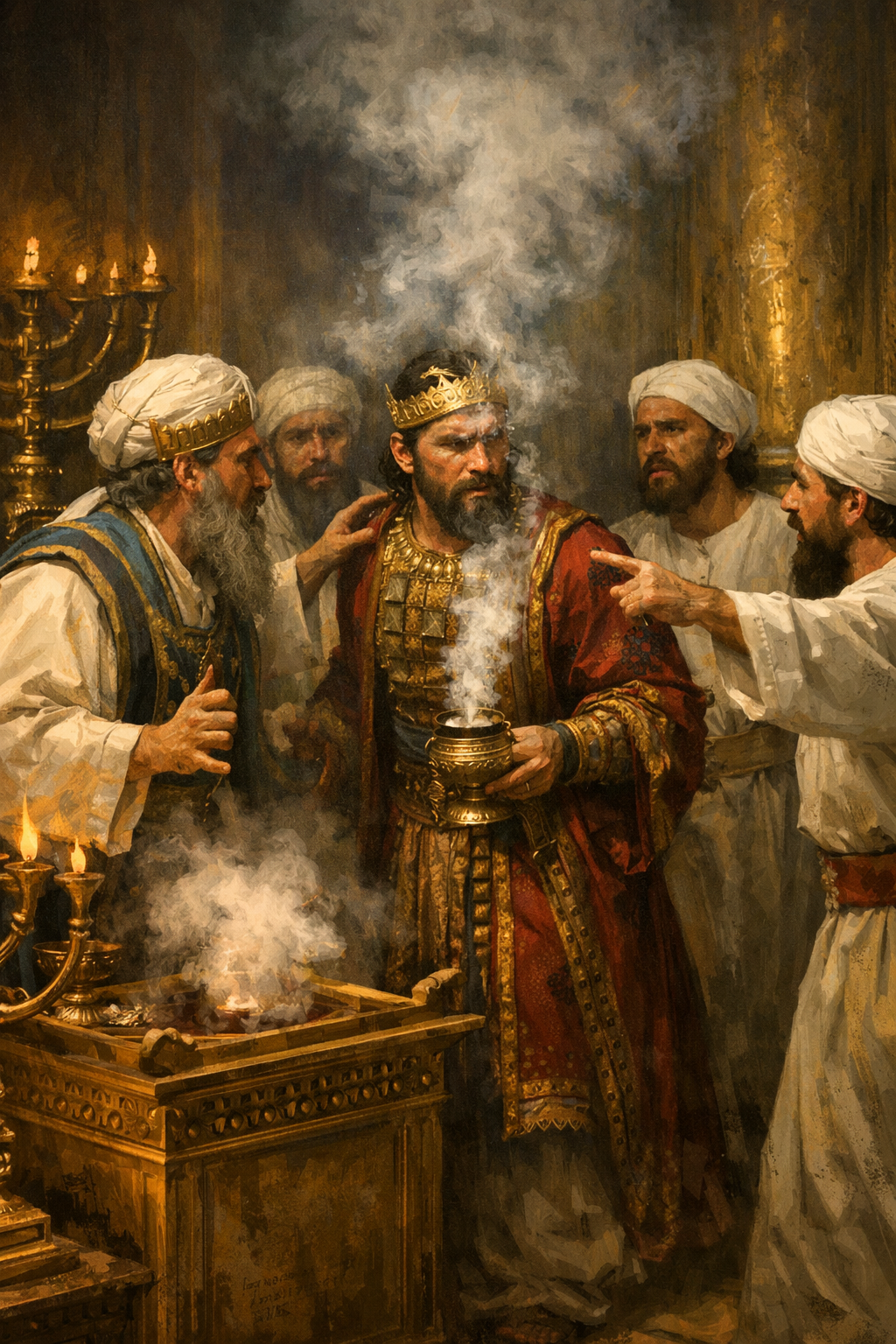
However, the chapter turns sharply when prosperity produces pride. When Uzziah is strong, “his heart was lifted up to his destruction” (26:16). He unlawfully enters the temple to burn incense—an act reserved by God for the sons of Aaron. Faithful priests confront him, warning that he has trespassed against the LORD.
Instead of repenting, Uzziah becomes angry. At that moment, God smites him with leprosy in his forehead. The judgment is immediate and unmistakable. Uzziah lives the rest of his life as a leper, cut off from the house of the LORD, while his son Jotham governs in his stead.
The chapter closes with Uzziah’s death and burial separate from the kings because of his leprosy—an enduring testimony that spiritual boundaries matter, even for godly men.
2 Chronicles 27 — Jotham: Quiet Faithfulness amid National Corruption
Jotham reigns sixteen years and “did that which was right in the sight of the LORD”, following his father’s earlier faithfulness without repeating his sin (27:2). Notably, Jotham does not enter the temple presumptuously.
He strengthens Judah militarily and architecturally:
- Builds the high gate of the house of the LORD
- Fortifies cities and castles
- Successfully wars against the Ammonites and secures tribute
The key theological statement of the chapter is found in 27:6:
“So Jotham became mighty, because he prepared his ways before the LORD his God.”
Yet a sobering contrast is present: “the people did yet corruptly.” Personal faithfulness in leadership does not automatically produce national repentance. Jotham’s reign is righteous, stable, and quiet—but spiritually incomplete at the national level.
Jotham dies and is buried honorably, and his son Ahaz succeeds him.
2 Chronicles 28 — Ahaz: Apostasy, Judgment, and Rejected Mercy
Ahaz represents a catastrophic spiritual reversal. He “did not that which was right in the sight of the LORD” and instead walked in the ways of the kings of Israel (28:1–2).
His sins are explicit and severe:
- Idolatry and molten images for Baalim
- Worship in the high places and under green trees
- Burning his children in the fire, following pagan abominations
Because of this apostasy, the LORD delivers Judah into judgment:
- Defeat by Syria
- Devastating losses to Israel (120,000 slain in one day)
- 200,000 captives taken from Judah
A significant interlude occurs when a prophet named Oded confronts Israel for their cruelty. God restrains Israel, and the captives are returned with compassion—clothed, fed, healed, and escorted home. This episode highlights that God’s mercy remains active even during judgment.
Ahaz, however, refuses to learn. Instead of repenting:
- He appeals to Assyria rather than God
- He plunders the house of the LORD to pay pagan kings
- He adopts foreign altars and corrupts temple worship
- He shuts up the doors of the house of the LORD
The tragic summary is given in 28:19:
“For the LORD brought Judah low because of Ahaz king of Israel; for he made Judah naked, and transgressed sore against the LORD.”
Ahaz dies without honor and is not buried in the sepulchres of the kings—a stark contrast to faithful rulers before him.
Key People and Places
- Uzziah (Azariah) — Godly king whose pride led to direct divine judgment
- Jotham — Faithful king who prepared his ways before the LORD
- Ahaz — Apostate king whose reign brought national collapse
- Zechariah — Spiritual mentor during Uzziah’s early reign
- Azariah the priest — Faithful priest who confronted Uzziah
- Oded — Prophet who restrained Israel and upheld God’s mercy
- Jerusalem / Temple of the LORD — Center of worship and point of repeated violation
- Assyria, Syria, Israel (Ephraim) — Instruments of God’s chastening
Main Doctrinal or Spiritual Themes
- Prosperity without humility leads to destruction
- God enforces divinely appointed roles and boundaries
- Personal obedience matters, even when others are corrupt
- Idolatry invites national judgment
- God may use enemies as instruments of chastening
- Mercy is offered, but not forced
- Seeking alliances without God deepens ruin
Practical Applications or Lessons
- Success must be guarded by humility and submission to God’s Word
- No position or past faithfulness excuses disobedience
- Leaders are accountable not only for actions but for influence
- Turning to worldly solutions instead of God compounds problems
- God’s mercy often precedes judgment, but refusal hardens the heart
- Closing the house of God is a sign of deep spiritual decay
Comments are closed