Chapter Summaries
2 Chronicles 15 — Asa’s Spiritual Reformation
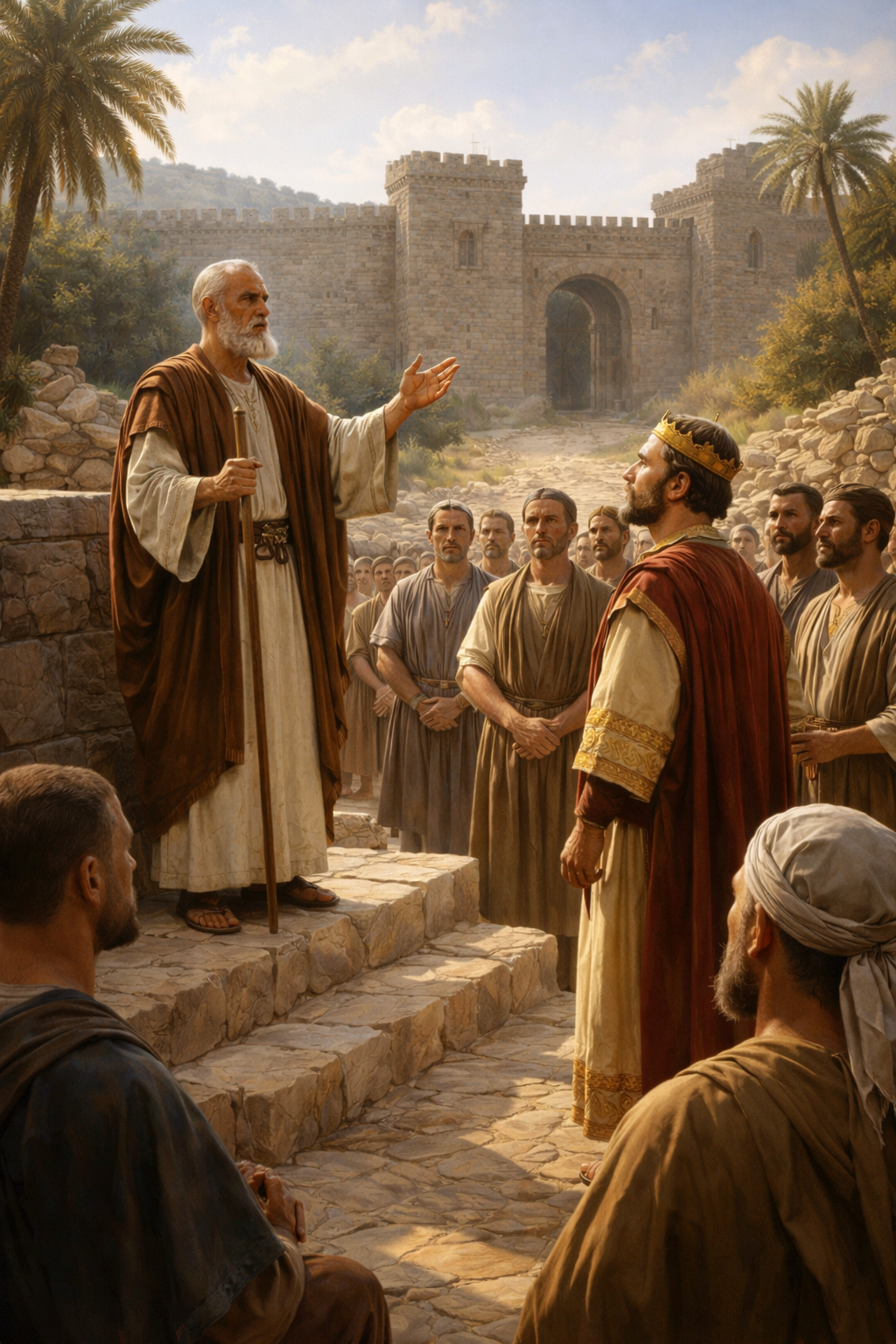
 The Spirit of God comes upon Azariah the son of Oded, who exhorts King Asa and Judah that the LORD is with them while they seek Him (15:2).
- Judah responds with repentance and reform: idols are removed, the altar of the LORD is renewed, and the people enter into a covenant to seek the LORD God of their fathers with all their heart and soul (15:12).
- Asa removes even his grandmother Maachah from her position because of her idolatry, showing uncompromising obedience.
- God rewards this revival with rest and peace, demonstrating that national blessing follows spiritual obedience.
Doctrinal emphasis: God honors wholehearted repentance, separation from idolatry, and covenant faithfulness.
2 Chronicles 16 — Asa’s Failure of Faith
- Baasha king of Israel threatens Judah. Instead of trusting the LORD, Asa relies on a political alliance with Ben-hadad of Syria, using temple treasures to secure help.
- Hanani the seer rebukes Asa for trusting man rather than God, declaring that the eyes of the LORD run to and fro throughout the whole earth to show Himself strong for those who trust Him (16:9).
- Asa reacts in anger, imprisoning the prophet and oppressing the people.
- Later, Asa is afflicted with a severe disease in his feet, yet he sought not to the LORD, but to the physicians (16:12).
- Asa dies having finished poorly despite a godly beginning.
Doctrinal emphasis: Reliance on human wisdom over divine trust leads to spiritual decline.
2 Chronicles 17 — Jehoshaphat Walks in the Ways of the LORD
- Jehoshaphat, Asa’s son, reigns and strengthens Judah militarily and spiritually.
- He removes high places and idols and sends Levites throughout Judah to teach the book of the law of the LORD (17:9).
- God establishes his kingdom, surrounding nations fear the LORD, and Judah prospers.
- Jehoshaphat’s strength is rooted not merely in armies, but in obedience and the knowledge of God’s Word.
Doctrinal emphasis: Biblical teaching and obedience produce spiritual stability and national strength.
2 Chronicles 18 — Ahab, Jehoshaphat, and the Lying Spirit
- Jehoshaphat foolishly allies himself with wicked Ahab king of Israel through affinity.
- Before battle, Jehoshaphat insists on seeking the LORD. False prophets unanimously encourage Ahab.
- The prophet Micaiah truthfully warns of defeat and reveals that God has allowed a lying spirit to deceive Ahab’s prophets as judgment.
- Ahab ignores the warning, disguises himself in battle, yet is struck by a random arrow and dies, fulfilling God’s word.
- Jehoshaphat narrowly escapes, spared by God’s mercy.
Doctrinal emphasis: God’s Word stands regardless of popular opinion; compromise with evil brings danger.
Key People and Places
- Asa — King of Judah; began well in faith but later trusted man over God.
- Azariah son of Oded — Prophet encouraging revival and covenant faithfulness.
- Hanani — Seer who rebuked Asa for lack of faith.
- Jehoshaphat — God-fearing king committed to teaching the Law.
- Ahab — Wicked king of Israel, hardened against truth.
- Micaiah — Faithful prophet who spoke truth despite persecution.
- Judah / Israel — Divided kingdoms illustrating obedience versus rebellion.
- Ramoth-gilead — Site of Ahab’s fatal battle.
Main Doctrinal or Spiritual Themes
- Seeking the LORD wholeheartedly brings peace and blessing.
- Separation from idolatry is required for true revival.
- Faith over fear — Trusting God versus trusting human alliances.
- The authority of God’s Word over majority opinion.
- Consequences of compromise with ungodly influences.
- Divine sovereignty even over deception used in judgment.
Practical Applications or Lessons
- A strong spiritual beginning does not guarantee a faithful ending—daily dependence on God is required.
- Revival begins with repentance, removal of sin, and renewed commitment to God’s Word.
- God’s people must avoid alliances that compromise biblical conviction.
- Truth should be valued even when it is unpopular or costly.
- Seeking God must continue through hardship, not cease when trouble comes.
Comments are closed