Chapter Summaries
2 Chronicles 1 — Solomon Established; Wisdom Requested
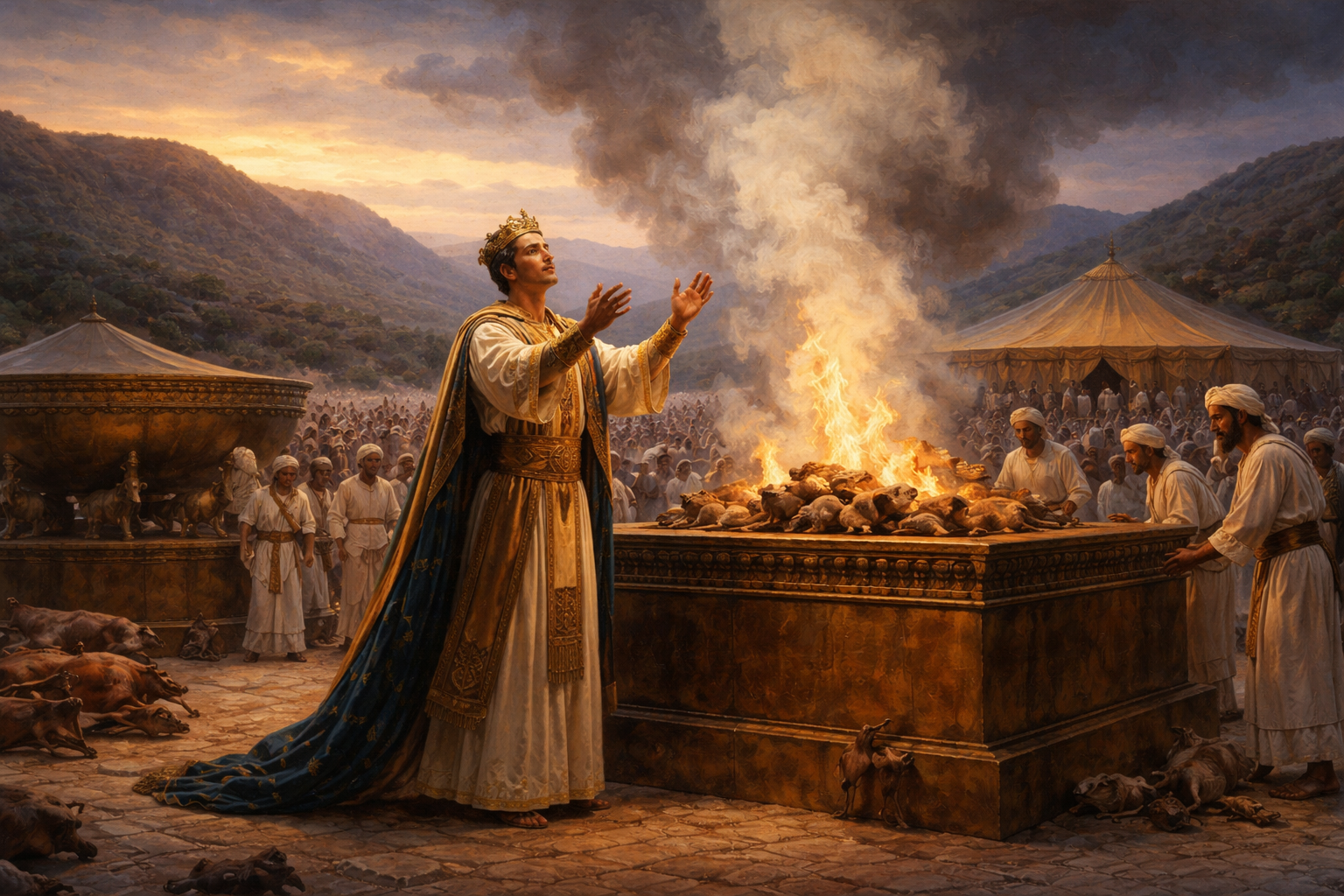
 Solomon the son of David is strengthened in his kingdom, and “the LORD his God was with him, and magnified him exceedingly” (1:1). Solomon gathers Israel’s leaders and goes to Gibeon, where the tabernacle and the brazen altar made by Bezaleel remain. There Solomon offers a great sacrifice.
The LORD appears to Solomon by night and invites him, “Ask what I shall give thee.” Solomon humbly acknowledges God’s mercy to David and his own insufficiency to judge so great a people. He asks for “wisdom and knowledge” to govern righteously. God is pleased, granting him wisdom beyond all others, and also riches, wealth, and honour not asked for. Solomon returns to Jerusalem and reigns, with his prosperity and administrative strength briefly described.
Background note: The Chronicler emphasizes Solomon’s spiritual posture at the outset—seeking God at the appointed place of worship—before highlighting material prosperity.
2 Chronicles 2 — Preparations for the Temple
Solomon determines to build an house for the name of the LORD and an house for his kingdom. He organizes labor, appoints overseers, and secures materials. Solomon sends to Huram king of Tyre, requesting a skilled craftsman and cedar, fir, and algum trees from Lebanon, recalling the cooperation that existed in David’s day.
Solomon’s message confesses the greatness of Israel’s God: “the heaven and heaven of heavens cannot contain him,” yet he desires to build a house for sacrifice and worship as commanded in the law of Moses. Huram responds favorably, praising the LORD God of Israel and sending Huram-abí, a master craftsman skilled in metal, stone, wood, and fine textiles.
Background note: The chapter stresses obedience to Mosaic ordinance and recognizes God’s transcendence, guarding against any notion that the temple could localize or limit God.
2 Chronicles 3 — The Temple Built
Solomon begins to build the house of the LORD in Jerusalem on mount Moriah, where the LORD appeared unto David, at the place prepared in the threshingfloor of Ornan the Jebusite. The chapter gives precise measurements and details of the temple structure, the overlaying of gold, the veil, the cherubims, and decorative elements.
The emphasis is on reverent craftsmanship, beauty, and exactness, underscoring that the work is done according to divine purpose and Davidic preparation. The temple stands as the central place of sacrifice and worship for Israel.
Background note: Mount Moriah connects the temple to earlier redemptive history (Genesis 22), highlighting continuity in God’s plan.
Key People and Places
- Solomon — Son of David; king of Israel; chosen to build the temple and endowed with God-given wisdom.
- David — His covenant legacy and preparations underpin Solomon’s reign and building work.
- Gibeon — Location of the tabernacle and brazen altar during Solomon’s early reign.
- Jerusalem — Political and spiritual center; site of the temple.
- Mount Moriah — Temple mount; place of prior divine encounter and sacrifice.
- Huram (Hiram), king of Tyre — Gentile ally providing materials and skilled labor.
- Huram-abí — Master craftsman sent to assist in temple construction.
Main Doctrinal or Spiritual Themes
- God’s Sovereign Choice and Blessing — The LORD establishes Solomon and grants wisdom according to His will.
- The Priority of Wisdom — God-honoring leadership flows from humility and dependence on God.
- True Worship According to God’s Word — The temple is built in harmony with Mosaic instruction, not human innovation.
- God’s Transcendence and Nearness — Though God cannot be contained, He appoints a place for His name and worship.
- Continuity of God’s Redemptive Plan — From David to Solomon, and from Moriah to the temple, God’s purposes unfold consistently.
Practical Applications or Lessons
- Believers should seek God’s wisdom above material gain, trusting Him to supply what is needful.
- Spiritual leadership begins with humility and acknowledgment of personal insufficiency before God.
- Worship must be offered God’s way, grounded in Scripture rather than preference.
- Careful, faithful preparation for God’s work honors Him and blesses His people.
- God’s promises to previous generations encourage faithfulness in the present.
Comments are closed