Chapter Summaries
1 Kings 18 — The LORD Vindicated on Mount Carmel
 After a prolonged drought “according to the word of the LORD” spoken by Elijah, God sends the prophet back to confront King Ahab (18:1–2). Obadiah, a faithful servant who had hidden the LORD’s prophets during Jezebel’s persecutions, arranges the meeting between Elijah and Ahab. Elijah boldly declares that Israel’s trouble is not due to him, but to Ahab’s abandonment of the commandments of the LORD and his following of Baalim (18:17–18).
Elijah calls for a public confrontation on Mount Carmel between the prophets of Baal (and the groves) and the prophet of the LORD. The people are challenged with a direct question: “How long halt ye between two opinions?” (18:21). Two altars are prepared; the true God will answer by fire.
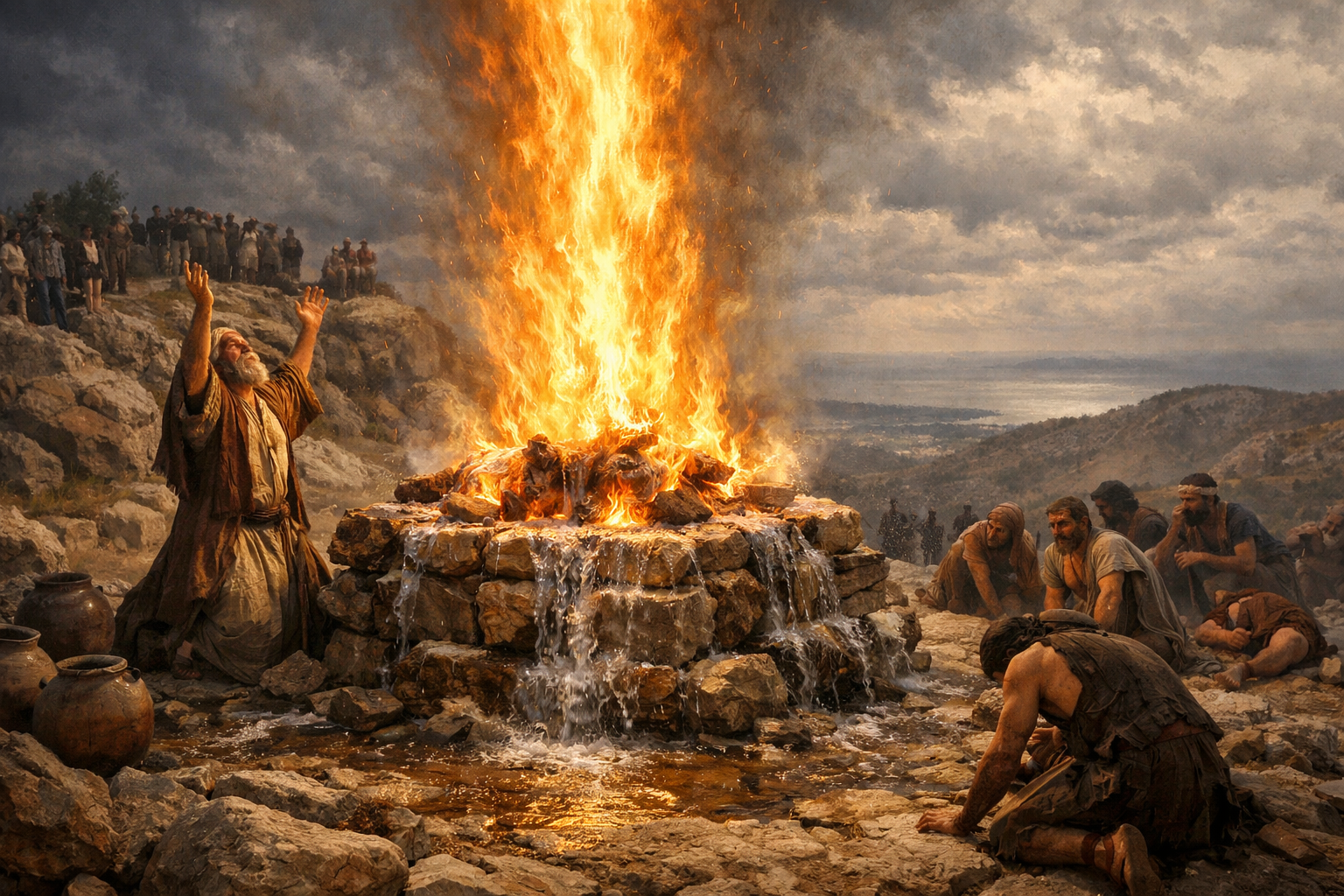
The prophets of Baal cry out all day, cutting themselves, but “there was neither voice, nor any to answer” (18:26–29). Elijah then repairs the broken altar of the LORD, lays the sacrifice, and saturates it with water to remove any suspicion of trickery. When Elijah prays, the fire of the LORD falls, consuming the sacrifice, wood, stones, dust, and water (18:36–38). The people fall on their faces, confessing, “The LORD, he is the God” (18:39).
Judgment follows repentance: the prophets of Baal are executed. Elijah then prays for rain, and after persistent intercession, the drought ends. The chapter closes with Elijah strengthened by the hand of the LORD, running before Ahab to Jezreel.
1 Kings 19 — The Prophet Sustained in Weakness
Despite the great victory, Jezebel threatens Elijah’s life. Elijah flees into the wilderness, discouraged and exhausted, asking that he might die (19:4). God responds not with rebuke but with provision—rest, food, and renewed strength provided by an angel of the LORD.
Elijah travels to Horeb, the mount of God. There, the LORD reveals Himself—not in wind, earthquake, or fire—but in “a still small voice” (19:12), teaching Elijah that God’s work is not only in public judgment but also in quiet, sovereign purpose. Elijah learns that he is not alone; God has preserved a remnant of seven thousand who have not bowed to Baal (19:18).
The LORD recommissions Elijah, giving him specific tasks and appointing Elisha as his successor. The chapter ends with Elijah calling Elisha, who leaves all to follow the prophet, signaling continuity in God’s work.
Key People and Places
People
-
Elijah — Prophet of the LORD; instrument of divine judgment, revival, and instruction.
-
Ahab — King of Israel; weak leader who tolerated idolatry.
-
Jezebel — Queen; aggressive promoter of Baal worship and persecutor of God’s prophets.
-
Obadiah — Faithful servant who feared the LORD and protected His prophets.
-
Prophets of Baal — Representatives of false religion, exposed as powerless.
-
Elisha — Chosen successor to Elijah.
Places
-
Mount Carmel — Site of the decisive confrontation demonstrating the LORD’s supremacy.
-
Kishon Brook — Place of judgment upon Baal’s prophets.
-
Jezreel — Royal city to which Ahab returned after the rain.
-
Wilderness / Horeb (Mount Sinai) — Place of Elijah’s renewal and divine instruction.
Main Doctrinal or Spiritual Themes
-
The Exclusivity of the LORD — The LORD alone is God; false gods are nothing.
-
Covenant Faithfulness vs. Apostasy — Israel’s crisis stemmed from divided allegiance.
-
Prayer and Divine Power — God answers earnest, obedient prayer according to His will.
-
Judgment and Mercy — God judges idolatry yet preserves a faithful remnant.
-
Human Weakness and Divine Sustaining Grace — Even great servants may falter, yet God restores them.
-
God’s Sovereign Work Beyond Public Signs — The LORD works quietly as well as dramatically.
Practical Applications or Lessons
-
Believers must refuse divided loyalty and openly confess allegiance to the LORD alone.
-
Public victories do not eliminate the need for daily dependence on God.
-
Spiritual discouragement is met best with rest, nourishment, and renewed fellowship with God.
-
Faithfulness is measured by obedience, not by visible success or popular approval.
-
God always preserves His people, even when they feel alone.
-
The work of God continues beyond any one servant, according to His sovereign plan.
Comments are closed