 Chapter Summaries
Judges 10 — Tola, Jair, and Israel’s Deepening Apostasy
After the events of Abimelech, the Lord raises Tola and Jair as minor judges who bring temporary stability (10:1–5). Yet after their deaths, Israel again falls into idolatry, serving the Baalim, Ashtaroth, and gods of surrounding nations (10:6).
The Lord declares that He will no longer deliver them because they continually abandon Him (10:11–14).
When Israel confesses their sin and puts away their idols, the Lord’s heart is “grieved for the misery of Israel” (10:16). The Ammonites gather to war, and the men of Gilead seek a leader.
Judges 11 — Jephthah’s Rise, His Victory, and His Rash Vow
Jephthah, a mighty warrior cast out by his brothers for being the son of a “strange woman” (11:1–3), is called back to lead Gilead.
He negotiates with the Ammonites using Israel’s historical claim to the land (11:14–27). When they refuse peace, “the Spirit of the LORD came upon Jephthah” (11:29), empowering him to fight.
Before battle, Jephthah makes a rash vow that whatever first comes out of his house will be offered to the Lord (11:30–31).
God grants victory, but Jephthah’s daughter comes out to meet him—leading to her tragic consecration and death as a result of the vow (11:34–40). The text stresses sorrow, purity, and the seriousness of vows.
Judges 12 — Civil Strife With Ephraim
The men of Ephraim confront Jephthah in anger, repeating a pattern of tribal jealousy already seen in Gideon’s story (12:1).
A battle ensues, and Gilead defeats Ephraim. The test-word “Shibboleth” is used at the ford of Jordan to identify fleeing Ephraimites, resulting in 42,000 deaths (12:6).
Jephthah judges six years, then three more minor judges follow—Ibzan, Elon, and Abdon (12:8–15).
Judges 13 — Israel Under Philistine Oppression and the Birth of Samson
Israel again does evil, and the Lord hands them over to the Philistines for forty years (13:1).
The Angel of the LORD appears to the barren wife of Manoah, promising a son who will “begin to deliver Israel” (13:5).
The child must be a Nazirite from the womb—no wine, no unclean food, no razor upon his head.
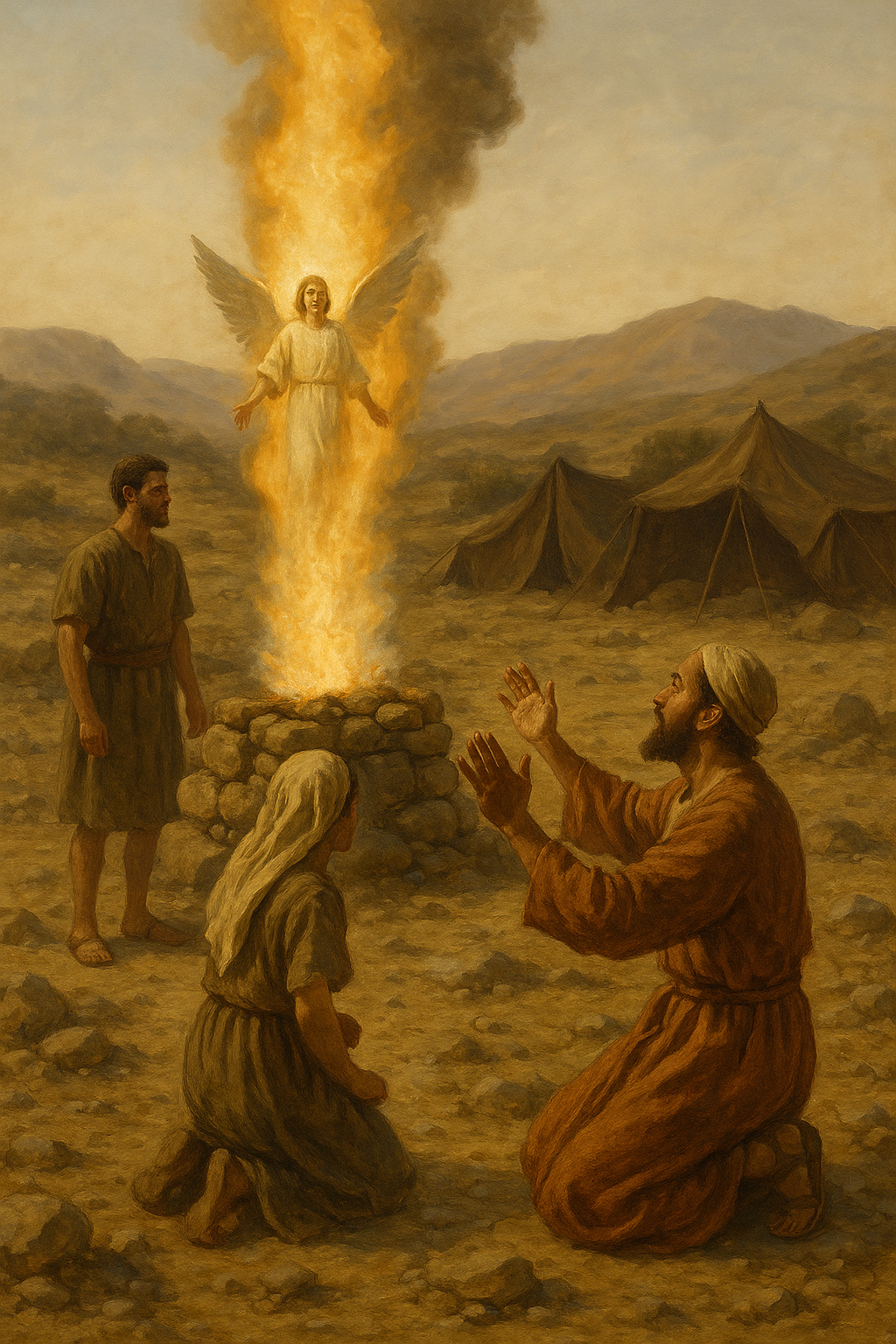
The Angel appears again to Manoah, and when they offer a sacrifice, He ascends in the flame of the altar—revealing His divine identity (13:18–20).
Samson is born, and “the Spirit of the LORD began to move him” (13:25), preparing him for his future ministry.
Key People and Places
People
-
Tola & Jair — Minor judges used by God for brief stability.
-
Jephthah — A courageous but flawed deliverer whose faith was joined with a disastrous vow.
-
Jephthah’s Daughter — A picture of purity and sacrificial devotion.
-
Ephraimites — A tribe frequently prone to jealousy and pride.
-
Manoah & His Wife — God-fearing parents chosen to raise Samson.
-
Samson — A Nazirite judge whose strength comes from the Spirit of God.
Places
-
Gilead / Mizpeh — Jephthah’s homeland and military headquarters.
-
Ammon — Israel’s oppressor in chapters 10–11.
-
Philistia — The oppressive power during Samson’s era.
-
Zorah — Samson’s hometown in the tribe of Dan.
Main Doctrinal or Spiritual Themes
1. God’s Holiness and Righteous Judgment
Israel’s repeated apostasy shows God’s intolerance of idolatry (10:6–14).
2. The Cycle of Sin, Chastening, Repentance, and Deliverance
God responds when His people truly repent (10:15–16).
3. The Danger of Rash Vows and Unwise Promises
Jephthah’s vow stands as a solemn warning (11:30–40).
4. God Uses Imperfect Instruments
Jephthah and Samson both demonstrate God’s ability to use flawed men to accomplish His purposes.
5. Divine Sovereignty in Raising Deliverers
Samson’s birth is miraculously ordained by God, emphasizing His control over Israel’s salvation (13:3–5).
Practical Applications
1. Sin Always Brings Bondage
Israel’s idolatry repeatedly results in oppression. Believers must guard their hearts from modern forms of idolatry.
2. True Repentance Involves Both Confession and Forsaking
Israel confessed and “put away” their strange gods (10:15–16). Repentance without change is counterfeit.
3. Believers Should Guard Their Words
Jephthah’s vow warns us to be slow to speak promises and commitments before God.
4. God Can Use Those Whom Others Reject
Jephthah was cast out by his brothers, yet God raised him up. Human rejection never cancels divine calling.
5. Parents Should Raise Their Children With God’s Calling in View
Manoah and his wife sought the Lord for guidance on raising Samson (13:8). Christian parents must do the same.
6. Spiritual Weakness Often Comes From Internal Division
Judges 12 shows that internal strife weakens God’s people more than outside enemies.
Comments are closed