Chapter Summaries
Jeremiah 30
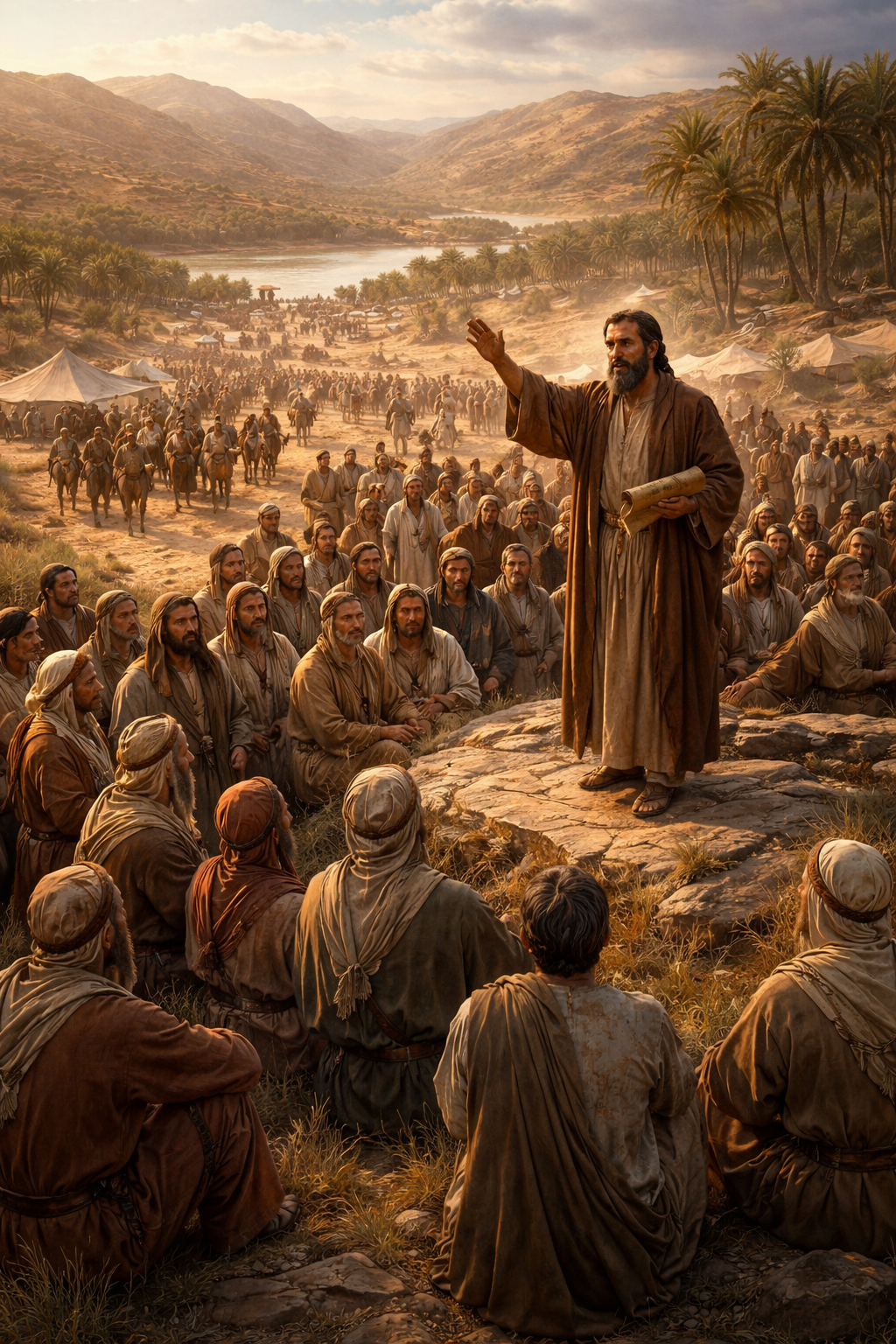
 Jeremiah 30 opens with the Lord commanding Jeremiah, “Write thee all the words that I have spoken unto thee in a book” (Jer. 30:2). That is important because this section is not merely a passing sermon; it is a written record of God’s covenant faithfulness and future purpose. The chapter looks beyond Judah’s immediate chastening and sets forth the promise of national restoration for both Israel and Judah. Verse 3 says, “I will bring again the captivity of my people Israel and Judah,” showing that the prophecy reaches beyond the nearer Babylonian captivity and includes a broader future regathering and restoration.
The chapter first describes a time of severe distress. The people are pictured as trembling with fear, and the day is called “the time of Jacob’s trouble” (Jer. 30:7). In conservative Baptist understanding, this has a double emphasis: it certainly speaks to deep national distress for Israel, and it also points prophetically toward a future climactic time of tribulation for Jacob, that is, Israel. Yet the verse does not end in despair: “but he shall be saved out of it.” God’s chastening is severe, but it is never the final word for His covenant people.
The Lord then promises deliverance from foreign bondage. He says, “they shall serve the LORD their God, and David their king, whom I will raise up unto them” (Jer. 30:9). This looks beyond the return from Babylon to the greater Messianic hope. In sound conservative interpretation, this points ultimately to the reign of the Lord Jesus Christ, the Son of David. The language is too large to be exhausted by Zerubbabel or any merely postexilic leader.
God balances judgment and mercy throughout the chapter. He tells Jacob not to fear, because He will save him from afar (Jer. 30:10), yet He also says, “I will correct thee in measure, and will not leave thee altogether unpunished” (Jer. 30:11). That is a vital doctrinal truth: divine election does not cancel divine chastening. Because of their sins, their wound is described as incurable from a human standpoint (Jer. 30:12-15). Yet what man cannot heal, God can. The Lord reverses their fortunes, judges their oppressors, and declares, “I will restore health unto thee, and I will heal thee of thy wounds” (Jer. 30:17).
The latter part of the chapter is full of restoration language. The city shall be built, thanksgiving will be heard again, the people will multiply, and their congregation shall be established (Jer. 30:18-20). Verse 21 is especially striking: “their nobles shall be of themselves, and their governor shall proceed from the midst of them.” Again, this points toward a ruler arising from among the covenant people, ultimately fulfilled in Christ. The chapter closes by reminding the reader that the fierce anger of the Lord will accomplish His purposes, and “in the latter days ye shall consider it” (Jer. 30:24). That phrase urges careful prophetic reflection.
Jeremiah 31
Jeremiah 31 continues and expands the restoration promises. It begins with the Lord saying, “I will be the God of all the families of Israel, and they shall be my people” (Jer. 31:1). This chapter is one of the richest in all Jeremiah for comfort, covenant hope, and future blessing. It emphasizes the Lord’s everlasting love, His regathering of scattered Israel, His rebuilding of the nation, and the promise of the new covenant.
The opening verses declare, “Yea, I have loved thee with an everlasting love: therefore with lovingkindness have I drawn thee” (Jer. 31:3). This is one of the clearest statements in Scripture concerning the steadfast, covenantal love of God. He promises that Israel will again be built, adorned, joyful, and fruitful in the land (Jer. 31:4-5). Ephraim, representing the northern kingdom, is specifically mentioned, showing that God has not forgotten the tribes scattered long before Judah’s captivity.
The chapter presents a beautiful picture of regathering. The Lord will bring them “from the north country, and gather them from the coasts of the earth” (Jer. 31:8). The blind, the lame, the woman with child, and her that travaileth with child together are all included. This highlights the tenderness and completeness of God’s restoration. He leads them “with weeping” and “by the rivers of waters in a straight way” (Jer. 31:9). This is no accidental return; it is shepherded by divine compassion.
Rachel is poetically pictured weeping for her children (Jer. 31:15), a verse later connected in Matthew 2 with the sorrow surrounding Herod’s massacre. In Jeremiah, however, the emphasis is not only grief but hope: “thy children shall come again to their own border” (Jer. 31:17). Ephraim’s repentance is also described in touching language: “turn thou me, and I shall be turned; for thou art the LORD my God” (Jer. 31:18). This shows that true restoration includes not merely national relocation but spiritual repentance.
The Lord then promises to sow the house of Israel and Judah, to watch over them for good, and to move them into a time where individual responsibility is emphasized: “every one shall die for his own iniquity” (Jer. 31:29-30). This does not deny family or national consequences, but it stresses personal accountability before God.
The high point of the chapter is the promise of the new covenant in Jeremiah 31:31-34. The Lord says, “I will make a new covenant with the house of Israel, and with the house of Judah.” It is explicitly said to be “not according to the covenant” made when He brought them out of Egypt, which they broke. Under the new covenant, God promises inward transformation: “I will put my law in their inward parts, and write it in their hearts” (Jer. 31:33). He also promises full covenant relationship, intimate knowledge of God, and complete forgiveness: “for I will forgive their iniquity, and I will remember their sin no more” (Jer. 31:34).
In conservative Baptist theology, this new covenant is grounded in the blood of Christ and is the basis for the salvation blessings believers enjoy now, while the full national application to Israel remains certain because the text plainly names “the house of Israel” and “the house of Judah.” The church does not erase Israel; rather, Christ secures the covenant blessings that prove God’s faithfulness and guarantee Israel’s future restoration in His time.
The chapter ends with a strong declaration that Israel will remain a nation before the Lord as long as the fixed order of sun, moon, and stars remains (Jer. 31:35-37). This is one of the clearest passages against the idea that God is finished with Israel as a nation. The chapter closes with Jerusalem being rebuilt unto the Lord, and it “shall not be plucked up, nor thrown down any more for ever” (Jer. 31:40). That language points beyond partial postexilic rebuilding to a fuller future fulfillment.
Key People and Places
Jeremiah
The prophet entrusted to write God’s words in a book. He serves as the faithful messenger of both judgment and hope.
The LORD
The central actor in both chapters. He wounds, heals, scatters, gathers, chastens, restores, forgives, and covenants.
Jacob
Used as a covenant name for the nation, especially in the phrase “the time of Jacob’s trouble” (Jer. 30:7). Emphasizes Israel’s identity as God’s chosen people.
Israel
Often referring to the northern tribes, but also broadly to the covenant nation. These chapters stress that God has not cast them away.
Judah
The southern kingdom, then facing Babylonian judgment. Included with Israel in the promise of restoration.
David their king
A prophetic reference ultimately fulfilled in the Messiah, the Lord Jesus Christ, the Son of David.
Ephraim
Frequently stands for the northern kingdom. In chapter 31 he appears as repentant and reclaimed by God’s mercy.
Rachel
Used figuratively as the mother weeping for her children. Her sorrow symbolizes national grief, but the passage moves toward hope and return.
The north country
The direction from which the exiles would return, historically linked with the route of Babylonian captivity and prophetically broadened into worldwide regathering.
Zion
The place of worship and joy. It represents restored fellowship with God and renewed national blessing.
Jerusalem
The covenant city that will be rebuilt unto the Lord. Its promised permanence points to future divine fulfillment.
The land given to the fathers
A recurring idea in both chapters. God’s promises are tied not only to spiritual blessing but also to actual restoration in the land.
Main Doctrinal or Spiritual Themes
God’s faithfulness to His covenant promises
Though Israel and Judah sinned grievously, the Lord does not abandon His sworn purposes. His chastening is real, but His covenant stands.
Judgment mixed with mercy
The Lord says He will “correct thee in measure” (Jer. 30:11). He does not overlook sin, yet He disciplines with a redemptive purpose.
The future restoration of Israel
These chapters plainly teach a future for Israel and Judah. The language includes regathering, rebuilding, national preservation, and covenant blessing.
The Messiah as Davidic King
“David their king” points to the coming reign of Christ. He is the righteous ruler through whom God’s promises are finally secured.
Repentance and conversion
Ephraim’s cry, “turn thou me, and I shall be turned” (Jer. 31:18), shows that restoration involves brokenness, confession, and divine grace.
The new covenant
Jeremiah 31:31-34 teaches inward transformation, personal knowledge of God, and full forgiveness of sins. This is a foundational prophecy for New Testament redemption through Christ.
The forgiveness of sin
“I will remember their sin no more” is one of the most precious gospel truths in the Old Testament. God’s pardon is not partial but decisive.
God’s everlasting love
The Lord’s love is not momentary sentiment but covenant affection. “I have loved thee with an everlasting love” anchors hope in God’s character, not man’s merit.
Personal responsibility before God
Jeremiah 31:29-30 emphasizes that each person stands accountable for his own sin. No one is excused by ancestry or circumstance.
Hope after chastening
These chapters teach that God can restore what sin has ruined. He can heal wounds, rebuild broken lives, and bring singing after sorrow.
Practical Applications or Lessons
God’s people should take comfort in His unchanging character
When circumstances are dark, believers must remember that the Lord’s purposes are not overturned by present trouble. His love and truth remain fixed.
Chastening should lead us to repentance, not rebellion
Israel’s pain came because of sin. The right response to divine correction is humble repentance, not hardness of heart.
No human wound is beyond God’s healing power
Jeremiah 30 describes wounds that seemed beyond remedy, yet the Lord says, “I will restore health unto thee.” Sin leaves deep damage, but God’s grace is greater.
Believers should value inward obedience, not mere outward religion
The new covenant emphasizes the law written in the heart. God is not satisfied with external form while the inward man remains untouched.
Forgiveness in God is full and final
When God forgives, He does not keep a ledger to torment the penitent soul. This should produce gratitude, humility, and holiness.
Prayer for turning is biblical
“Turn thou me, and I shall be turned” is a good prayer for the backslider, the burdened saint, and the sinner under conviction. Real change comes from God’s gracious work in the heart.
God’s promises should encourage steadfast faith
Even when fulfillment seems delayed, the Lord keeps His word. These chapters call believers to trust what God has spoken.
Hope is not wishful thinking but confidence in revealed truth
Jeremiah spoke hope in a setting of judgment and collapse. Biblical hope rests in God’s promises, not in favorable appearances.
Christ is the center of all true restoration
The hope of a coming Davidic ruler and the blessings of the new covenant find their fulfillment in the Lord Jesus Christ. Any true peace with God comes through Him.
God is not finished with what He has purposed
Whether in regard to Israel nationally or believers personally, the Lord finishes what He begins. He is able to rebuild what seems ruined and to fulfill every word He has spoken.
Comments are closed