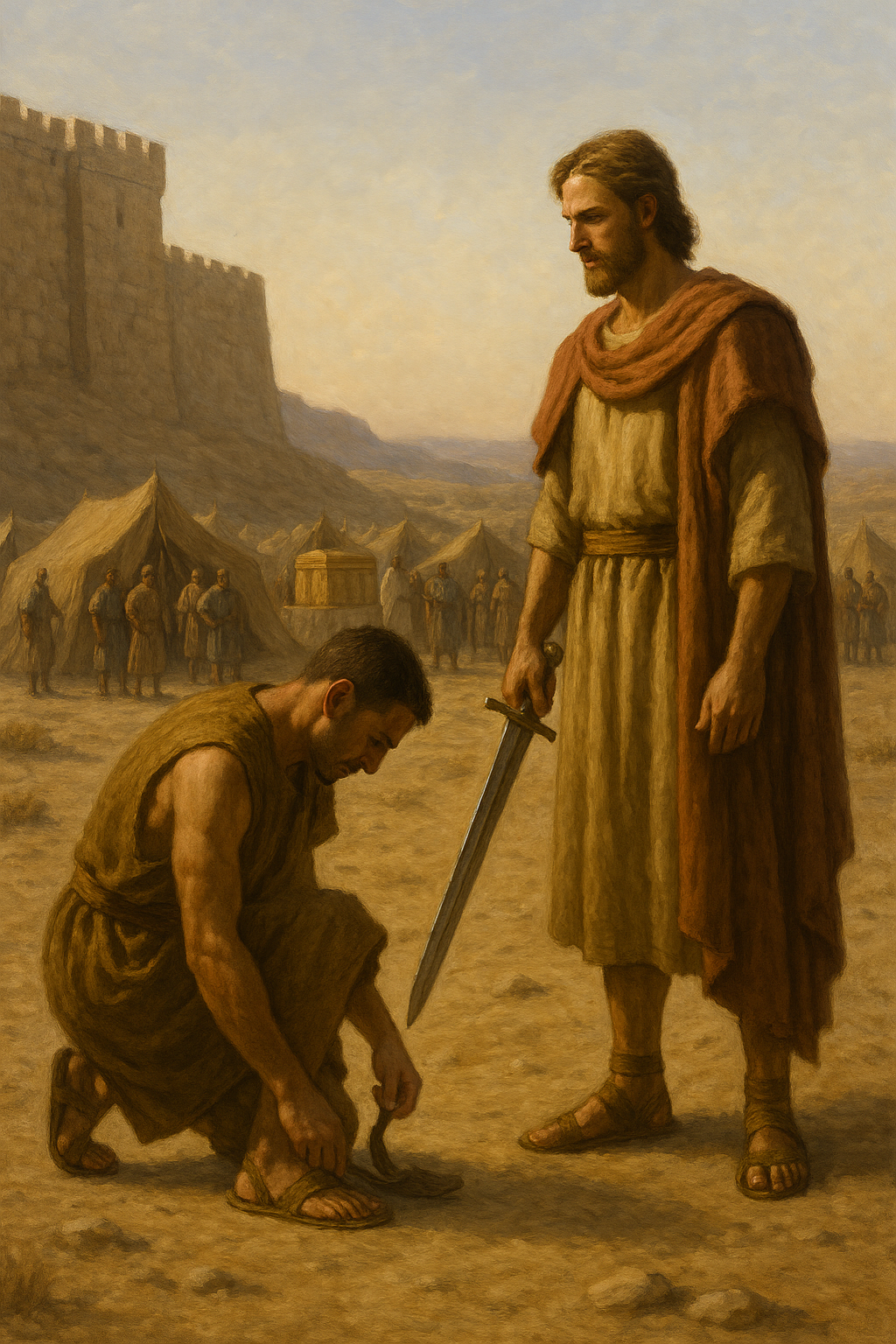
1. The Biblical Statement
“And they burnt the city with fire, and all that was therein: only the silver, and the gold, and the vessels of brass and of iron, they put into the treasury of the house of the LORD.”
— Joshua 6:24 (KJV)
 2. Jericho’s Construction Materials
Archaeological excavations (notably by Garstang and Kenyon) have confirmed that ancient Jericho was built largely of mudbrick — not solid hewn stone.
-
Stone foundation: The walls had stone retaining bases several feet high.
-
Mudbrick superstructure: Above those were thick sun-dried mudbricks held with straw and clay.
-
Wooden beams and roofs: Houses and gates were supported with timber, reeds, and pitch.
When Israel “burned the city,” these combustible materials — the wooden structures, doors, roof beams, furniture, and clay-brick housing — would have gone up in flames quickly.
The outer stonework (like the foundation) would remain, blackened or collapsed, while the entire interior became a smoking ruin of charred debris and ashes.
3. The Meaning of “Burning” in Biblical Usage
In Scripture, “burning a city” means to completely destroy by fire all that can be consumed, leaving only ruins. Examples:
-
Deuteronomy 13:16 — Cities of idolatry: “Thou shalt burn the city with fire, and all the spoil thereof every whit.”
-
Joshua 8:28 — “And Joshua burnt Ai, and made it an heap for ever, even a desolation.”
-
Judges 9:49, 52 — Cities and towers burned to root out the enemy.
It expresses total judgment, not literal combustion of stone.
4. Archaeological Confirmation
Excavated layers of Jericho show:
-
Collapsed mudbrick walls forming ramps at the base (matching Joshua 6:20).
-
A thick layer of ash and burned debris, consistent with widespread fire.
-
Storage jars full of charred grain — evidence the city was conquered suddenly and burned soon after harvest, as the text describes.
So “they burnt the city with fire” precisely fits both the linguistic and archaeological record.
5. Doctrinal and Symbolic Meaning
From a theological perspective:
-
The burning represented divine judgment — total cleansing of a cursed city (6:17–19).
-
The materials devoted to the LORD’s treasury (metal) survived the fire; everything else perished.
-
This foreshadows the biblical theme that what endures through fire is what belongs to God (cf. 1 Corinthians 3:13-15).
Summary:
Jericho was burned not by melting stone, but by consuming its mudbrick, timber, and thatch structures in a divinely commanded act of judgment. The fire left the city a heap of blackened ruins — the enduring testimony of obedience and holiness before the LORD.
How useful was this post?
Click on a star to rate it!
Average rating 0 / 5. Vote count: 0
No votes so far! Be the first to rate this post.
We are sorry that this post was not useful for you!
Let us improve this post!
Tell us how we can improve this post?
Comments are closed