Chapter Summaries
Ezra 1 — The Decree of Cyrus and the Return Begins
 The book opens with the LORD moving the heart of Cyrus king of Persia, fulfilling the word spoken earlier by Jeremiah. Cyrus issues a decree allowing the Jews to return to Jerusalem and rebuild “the house of the LORD God of Israel” (Ezra 1:3).
Those whose spirits God stirred—chiefly from Judah and Benjamin, along with priests and Levites—prepare to return. Cyrus restores the sacred vessels taken by Nebuchadnezzar from the temple. This chapter emphasizes God’s sovereignty over pagan rulers and His faithfulness to His promises.
Ezra 2 — The Register of the Returning Remnant
This chapter lists those who returned from Babylon with Zerubbabel and Jeshua. Families, priests, Levites, singers, porters, and Nethinims are carefully recorded. Some claiming priestly descent are excluded from priestly service due to lack of genealogical proof until a priest could consult with Urim and Thummim.
The people willingly give offerings for the rebuilding of the house of God. The emphasis is on order, identity, and purity of worship according to God’s revealed standards.
Ezra 3 — The Altar and the Foundation of the Temple
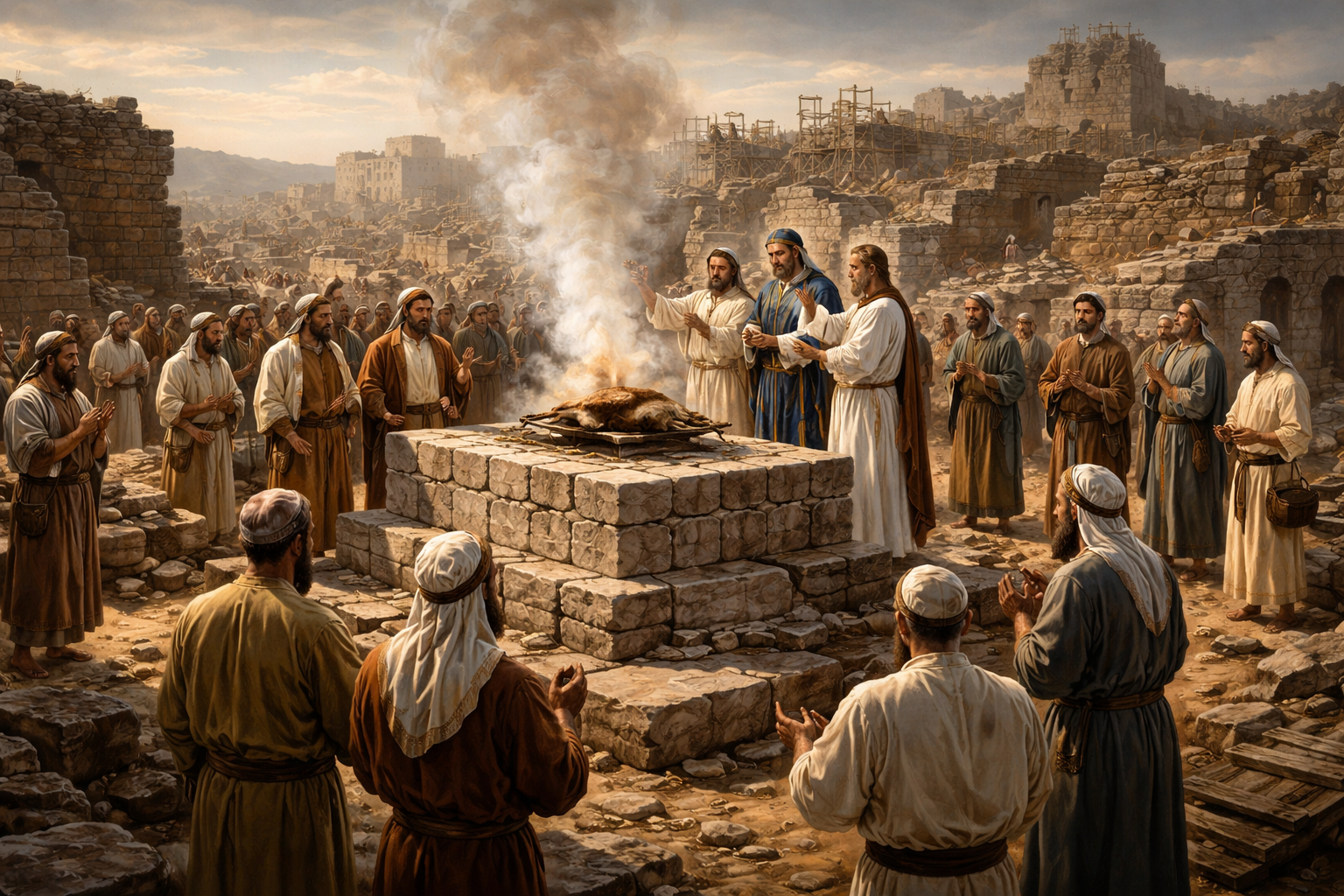
Upon arriving, the people set up the altar on its bases and resume burnt offerings “as it is written in the law of Moses the man of God” (Ezra 3:2). The foundation of the temple is laid amid great rejoicing—yet some older priests and Levites weep, remembering the former glory of Solomon’s temple.
This chapter highlights obedience to the Law, restored worship before full restoration of structures, and mixed emotions when God’s work begins again in weakness compared to former days.
Ezra 4 — Opposition to the Work
Adversaries—identified as the people of the land—offer to help build, claiming shared worship, but are rightly refused. Their worship was corrupt and syncretistic. When rejected, they actively oppose the work through discouragement, intimidation, and political accusation.
The chapter records official letters to Persian kings, resulting in a temporary halt to the rebuilding. The spiritual lesson is clear: God’s work will face opposition, especially when separation is maintained, but resistance does not negate God’s ultimate purpose.
Key People and Places
- Cyrus, King of Persia — God’s chosen instrument to permit the return and temple rebuilding.
- Zerubbabel — Davidic descendant and civil leader of the returnees.
- Jeshua (Joshua) the High Priest — Spiritual leader, restoring worship.
- Jerusalem — The city of God, lying in ruins yet chosen for restoration.
- The House of the LORD (Temple) — Central focus of the return; symbol of restored worship and covenant identity.
- The Adversaries of Judah and Benjamin — Syncretistic peoples opposing God’s work.
Main Doctrinal or Spiritual Themes
- God’s Sovereignty Over Nations — The LORD directs kings to fulfill His word.
- Faithfulness to God’s Promises — Prophecy fulfilled precisely and historically.
- Separation for Pure Worship — God’s work cannot be joined with false religion.
- Obedience to Scripture — Worship restored according to the Law, not innovation.
- Remnant Theology — God works through a faithful few, not through numbers alone.
- Opposition to God’s Work — Resistance is expected where obedience is present.
Practical Applications or Lessons
- God keeps His promises even after long seasons of judgment and delay.
- True revival begins with restored worship, not buildings or political power.
- Spiritual identity and doctrinal purity matter; sincerity alone is insufficient.
- God’s people must expect opposition when they separate from error.
- Faithfulness is required even when the work seems small compared to former glory.
Comments are closed