
Ezekiel 13–15 continues the LORD’s case against Jerusalem. The people were not merely politically foolish; they were spiritually corrupt. False prophets were comforting sinners with lies, false prophetesses were hunting souls, elders were hiding idols in their hearts, and Jerusalem itself was compared to a useless vine fit only for burning. These chapters show that God’s judgment was not rash or unjust. Judah had rejected truth, embraced deception, and become spiritually unprofitable.
Chapter Summaries
Ezekiel 13 — Judgment Against False Prophets and False Prophetesses
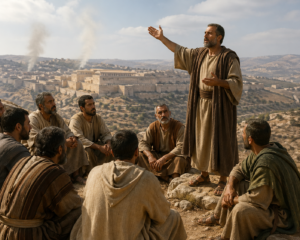 Ezekiel 13 condemns those who claimed to speak for God but had not received a word from Him. The LORD commands Ezekiel, “Son of man, prophesy against the prophets of Israel that prophesy” and say, “Hear ye the word of the LORD” (Ezekiel 13:2).
These false prophets are described as men who “follow their own spirit, and have seen nothing” (13:3). They were not true watchmen. Instead of standing in the breach for the house of Israel, they left the people exposed. God compares them to “foxes in the deserts” (13:4), creatures that roam ruins but do nothing to repair them.
Their sin was serious because they claimed divine authority for their own imaginations. They said, “The LORD saith,” when “the LORD hath not sent them” (13:6). This is one of the clearest Old Testament warnings against preaching man’s ideas as if they were God’s Word.
The image of the wall daubed with “untempered morter” is especially important (13:10). The people were building false hopes, and the prophets were coating those lies with religious language. They said, “Peace,” when there was no peace. Their message looked good on the surface, but it could not stand under the storm of God’s judgment. The LORD declares that overflowing showers, great hailstones, and a stormy wind would expose and destroy the wall (13:11–13).
This is a solemn picture of false religion. Anything not built on truth will fall. A ministry, church, nation, or personal life built on flattering words rather than God’s Word is like a weak wall covered with cheap plaster.
The second part of the chapter condemns the women who prophesied falsely. They are accused of sewing “pillows to all armholes” and making “kerchiefs upon the head of every stature to hunt souls” (13:18). The exact details of their practice are debated, but the meaning is clear: they used deceptive religious devices to manipulate people spiritually. They made the righteous sad and strengthened the hands of the wicked (13:22).
God says, “I will deliver my people out of your hand” (13:23). False teachers may deceive for a season, but they cannot overrule the LORD. God defends His truth and His people.
Doctrinal background:
This chapter strongly supports the Baptist emphasis on the authority and sufficiency of Scripture. No preacher, teacher, prophet, or religious leader has the right to replace God’s Word with personal imagination, emotional manipulation, or popular opinion. True preaching must say what God has said, not what men wish God had said.
Ezekiel 14 — Idols in the Heart and the Certainty of Judgment
Ezekiel 14 begins with “certain of the elders of Israel” sitting before Ezekiel (14:1). Outwardly, they appeared to be seeking the prophet. Inwardly, however, God saw the truth: “These men have set up their idols in their heart” (14:3).
This is one of the strongest passages in Scripture on hidden idolatry. These elders were not necessarily carrying physical idols in their hands at that moment, but they had enthroned idols within. God asks, “Should I be enquired of at all by them?” (14:3). They wanted access to God’s prophet while refusing surrender to God’s authority.
The LORD calls them to repentance: “Repent, and turn yourselves from your idols; and turn away your faces from all your abominations” (14:6). The command is direct. God does not offer counseling for idolatry; He commands repentance.
The chapter then warns that if a man comes before the LORD while clinging to idols, God will answer him according to the multitude of his idols (14:4). This does not mean God approves the idolater’s desire. It means God may deal with him in judgment according to the deceit he has chosen.
The prophet himself is also warned. If a prophet is deceived and speaks falsely, judgment will fall upon both the false prophet and the inquirer (14:9–10). God holds religious leaders accountable, but He also holds hearers accountable. A man cannot excuse rebellion by saying he followed a false teacher willingly.
The second major section of the chapter teaches the certainty of Jerusalem’s judgment. God names three righteous men: “Noah, Daniel, and Job” (14:14). Even if these three were present, they would “deliver but their own souls by their righteousness.” This is repeated several times concerning famine, noisome beasts, the sword, and pestilence.
The point is not that these men earned salvation by works. Rather, they were known examples of genuine righteousness and faithfulness. Yet even their presence would not spare an unrepentant nation from divine judgment. Noah could not save the pre-flood world. Job could not save his children once judgment had come. Daniel, who was likely alive in Ezekiel’s day, could not rescue rebellious Jerusalem by his own righteousness.
The chapter ends with a note of vindication. A remnant would come forth, and the exiles would “be comforted concerning the evil” God brought upon Jerusalem when they saw the ways and doings of those who escaped (14:22–23). They would understand that God had not judged without cause.
Doctrinal background:
This chapter teaches personal responsibility before God. Godly relatives, faithful preachers, national heritage, or religious association cannot save a rebellious soul. Every man must repent and deal honestly with God. It also teaches that hidden idolatry is as offensive to God as open idolatry.
Ezekiel 15 — Jerusalem as the Useless Vine
Ezekiel 15 is short but powerful. The LORD gives Ezekiel a parable about the vine tree. He asks what the vine wood is good for compared to other trees (15:2). Can men take wood from it “to do any work”? Can they make a peg from it “to hang any vessel thereon”? (15:3).
The answer is no. A vine is valuable only if it bears fruit. If it does not bear fruit, its wood is not useful for building. It is fit for the fire.
This is the heart of the chapter: Jerusalem had failed in her purpose. Israel was meant to bear fruit unto God, to be a holy nation, and to witness to the LORD among the nations. Instead, Jerusalem had become spiritually barren. Therefore the LORD says, “Behold, it is cast into the fire for fuel” (15:4).
The imagery becomes even more severe. If the vine was already partly burned, it was even less useful afterward (15:5). This points to Jerusalem’s weakened condition after previous judgments. The city had already suffered, yet instead of repenting, it remained rebellious.
God declares, “I will set my face against them” (15:7). Though they escape one fire, another fire will devour them. This shows the inescapable nature of God’s judgment when a people persist in rebellion.
The chapter closes with the reason: “because they have committed a trespass” (15:8). Jerusalem’s destruction was not accidental, political only, or unfair. It was moral and spiritual judgment from a holy God.
Doctrinal background:
The vine imagery reminds believers that privilege brings responsibility. Israel had covenant privilege, temple worship, priesthood, sacrifices, and prophets. Yet privilege without obedience became grounds for greater judgment. In the New Testament, the Lord Jesus teaches that fruitfulness is the evidence of true discipleship. A fruitless religious profession is a fearful thing.
Key People and Places
Ezekiel
The prophet of the captivity, called by God to speak hard truth to the exiles in Babylon. In these chapters, he exposes false prophets, condemns hidden idolatry, and explains why Jerusalem must be judged.
The False Prophets of Israel
Religious leaders who claimed, “The LORD saith,” though God had not sent them. They preached peace when there was no peace and strengthened the people in false confidence.
The False Prophetesses
Women who used deceptive religious practices to “hunt souls.” They discouraged the righteous and encouraged the wicked. God promised to tear away their devices and deliver His people.
The Elders of Israel
Men who sat before Ezekiel outwardly but had idols in their hearts inwardly. Their presence before the prophet did not make them right with God.
Noah
A righteous man from the days before the flood. In Ezekiel 14, he is used as an example of personal righteousness that could not deliver a rebellious nation.
Daniel
A faithful servant of God, likely already known among the exiles. He is named with Noah and Job as an example of righteousness. Even Daniel’s righteousness could not spare Jerusalem from judgment.
Job
A righteous sufferer known for fearing God and eschewing evil. His inclusion emphasizes that even the most faithful men could not save an impenitent people by their own righteousness.
Jerusalem
The central earthly focus of these chapters. Jerusalem had become corrupt through false religion, idolatry, and trespass. In chapter 15, the city is compared to a fruitless vine fit for burning.
Israel / House of Israel
The covenant people who had turned from the LORD. These chapters deal especially with their false leaders, idolatrous elders, and corrupt national condition.
Main Doctrinal or Spiritual Themes
1. The Authority of God’s Word
Ezekiel 13 sharply condemns those who speak in God’s name without God’s message. The false prophets “have seen vanity and lying divination” (13:6). This is a warning against preaching opinions, dreams, trends, psychology, politics, or tradition as if they were Scripture.
For the believer, the question must always be: What saith the Scripture? True preaching does not create truth; it declares truth.
2. The Danger of False Peace
The false prophets said, “Peace,” when there was no peace (13:10). This is one of the great dangers of false religion. It comforts people without conversion, assures people without repentance, and promises safety without obedience.
A preacher who hides sin, avoids judgment, and refuses to call men to repentance is not being loving. He is daubing a weak wall with untempered mortar.
3. Hidden Idolatry
Ezekiel 14 shows that idols can be “in the heart” (14:3). A man may appear religious while inwardly serving something else. An idol is not only a carved image. It can be anything loved, trusted, obeyed, or desired above God.
This applies directly today. Money, reputation, pleasure, family approval, comfort, ministry success, politics, entertainment, or self-will can become idols if they take God’s rightful place.
4. Personal Responsibility Before God
Noah, Daniel, and Job could deliver only their own souls (14:14, 20). Godly men cannot repent for others. Parents cannot believe for their children. A pastor cannot obey for his church members. A nation cannot be preserved merely because a few righteous men once lived there.
God deals with individuals personally. Every soul must answer to Him.
5. God’s Judgment Is Righteous
Ezekiel 14 and 15 make clear that Jerusalem’s fall was deserved. The LORD says He would not act without cause. The people had committed abominations and trespass. God’s judgment may seem severe to man, but it is always righteous.
The destruction of Jerusalem was not evidence that God had failed. It was evidence that God keeps His Word.
6. Religious Privilege Without Fruit Invites Judgment
The vine in Ezekiel 15 had one purpose: fruitfulness. If it bore no fruit, it was useless for building and fit only for burning. Jerusalem had great spiritual privilege but had become barren.
This is a warning to churches and believers. Sound doctrine, church attendance, Bible possession, and religious heritage are blessings, but they must produce obedience, holiness, faith, and fruit.
7. God Defends His People From Spiritual Deception
In Ezekiel 13, God promises to deliver His people from those who hunt souls and deceive them. False teachers may prosper for a time, but God sees their work. He will expose lies and vindicate truth.
Practical Applications or Lessons
1. Do Not Trust Every Religious Voice
Not everyone who says, “The LORD saith,” speaks for the LORD. The believer must test every message by Scripture. Sincerity, confidence, popularity, and emotional power do not prove a message is true.
A faithful Christian should ask:
Does this agree with the Bible?
Does it exalt God’s holiness?
Does it call sin what God calls sin?
Does it point men to repentance and obedience?
2. Beware of Preaching That Never Confronts Sin
The false prophets made people comfortable in danger. They spoke peace while judgment was near. That kind of ministry is still dangerous today.
Faithful preaching should include grace, mercy, comfort, and hope, but it must also include sin, judgment, repentance, holiness, and obedience. A doctor who refuses to diagnose disease is not kind. A preacher who refuses to expose sin is not faithful.
3. Deal With Heart Idols Honestly
The elders in Ezekiel 14 looked respectable, but God saw their hearts. This is a searching lesson. A man may sit under preaching, serve in church, give offerings, and speak religious words while hiding idols within.
Believers should pray like David, “Search me, O God, and know my heart” (Psalm 139:23). Anything that competes with God must be cast down.
4. Do Not Use Religion While Refusing Repentance
The elders wanted access to God’s prophet while keeping their idols. Many today want God’s help, God’s blessings, and God’s answers while refusing God’s authority.
The biblical order is not: “Bless me while I keep my sin.”
The biblical order is: “Repent, and turn yourselves from your idols” (Ezekiel 14:6).
5. Righteous Examples Cannot Substitute for Personal Obedience
Noah, Daniel, and Job were righteous men, but they could not save Jerusalem by their righteousness. A person is not right with God because he had godly parents, a faithful pastor, a Christian spouse, or a Baptist background.
Each person must personally repent, believe, and walk with God.
6. Religious Activity Must Produce Fruit
The vine was judged because it was fruitless. God does not desire empty profession. He desires real fruit: faith, obedience, holiness, love for truth, separation from sin, and service that honors Him.
A church may have buildings, programs, music, history, and reputation, yet be spiritually barren. The question is not merely, “Are we active?” The question is, “Are we fruitful unto God?”
7. False Security Will Collapse Under God’s Storm
The wall daubed with untempered mortar looked acceptable until the storm came. False doctrine often appears comforting until it is tested by death, judgment, suffering, or eternity.
Only truth can stand. A life built on God’s Word will endure when man-made confidence collapses.
8. God’s Warnings Are Merciful
These chapters are severe, but they are also merciful. God exposes false prophets, heart idols, and fruitlessness before final judgment falls. A warning from God is an opportunity to repent.
The loving response is not to resent conviction but to receive it. When God uncovers sin, He is giving space to turn back to Him.
Conservative Baptist Closing Thought
Ezekiel 13–15 is a powerful warning against false religion, hidden idolatry, and fruitless profession. God’s people must not be satisfied with religious appearance. The LORD requires truth in preaching, purity in the heart, and fruit in the life.
False prophets may promise peace, but only God’s truth can give real peace. Idols may be hidden from men, but they are open before God. Jerusalem’s privileges could not save her when she became barren and rebellious.
The faithful lesson is plain: hear God’s Word, reject falsehood, repent of idols, and bear fruit worthy of a people who belong to the LORD.
Comments are closed