
In 1 Chronicles 11, when David would not drink the water his men bought him, why did that offend the men that put their lives on the line to get him that water?
 This goes to honor, intention, and conscience, not rejection.
The event (KJV context)
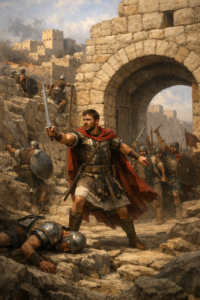
In 1 Chronicles 11:17–19 (KJV), three mighty men break through the Philistine host to draw water for David from the well of Bethlehem. When they bring it to him:
“David would not drink of it, but poured it out to the LORD,
And said, My God forbid it me, that I should do this: shall I drink the blood of these men that have put their lives in jeopardy? … Therefore he would not drink it.”
Why this felt offensive to the men
The text never says the men verbally complained, but humanly, their act could feel dishonored for three reasons:
- Their gift was costly
They risked their lives intentionally for David. Refusing the water could appear to reject the sacrifice behind it. - The water symbolized loyalty
This was not about thirst — it was devotion. Turning it down could be misunderstood as devaluing that devotion. - Honor culture
In ancient warrior culture, a leader accepting such a gift validated the men’s courage and loyalty.
So emotionally, a refusal could sting.
Why David refused — and why it was actually higher honor
David’s refusal was not rejection; it was reverence.
- He saw their risk as sacred
He calls it “their blood.” In David’s conscience, to drink it casually would cheapen the life-risk they took. - He redirected the honor to God
By pouring it out “to the LORD,” David declared:- Their courage was not wasted
- Their act was worthy of God, not mere refreshment
- He protected them from sinful leadership
David refused to enjoy a personal comfort that was purchased by another man’s extreme danger.
Why the men were ultimately honored, not insulted
The passage ends with this statement:
“These things did these three mightiest.”
The Spirit of God records their deed because David treated it as holy. If David had simply drunk the water, the act might have passed unnoticed. Instead, it became Scripture.
Summary (plainly)
- Did it offend them emotionally? It could have, at first glance.
- Did David intend offense? No — the opposite.
- What was David saying?
“Your lives are too valuable for me to treat this lightly. This belongs to God.”
In conservative Baptist terms:
David showed that leaders must never benefit casually from the sacrifices of faithful men, and that the highest way to honor devotion is sometimes to refuse personal gain and give the glory to God.
Comments are closed