Chapter Summaries
Ecclesiastes 5
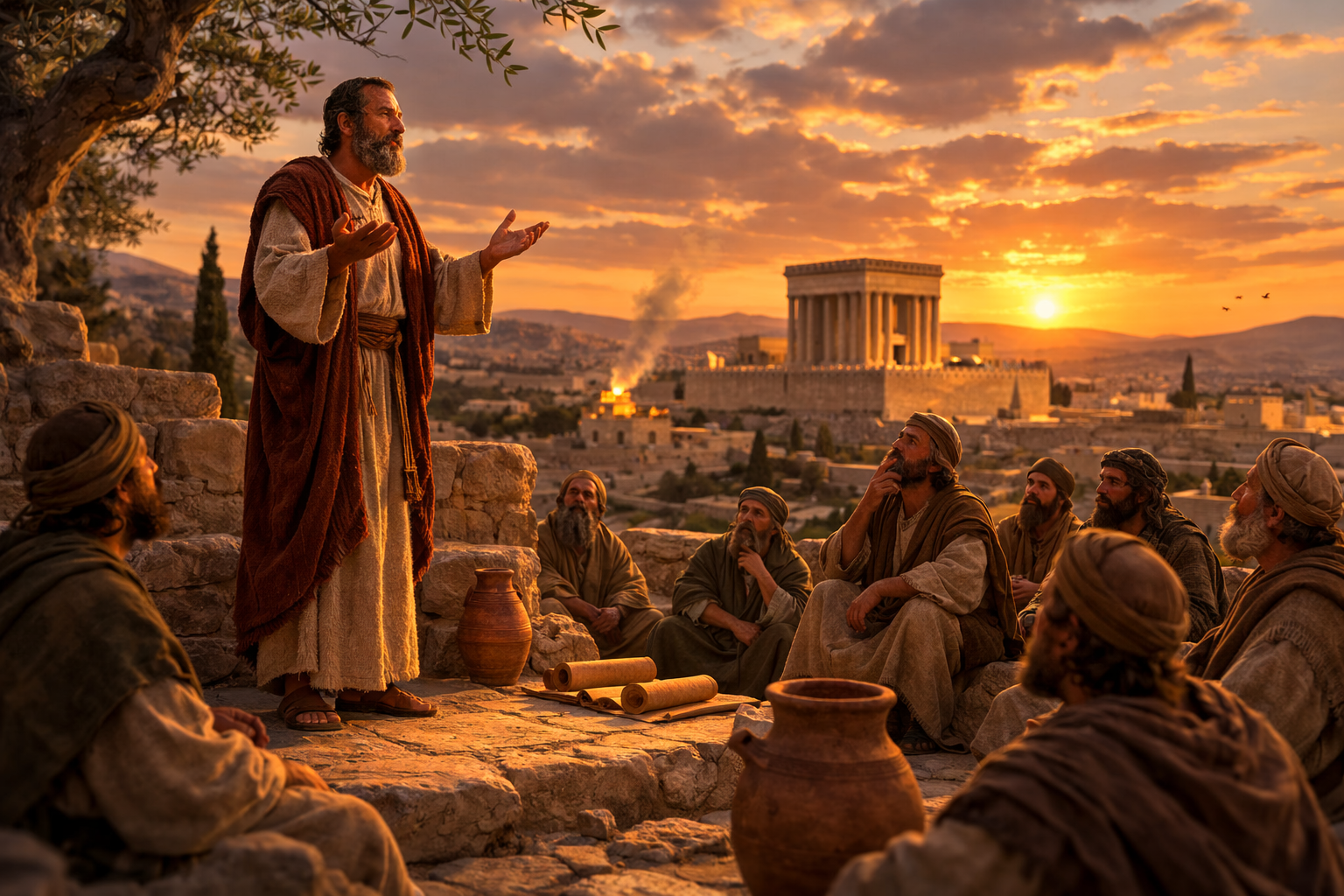
 Solomon begins with instruction about reverence in approaching God. He warns, “Keep thy foot when thou goest to the house of God, and be more ready to hear, than to give the sacrifice of fools” (5:1). The emphasis is on careful worship and humility before the Lord. Many speak rashly before God, but Solomon reminds the reader, “God is in heaven, and thou upon earth: therefore let thy words be few” (5:2).
A major theme in the chapter concerns vows made to God. Solomon warns that vows must be taken seriously: “Better is it that thou shouldest not vow, than that thou shouldest vow and not pay” (5:5). In the Old Testament context, vows were solemn commitments before God, and failure to keep them demonstrated irreverence and hypocrisy.
Solomon then shifts to the subject of oppression and injustice. When men see oppression of the poor and corruption in government, they should not be surprised, because fallen human authority structures often operate unjustly (5:8). Even kings depend upon the productivity of the land and the labor of others (5:9).
The preacher again examines the vanity of riches. Wealth never satisfies the soul: “He that loveth silver shall not be satisfied with silver” (5:10). As riches increase, so do those who consume them. The rich often suffer anxiety and sleeplessness (5:12). Wealth can even be lost through misfortune, leaving nothing for one’s children (5:13–14).
Solomon reminds the reader of life’s ultimate reality: a man leaves this world exactly as he entered it (5:15). Therefore earthly wealth cannot provide lasting fulfillment.
The chapter concludes with Solomon acknowledging one of God’s mercies in a fallen world: when a man can enjoy the fruits of his labor, it is a gift from God (5:18–20). Contentment with God’s provision is presented as a blessing that comes from the Lord.
Ecclesiastes 6
Chapter 6 continues the examination of wealth and dissatisfaction. Solomon describes a tragic situation in which a man possesses riches, honor, and long life, yet lacks the ability to enjoy them (6:2). Others consume what he has accumulated.
Solomon paints an extreme example: a man might have a hundred children and live many years, yet if his soul is not satisfied with good, his life remains empty. In fact, Solomon declares that an untimely birth may be better than such a life (6:3–5). This stark imagery highlights the futility of life without true satisfaction.
The chapter stresses that human desires are never fully satisfied. “All the labour of man is for his mouth, and yet the appetite is not filled” (6:7). Wisdom and foolishness alike cannot ultimately fill the void in the human heart apart from God.
Solomon concludes with a recognition of human limitation. Man cannot contend with God or change the course of divine providence (6:10). Many things increase vanity, and human beings do not know what is best for them or what will come after them (6:11–12). This prepares the reader for Solomon’s later emphasis on fearing God.
Ecclesiastes 7
This chapter shifts toward wisdom sayings, similar in structure to the book of Proverbs. Solomon contrasts values that seem counterintuitive but reflect deeper wisdom.
He states, “A good name is better than precious ointment; and the day of death than the day of one’s birth” (7:1). The point is not to glorify death but to emphasize the enduring value of character over temporary pleasures.
Solomon explains that sorrow can produce wisdom:
“It is better to go to the house of mourning, than to go to the house of feasting” (7:2). Reflection on mortality sobers the heart and encourages spiritual wisdom.
The preacher warns against nostalgia and impatience: “Say not thou, What is the cause that the former days were better than these?” (7:10). True wisdom accepts God’s providence in both prosperity and adversity (7:14).
Solomon also discusses moral balance and humility. He cautions against self-righteous pride and reckless wickedness (7:16–17). The teaching is not moral compromise but a warning against extremes rooted in pride.
A significant doctrinal statement appears in verse 20:
“For there is not a just man upon earth, that doeth good, and sinneth not.”
This affirms the universal sinfulness of humanity, a truth later fully developed in the New Testament (Romans 3).
The chapter ends with Solomon acknowledging that God made man upright, but humanity has pursued many sinful schemes (7:29).
Ecclesiastes 8
Chapter 8 examines wisdom in relation to authority and justice. Solomon begins by describing the value of wisdom, which can change a person’s countenance (8:1).
He instructs obedience to the king’s command because of the oath of God (8:2). In ancient Israel and surrounding nations, loyalty to the king involved solemn covenant obligations.
Solomon recognizes that rulers possess real authority: “Where the word of a king is, there is power” (8:4). Wisdom teaches discernment about when and how to act in relation to authority.
The preacher again confronts the troubling reality that justice is not always immediate. Wicked people may seem to prosper while righteous people suffer (8:14). Because judgment is not executed quickly, sinners may become emboldened (8:11).
Yet Solomon affirms that God ultimately governs all things. It will be well with those who fear God (8:12), but it will not ultimately be well with the wicked.
The chapter closes by acknowledging the limits of human understanding. Even the wisest individuals cannot fully grasp God’s work in the world (8:16–17). This reinforces the need for humility before divine sovereignty.
Key People and Places
Solomon (The Preacher)
The son of David and king of Israel, traditionally understood as the author. Writing from the perspective of one who experienced immense wealth, power, and knowledge.
The House of God
Likely referring to the temple in Jerusalem or the place of worship where vows and offerings were made.
The King / Civil Authorities
Referenced particularly in chapter 8, representing earthly government and authority structures under God’s providence.
Main Doctrinal or Spiritual Themes
Reverence Toward God
True worship requires humility, careful speech, and sincerity before the Lord (Eccl. 5:1–2).
The Vanity of Material Wealth
Money and possessions cannot satisfy the human soul or provide ultimate meaning (5:10; 6:7).
Human Sinfulness
Scripture affirms that no person is completely righteous (7:20), pointing to the universal need for redemption.
God’s Sovereignty and Providence
Human beings cannot fully comprehend God’s purposes, yet His rule governs all events (8:17).
The Fear of God
Despite life’s uncertainties, those who fear God will ultimately be blessed (8:12).
Human Limitation
Man’s knowledge, power, and wealth cannot overcome the boundaries set by God.
Practical Applications or Lessons
Approach God with reverence.
Believers should not treat worship lightly. Careless words and empty promises dishonor the Lord.
Keep commitments made before God.
Spiritual integrity requires faithfulness in vows, promises, and commitments.
Do not trust riches for satisfaction.
Money cannot fill the spiritual void of the human heart. True contentment comes from God.
Accept both prosperity and adversity from God’s hand.
Faith recognizes that God works through both joyful and difficult seasons.
Guard your character.
A good name and righteous reputation have greater value than temporary pleasures.
Recognize the limits of human understanding.
Not every injustice or mystery of life can be explained in this life, but believers can trust the righteousness of God.
Fear God rather than envy the prosperity of the wicked.
Though evil may seem to prosper temporarily, God’s justice will ultimately prevail.
Comments are closed