
These psalms form the concluding section of the Psalter. They move from deep personal distress (Psalm 143) to universal praise (Psalm 150). The progression is doctrinally rich: repentance, dependence, covenant mercy, divine deliverance, righteous rule, and finally triumphant worship.
Chapter Summaries
Psalm 143
 Historical Setting:
A Psalm of David. Likely written during a period of persecution (possibly fleeing from Saul or during Absalom’s rebellion).
Flow of the Psalm:
David begins with urgent supplication:
“Hear my prayer, O LORD, give ear to my supplications: in thy faithfulness answer me, and in thy righteousness” (v. 1).
He acknowledges human depravity:
“For in thy sight shall no man living be justified” (v. 2).
This is foundational Baptist doctrine—justification is not by works but by God’s mercy (cf. Romans 3).
David describes oppression:
“The enemy hath persecuted my soul” (v. 3).
Yet he remembers God’s former works (v. 5) and expresses thirst for God:
“My soul thirsteth after thee, as a thirsty land” (v. 6).
He prays for guidance:
“Cause me to know the way wherein I should walk” (v. 8).
He concludes with submission to God’s will:
“Teach me to do thy will; for thou art my God” (v. 10).
Doctrinal Note:
This psalm emphasizes total dependence upon God’s mercy and leadership.
Psalm 144
Theme: The LORD as Warrior and Deliverer.
David blesses the LORD:
“Blessed be the LORD my strength, which teacheth my hands to war” (v. 1).
God is described as:
- “my goodness”
- “my fortress”
- “my high tower”
- “my deliverer”
- “my shield” (v. 2)
David marvels at man’s frailty:
“Man is like to vanity: his days are as a shadow that passeth away” (v. 4).
He asks God to “bow thy heavens” and intervene (v. 5).
The psalm closes with covenant blessing language:
“Happy is that people, that is in such a case: yea, happy is that people, whose God is the LORD” (v. 15).
Application:
National blessing flows from covenant relationship with the true God.
Psalm 145
Title: “David’s Psalm of praise.”
This is an acrostic psalm celebrating the greatness of God.
“I will extol thee, my God, O king” (v. 1).
God’s attributes emphasized:
- Greatness (v. 3)
- Graciousness (v. 8)
- Compassion (v. 8)
- Faithfulness (v. 13)
- Righteousness (v. 17)
“The LORD is gracious, and full of compassion; slow to anger, and of great mercy” (v. 8).
It emphasizes generational testimony:
“One generation shall praise thy works to another” (v. 4).
This aligns with strong conservative Baptist emphasis on discipleship and faithful transmission of truth.
Psalm 146
The first of the “Hallelujah” psalms.
“Praise ye the LORD. Praise the LORD, O my soul” (v. 1).
Warning against misplaced trust:
“Put not your trust in princes, nor in the son of man, in whom there is no help” (v. 3).
God is Creator (v. 6), defender of the oppressed, feeder of the hungry, opener of blind eyes (vv. 7–8).
“The LORD shall reign for ever” (v. 10).
This psalm contrasts human weakness with God’s eternal sovereignty.
Psalm 147
Likely written after the return from Babylonian captivity.
“The LORD doth build up Jerusalem” (v. 2).
God:
- Heals the broken in heart (v. 3)
- Counts the stars (v. 4)
- Sends snow, frost, and ice (vv. 16–17)
- Sends His word (v. 19)
“He sheweth his word unto Jacob” (v. 19).
This emphasizes special revelation — a key doctrine.
Psalm 148
Universal call to praise.
Praise is commanded from:
- Angels (v. 2)
- Sun, moon, stars (v. 3)
- Sea creatures (v. 7)
- Kings and people (v. 11)
“Let them praise the name of the LORD: for his name alone is excellent” (v. 13).
Creation exists for the glory of God.
Psalm 149
Praise connected with holiness and judgment.
“Sing unto the LORD a new song” (v. 1).
The saints are to rejoice (v. 5) yet also execute judgment (vv. 6–9).
This anticipates millennial themes where God’s people share in His righteous reign.
Psalm 150
The grand doxology of the Psalter.
“Praise ye the LORD.”
Praise is commanded:
- In the sanctuary (v. 1)
- For His mighty acts (v. 2)
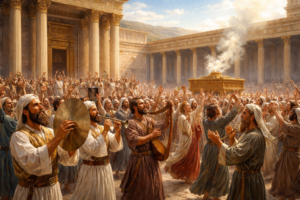
- With instruments (vv. 3–5)
- By everything that hath breath (v. 6)
“Let every thing that hath breath praise the LORD. Praise ye the LORD.”
The Bible’s hymnbook ends in triumphant worship.
Key People and Places
David – King of Israel, author of Psalms 143–145. A man after God’s own heart, model of repentance and praise.
Jerusalem – Mentioned in Psalm 147; center of covenant worship.
Jacob / Israel – Covenant people to whom God revealed His word (Psalm 147:19).
The Nations – Referenced broadly in Psalms 144, 148, 149 as subjects of God’s rule.
Main Doctrinal or Spiritual Themes
1. Human Depravity and Need of Mercy
“No man living be justified” (Ps. 143:2).
Salvation is by grace, not works.
2. Divine Sovereignty
“The LORD shall reign for ever” (Ps. 146:10).
3. Covenant Faithfulness
God’s mercy and faithfulness endure to all generations (Ps. 145).
4. Separation from Worldly Trust
“Put not your trust in princes” (Ps. 146:3).
5. Praise as the Chief Duty of Man
All creation exists to glorify God (Ps. 148–150).
6. Righteous Judgment
Psalm 149 anticipates the righteous execution of divine justice.
Practical Applications or Lessons
- Seek God Early in Distress
Like David in Psalm 143, believers must run to God before human solutions. - Remember Past Deliverances
Meditating on God’s former works strengthens present faith. - Trust God Over Political Power
Psalm 146 teaches confidence in eternal sovereignty over earthly rulers. - Pass Down Truth to the Next Generation
Psalm 145 emphasizes generational testimony. - Live a Life of Continual Praise
Praise is not situational but constant. - Anticipate Christ’s Righteous Reign
Psalm 149 reminds believers that justice will ultimately prevail. - Glorify God with All You Have
Psalm 150 teaches comprehensive worship — heart, voice, and substance.
Comments are closed