Chapter Summaries
2 Kings 24 — The Final Decline of Judah
 Jehoiakim’s Vassalage and Rebellion (24:1–7):
Nebuchadnezzar king of Babylon comes against Judah, and Jehoiakim becomes his servant. After three years, Jehoiakim rebels. The LORD sends bands of the Chaldees, Syrians, Moabites, and Ammonites “according to the word of the LORD,” fulfilling earlier prophetic warnings. This judgment is explicitly tied to Judah’s sins, especially those of Manasseh, including innocent bloodshed.- Jehoiachin’s Short Reign and First Deportation (24:8–16):
Jehoiachin reigns only three months before surrendering to Babylon. Nebuchadnezzar carries away the king, the queen mother, princes, mighty men, craftsmen, and treasures from the house of the LORD and the king’s house. This marks a decisive stripping of Judah’s strength and independence. - Zedekiah Installed as Puppet King (24:17–20):
Nebuchadnezzar sets Mattaniah on the throne, changing his name to Zedekiah. Zedekiah reigns eleven years and “did that which was evil in the sight of the LORD.” His rebellion against Babylon is ultimately rebellion against God’s chastening hand.
Background Note:
These events occur in stages (605, 597, 586 BC), showing God’s long-suffering patience before final judgment, while also demonstrating that divine warnings, when ignored, lead to escalating discipline.
2 Kings 25 — The Fall of Jerusalem and the End of the Kingdom
- Siege and Famine (25:1–3):
Babylon lays siege to Jerusalem for about eighteen months. The famine becomes severe, showing the complete helplessness of the city once God’s protection is withdrawn. - Capture of Zedekiah and Judgment (25:4–7):
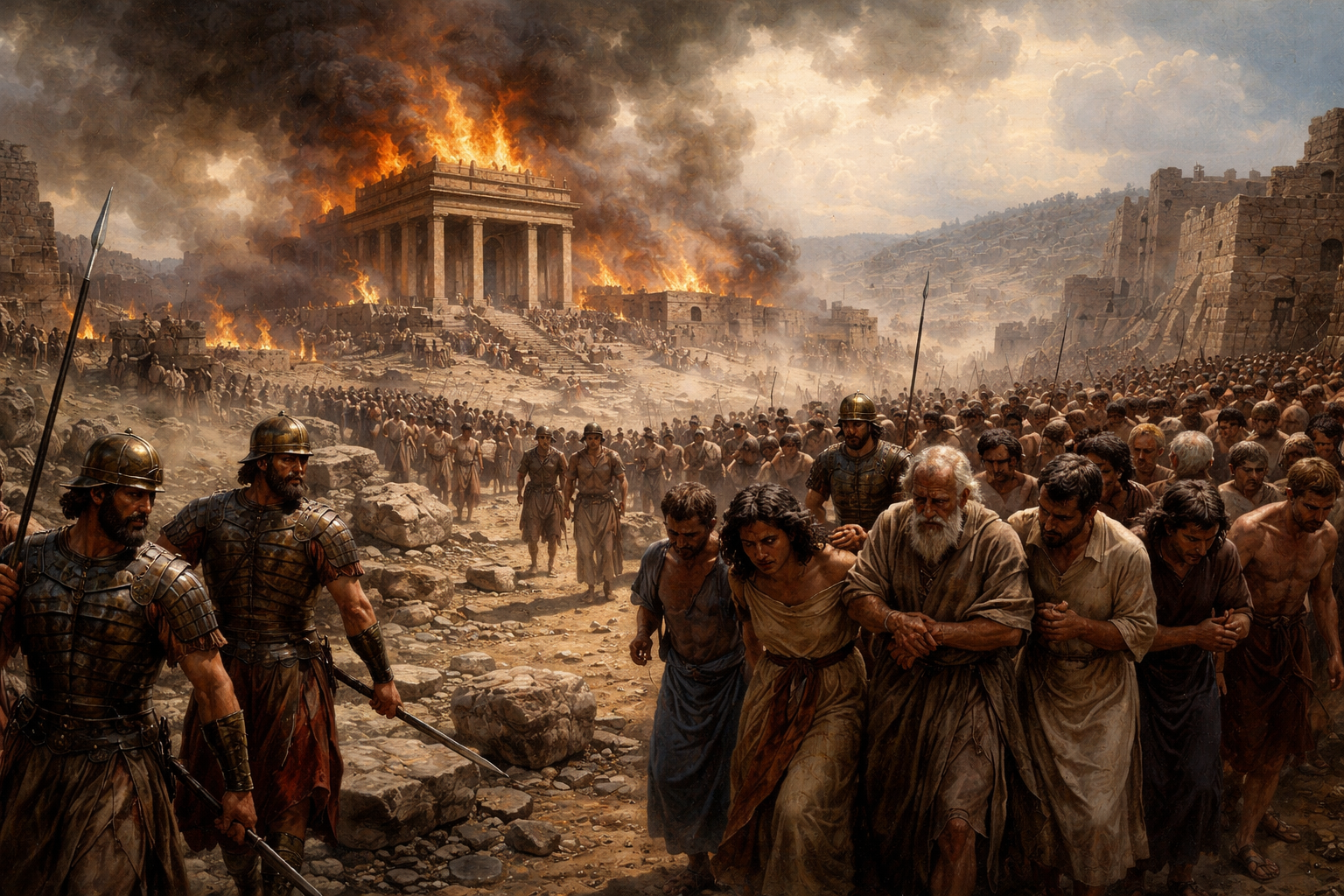
Zedekiah flees but is captured. His sons are slain before his eyes, then his eyes are put out, and he is bound in chains and taken to Babylon—an especially sobering fulfillment of prophetic warnings. - Destruction of Jerusalem and the Temple (25:8–21):
Nebuzaradan burns the house of the LORD, the king’s house, and all Jerusalem. The walls are broken down. The sacred vessels are taken away. The leading men are executed. The Davidic kingdom ceases to function on the throne in Jerusalem. - Gedaliah and the Remnant (25:22–26):
Gedaliah is appointed governor over the poor left in the land, but he is assassinated. Fear drives the remaining people to Egypt, contrary to God’s counsel given through the prophets. - Jehoiachin’s Release (25:27–30):
In Babylon, Evil-merodach releases Jehoiachin from prison and gives him a place of honor. The book closes with a small but real note of hope—David’s line is not forgotten.
Doctrinal Note:
Though the kingdom falls, God’s covenant promises are not annulled. Judgment does not cancel redemption.
Key People and Places
- Nebuchadnezzar — King of Babylon; instrument of God’s judgment on Judah.
- Jehoiakim — King of Judah who rebels and brings judgment upon the nation.
- Jehoiachin — King taken captive to Babylon; later shown mercy.
- Zedekiah — Last king of Judah; rebellious, disobedient, and judged severely.
- Nebuzaradan — Captain of the Babylonian guard who destroys Jerusalem.
- Gedaliah — Governor appointed over the remnant; assassinated.
- Jerusalem — The city of David; destroyed because of persistent sin.
- The Temple (House of the LORD) — Burned and plundered, marking the end of Israel’s sacrificial worship at that time.
- Babylon — Center of Gentile world power and place of Judah’s captivity.
Main Doctrinal or Spiritual Themes
- The Certainty of Divine Judgment:
God’s warnings through prophets are never empty threats. - National Sin Has Consequences:
Persistent idolatry, injustice, and rejection of God’s word bring corporate judgment. - God’s Sovereignty Over Nations:
Babylon acts, but only within God’s determined will. - The Faithfulness of God’s Word:
Everything happens “according to the word of the LORD.” - Hope Beyond Judgment:
The preservation of Jehoiachin points forward to God’s continuing covenant purposes.
Practical Applications or Lessons
- Delayed judgment is not canceled judgment. God is patient, but sin unrepented will be addressed.
- Leadership matters. Wicked rulers lead people into ruin.
- Religious privilege does not guarantee protection. The temple itself could not shield Judah from judgment.
- God disciplines those He has chosen. Chastening is a mark of ownership, not abandonment.
- Even in ruin, God preserves hope. The Davidic line continues, ultimately fulfilled in Christ.
Comments are closed