CHAPTER SUMMARIES
2 Samuel 8 — David’s Victories and Establishment of His Kingdom
David, now firmly established as king, is described as conquering surrounding hostile nations. He defeats the Philistines, Moab, Zobah, Syria, and Edom. The text repeatedly emphasizes that “the LORD preserved David whithersoever he went” (v. 6, 14), showing divine endorsement of righteous leadership.
David dedicates the spoils of war unto the LORD, demonstrating humility and recognizing God as the true source of victory. The chapter concludes with a summary of David’s administration, showing a well-ordered kingdom marked by justice: “David executed judgment and justice unto all his people” (v. 15).
 2 Samuel 9 — David Shows Kindness to Mephibosheth
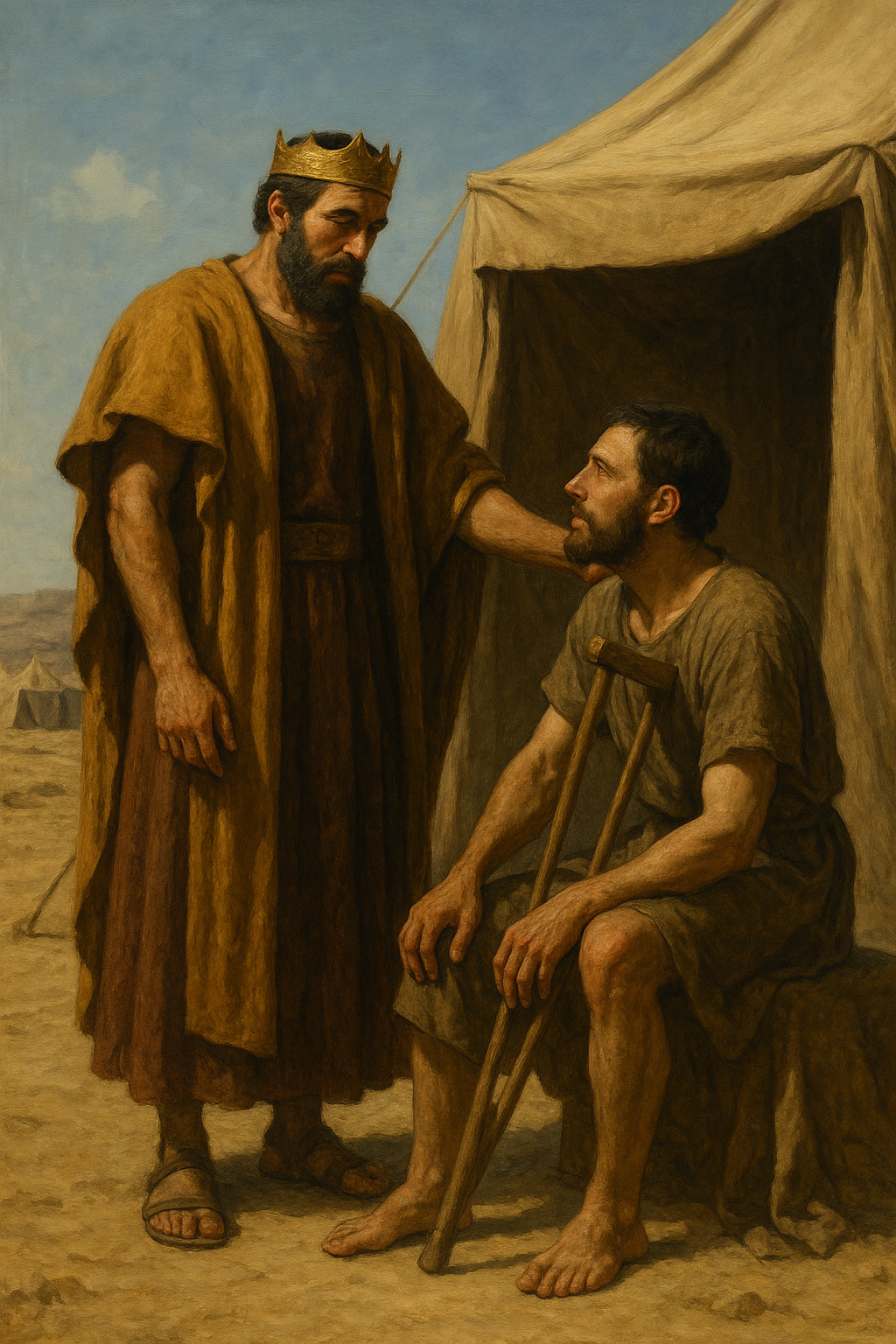
David seeks to honor his covenant with Jonathan by showing kindness to any remaining descendants of Saul. Mephibosheth, a crippled son of Jonathan, is brought before the king. Expecting judgment, he instead receives grace: “Fear not… I will surely shew thee kindness for Jonathan thy father’s sake” (v. 7).
David restores Saul’s land to Mephibosheth and invites him to eat continually at the king’s table. This demonstrates covenant faithfulness, humility, and mercy—the heart of biblical leadership.
2 Samuel 10 — The War with Ammon and Syria
When Hanun of Ammon misinterprets David’s message of comfort as espionage, he humiliates David’s ambassadors. This insult provokes conflict. The Ammonites hire Syrian forces, but Joab leads Israel with courage and dependence upon God: “Let the LORD do that which seemeth him good” (v. 12).
God grants victory as both Ammon and Syria fall before Israel. The chapter highlights the danger of pride and foolish counsel, and the strength that comes from trusting the Lord in righteous conflict.
2 Samuel 11 — David’s Sin with Bathsheba and the Murder of Uriah
This chapter marks the turning point in David’s life. Instead of going to war “at the time when kings go forth” (v. 1), David remains in Jerusalem. From his rooftop he sees Bathsheba and commits adultery. When he learns she is with child, he attempts to cover his sin by recalling Uriah from the battlefield.
Uriah’s integrity contrasts sharply with David’s failure: refusing comfort while his fellow soldiers are at war. When David cannot manipulate him, he orders Joab to place Uriah in the fiercest battle and withdraw—effectively murdering him (vv. 14–17).
After Uriah’s death, David takes Bathsheba as his wife, but “the thing that David had done displeased the LORD” (v. 27). This sets the stage for divine chastening in the next chapter.
KEY PEOPLE AND PLACES
People
-
David — King of Israel; victorious in war, merciful to Mephibosheth, yet tragically fallen in sin in chapter 11.
-
Joab — David’s military commander; courageous in chapter 10, complicit in David’s plan against Uriah.
-
Mephibosheth — Crippled son of Jonathan; recipient of David’s covenant kindness.
-
Ziba — Servant of Saul’s household; caretaker of Mephibosheth’s estate.
-
Hanun — New king of Ammon; misjudges David and brings war upon his nation.
-
Uriah the Hittite — Loyal, righteous soldier; wronged by David.
-
Bathsheba — Wife of Uriah; taken by David during his moral failure.
Places
-
Jerusalem — David’s capital; setting of both mercy (ch. 9) and sin (ch. 11).
-
Rabbah of Ammon — Battlefield where David should have been; site of Uriah’s death.
-
Edom, Moab, Philistia, Syria — Nations subdued under David in chapter 8.
MAIN DOCTRINAL OR SPIRITUAL THEMES
1. God’s Sovereignty in Victory and Judgment
God preserved David in battle (8:6), yet later judges him for sin (11:27). The same God who grants success also disciplines His children.
2. Covenant Faithfulness
David’s grace to Mephibosheth reflects God’s own covenant-keeping nature. Biblical loyalty requires action, not sentiment.
3. The Dangers of Idleness and Lust
David’s fall begins with idleness—remaining home when he should have been on the battlefield. Spiritual negligence opens the door to temptation.
4. The Deceitfulness of Sin
David’s adultery leads to deceit, manipulation, and murder. Sin always grows when not confessed.
5. The Contrast Between Fleshly Failure and Upright Character
Uriah’s integrity exposes David’s lapse in moral leadership. Scripture lifts up righteousness even when it condemns God’s anointed.
6. God’s Holiness
The final verdict—“displeased the LORD”—reminds believers that God’s moral standards do not bend for position, reputation, or past victories.
PRACTICAL APPLICATIONS
1. Victory and Blessing Come From God Alone
David’s military success was not human superiority but divine preservation. Believers must credit God for every victory.
2. Honor Spiritual Commitments
David fulfilled his covenant to Jonathan; Christians must likewise keep promises, honor relationships, and extend grace.
3. Beware of Misjudging Motives
Hanun’s rash suspicion caused war. Believers must avoid slander, harsh assumptions, and foolish advisers.
4. Avoid Idleness and Maintain Discipline
David fell when he let his guard down. Christians must remain vigilant, especially in seasons of prosperity.
5. Confess Sin Early
David tried to hide his sin, which only multiplied its consequences. Believers must confess and forsake sin quickly.
6. Serve with Integrity Like Uriah
Uriah models duty, loyalty, and principle. Christians should strive for such steadfastness even when unseen.
7. God Sees Everything
Even when the king of Israel conceals sin from men, God’s verdict stands. This truth calls believers to live in holiness and reverence.
Comments are closed