Chapter Summaries
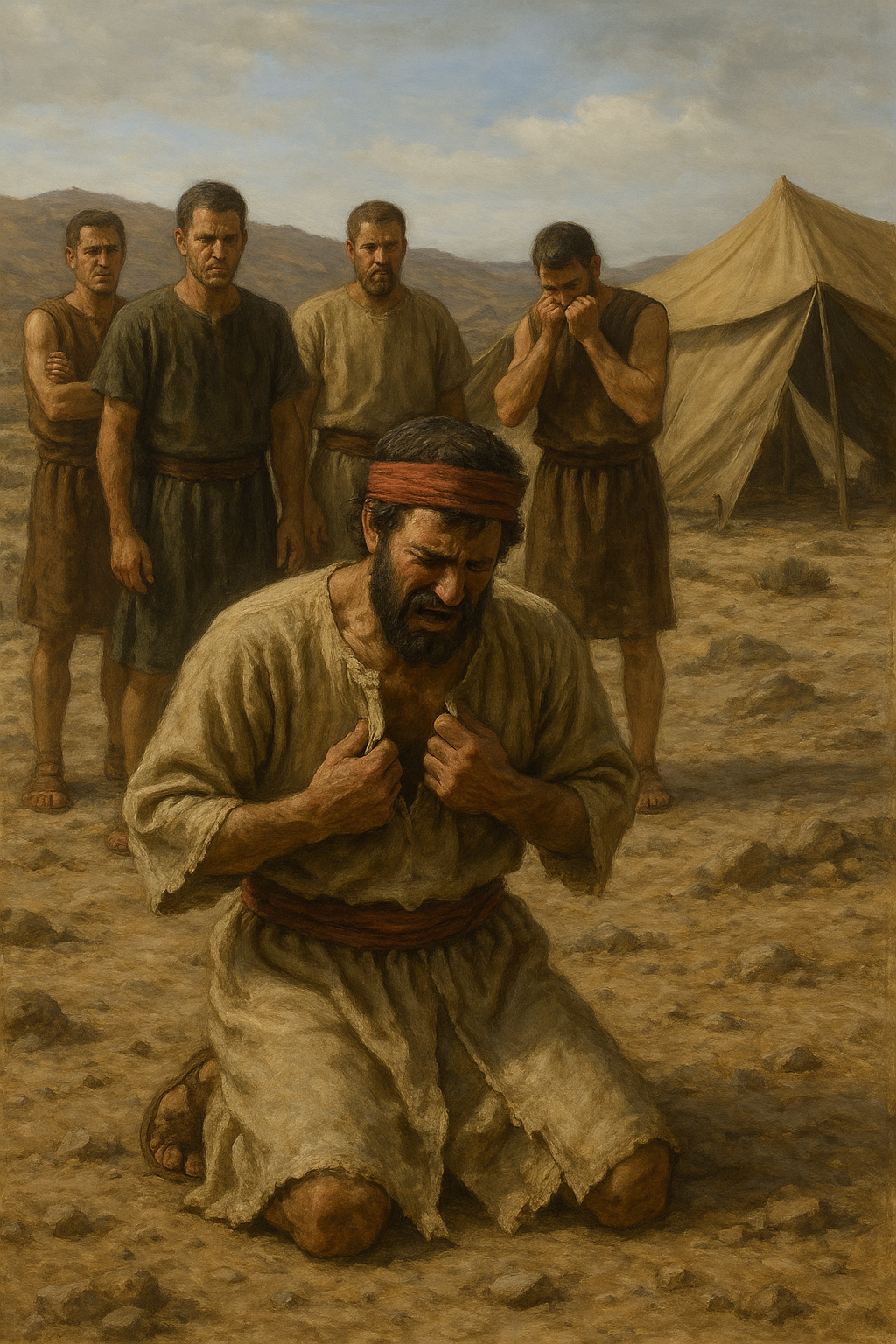
 2 Samuel 1 — David Learns of Saul and Jonathan’s Death
David receives news of the deaths of Saul and Jonathan while he is in Ziklag. An Amalekite arrives claiming he “slew” Saul at the king’s request (2 Sam. 1:10). His story contradicts the record of 1 Samuel 31, showing he lied to gain favor. David holds him accountable for touching “the LORD’s anointed” (v. 14–16).
David then composes “The Bow”, a lament honoring both Saul and Jonathan, describing them as “swifter than eagles” and “stronger than lions” (v. 23). Though Saul had persecuted him, David shows a godly spirit of forgiveness, refusing to rejoice in an enemy’s fall.
2 Samuel 2 — David Becomes King Over Judah
David seeks the LORD (2 Sam. 2:1), showing a pattern of dependence. God directs him to Hebron, where the men of Judah anoint him king over their tribe (v. 4). Meanwhile, Abner—captain of Saul’s host—sets up Ish-bosheth, Saul’s son, as king over the rest of Israel (v. 8–10), creating a divided kingdom.
The chapter ends with conflict between Abner’s men and Joab’s men at Gibeon. Asahel, Joab’s brother, pursues Abner and is slain (v. 23). This event plants a future seed of personal vengeance within Joab.
2 Samuel 3 — David Strengthens, Saul’s House Weakens
The chapter opens with a summary: “there was long war between the house of Saul and the house of David: but David waxed stronger and stronger” (2 Sam. 3:1). David’s growing influence shows God’s hand, yet his taking of multiple wives (v. 2–5) hints at future consequences.
Abner, angered by Ish-bosheth’s accusations, defects to David. He acknowledges the LORD had sworn to give the kingdom to David (v. 9–10). David receives him peacefully, showing political wisdom and mercy.
However, Joab murders Abner in revenge for Asahel (v. 27). David publicly distances himself from the act, mourning for Abner and declaring his innocence (v. 28–35). His lamenting testimony causes the people to perceive that “it pleased them” and “all Israel understood” David had no part in the murder (v. 36–37).
Key People and Places
People
-
David — God’s chosen king; models dependence on the LORD, forgiveness, and righteous leadership.
-
Saul — Former king of Israel; his death ends a tragic downward spiritual spiral.
-
Jonathan — David’s loyal friend; remembered for courage and godliness.
-
Ish-bosheth — Saul’s son; weak, a puppet king controlled largely by Abner.
-
Abner — Saul’s military commander; powerful, influential, yet ultimately slain by Joab.
-
Joab — David’s military leader; capable yet often driven by vengeance.
-
Asahel — Joab’s swift brother, killed by Abner.
Places
-
Ziklag — David’s base during exile; where he hears of Saul’s death.
-
Gilboa — Location of Saul and Jonathan’s death.
-
Hebron — First capital of David’s kingdom; place of his anointing by Judah.
-
Gibeon — Setting of the initial conflict between Abner and Joab.
Main Doctrinal or Spiritual Themes
1. God Sovereignly Transfers Leadership
Despite human conflict and political tension, God’s promise to David steadily unfolds (2 Sam. 3:1, 9–10).
2. The Sinfulness of Vengeance
Joab’s murder of Abner reveals how personal revenge violates righteousness and damages testimony (Rom. 12:19 principle).
3. The Importance of a God-Seeking Spirit
David inquired of the LORD before taking action (2 Sam. 2:1), setting a pattern of humble dependence.
4. A Godly Response to the Fall of Others
David mourns Saul—even though Saul persecuted him—showing forgiveness and respect for God’s appointed authority (2 Sam. 1:12).
5. The Consequences of Polygamy
David’s multiplication of wives (2 Sam. 3:2–5), while culturally common, contradicts God’s creational pattern and later leads to household turmoil.
Practical Applications or Lessons
1. Honor God’s Established Authority
David refused to rejoice in Saul’s death or condone harm to “the LORD’s anointed.” Believers today should show respect for God-ordained structures even when mistreated.
2. Avoid Vengeful Actions
Joab’s behavior shows the destructive consequences of revenge. Christians must entrust wrongs to God.
3. Seek God’s Guidance in Major Decisions
David inquired of the LORD rather than relying on human reasoning alone. The same principle applies to every major life step.
4. Maintain a Godly Testimony Before Others
David openly distanced himself from Joab’s wicked act, demonstrating integrity. Believers also must reject sin publicly and clearly.
5. Mourn With a Spirit of Grace
David’s lament teaches us not to revel in the failures of others—even adversaries—but to maintain compassion and humility.
Comments are closed