CHAPTER SUMMARIES
1 Samuel 16 — David Chosen and Anointed
The Lord Sends Samuel to Bethlehem (vv. 1–5)
After Saul’s rejection (1 Sam. 15), the LORD tells Samuel to cease mourning and go anoint a new king. Samuel fears Saul, but the LORD provides instructions. Samuel travels to Bethlehem under the pretense of offering a sacrifice. The elders tremble, fearing his arrival signals judgment.
God Chooses David, Not the Obvious Choice (vv. 6–13)
Jesse’s sons pass before Samuel. Eliab impresses Samuel, but the LORD rebukes external judgment: “man looketh on the outward appearance, but the LORD looketh on the heart.” David, the youngest, tending sheep, is called. Samuel anoints him, and “the Spirit of the LORD came upon David from that day forward.” This marks the true spiritual transfer of kingship, though Saul still sits on the throne politically.
David Becomes Saul’s Musician (vv. 14–23)
Because of Saul’s rebellion, “the Spirit of the LORD departed from Saul,” and an evil spirit troubles him as divine judgment. His servants seek a skilled harpist, and God’s providence brings David into Saul’s court. David’s playing brings relief, foreshadowing God’s chosen king ministering to a rejected one.
1 Samuel 17 — David and Goliath
 The Philistine Challenge (vv. 1–11)
The armies gather in the Valley of Elah. Goliath, a giant of Gath, challenges Israel to a duel, defying the armies of the living God. Saul and Israel are “dismayed, and greatly afraid.”
David Sent to the Battlefield (vv. 12–27)
David goes to deliver food to his brothers. He hears the blasphemous challenge and is stirred with righteous indignation: “who is this uncircumcised Philistine, that he should defy the armies of the living God?” This is the heart of the chapter—faith in God versus fear of man.
David’s Faith Opposed (vv. 28–40)
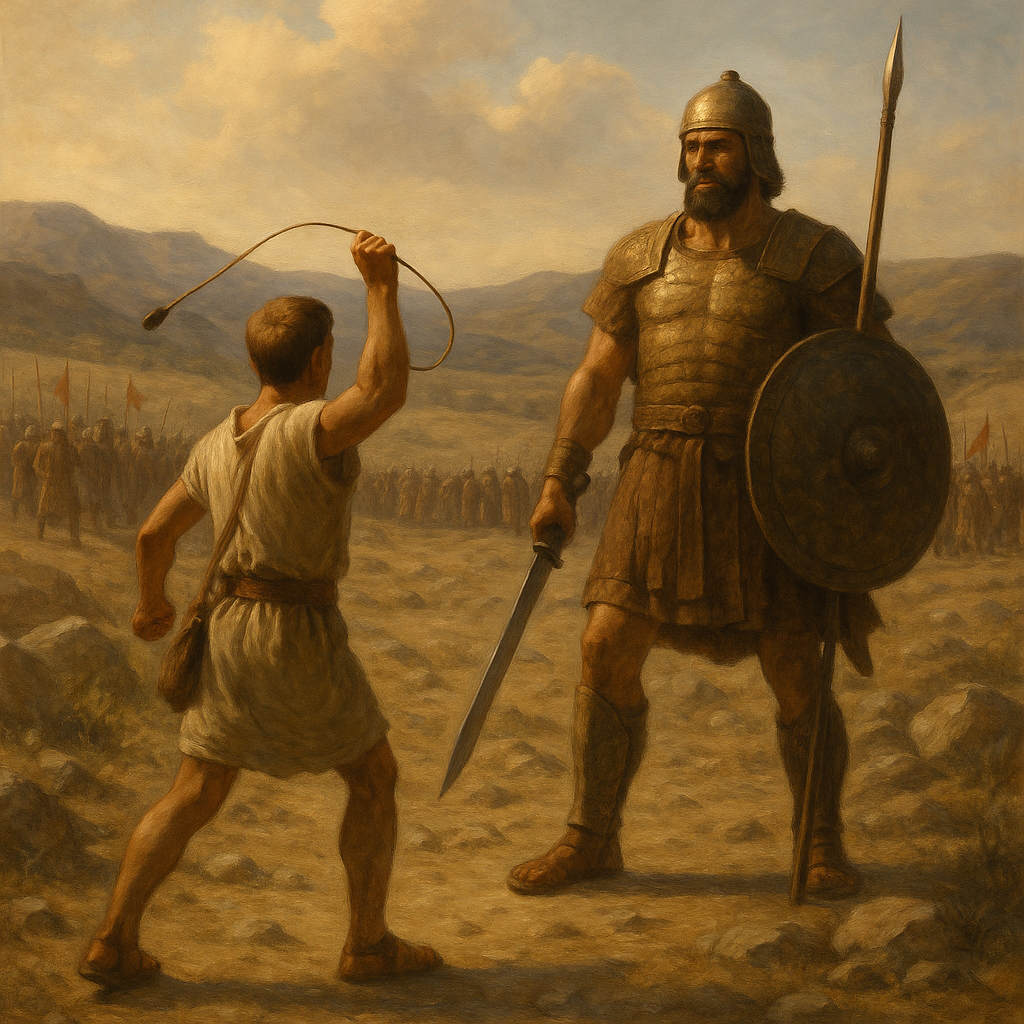
Eliab mocks David; Saul doubts him. David recounts God’s past deliverances from lion and bear. Saul offers his armor, but David chooses his shepherd’s gear—five smooth stones and a sling.
The Battle and Victory (vv. 41–54)
Goliath mocks him, but David boldly declares, “I come to thee in the name of the LORD of hosts.” David strikes the giant with one stone guided by providence and cuts off his head with Goliath’s sword. Israel pursues the Philistines, and David takes the giant’s head to Jerusalem.
Saul Inquires About David (vv. 55–58)
Saul, having already known David as a musician, now seeks to know his family lineage—because of the promised reward of exemption and marriage, and because God’s hand clearly rests on him.
KEY PEOPLE AND PLACES
Samuel — God’s prophet; obedient despite danger.
Saul — The rejected king; spiritually tormented.
David — The chosen king; a man after God’s heart, living by faith.
Jesse — David’s father, Bethlehem resident.
Goliath of Gath — Philistine champion, symbol of human pride and opposition to God.
Valley of Elah — Battlefield between Israel and the Philistines.
Bethlehem — David’s hometown, location of his anointing.
MAIN DOCTRINAL OR SPIRITUAL THEMES
1. God Chooses Based on the Heart, Not Appearance
1 Samuel 16:7 stands as a central theological pillar. God’s standards differ entirely from man’s superficial evaluations.
2. The Spirit’s Empowering and Departure
David receives the Spirit for service; Saul loses it because of rebellion. This reflects divine enabling for God’s work and divine judgment for disobedience.
3. Faith Versus Fear
David sees the spiritual reality; Israel sees only the physical threat. Biblical faith rests in the character and power of God.
4. God Uses Weak Things to Confound the Mighty
A sling and a stone defeat a fully armored giant. God exalts His own name by using humble instruments.
5. Righteous Zeal for God’s Honor
David is not motivated by pride, but by a defense of God’s glory.
PRACTICAL APPLICATIONS
1. Serve God with a Clean Heart
David’s selection emphasizes heart purity and sincerity. God values obedience, humility, and genuine devotion over external qualifications.
2. The Holy Spirit Empowers Service, Not Self
Like David, believers need God’s enabling to serve effectively. We must avoid Saul’s pride, rebellion, and grieving the Spirit.
3. Face Challenges in God’s Strength, Not Human Wisdom
David faced Goliath trusting in God’s past deliverance. Believers today must confront trials through prayer, Scripture, and faith—not human schemes.
4. Be Faithful in Small Things
David’s faithfulness with sheep prepared him for the battlefield. Faithfulness in quiet duties precedes public usefulness.
5. Stand for God’s Honor Even When Others Compromise
David’s zeal contrasts sharply with Israel’s fear. Modern believers must unapologetically defend truth and righteousness in a compromising world.
Comments are closed