 Chapter Summaries
Deuteronomy 8 — Remember the Lord in Prosperity
Moses exhorts Israel to remember “all the way which the Lord thy God led thee these forty years in the wilderness” (v. 2). The wilderness journey tested and humbled them, teaching dependence upon God and obedience to His Word: “Man doth not live by bread only, but by every word that proceedeth out of the mouth of the Lord” (v. 3).
The Lord supplied their needs — their garments did not wear out, and their feet did not swell (v. 4). As a father disciplines his son, so the Lord corrected them (v. 5).
Moses describes the good land awaiting them — a land of brooks, fountains, wheat, barley, vines, fig trees, and honey (vv. 7–9). Yet he warns against pride when they prosper: “Beware that thou forget not the Lord thy God” (v. 11). Prosperity must not lead to self-sufficiency. To forget God and attribute blessings to one’s own power (v. 17) is to invite destruction, as happened to the heathen nations (v. 19–20).
Summary Thought: Israel must remember that the same God who sustained them in want deserves obedience in abundance.
Deuteronomy 9 — Israel’s Unworthiness and God’s Mercy
Moses reminds Israel that victory over the nations of Canaan is not due to their righteousness but because of the wickedness of those nations and God’s covenant with Abraham, Isaac, and Jacob (vv. 4–5).
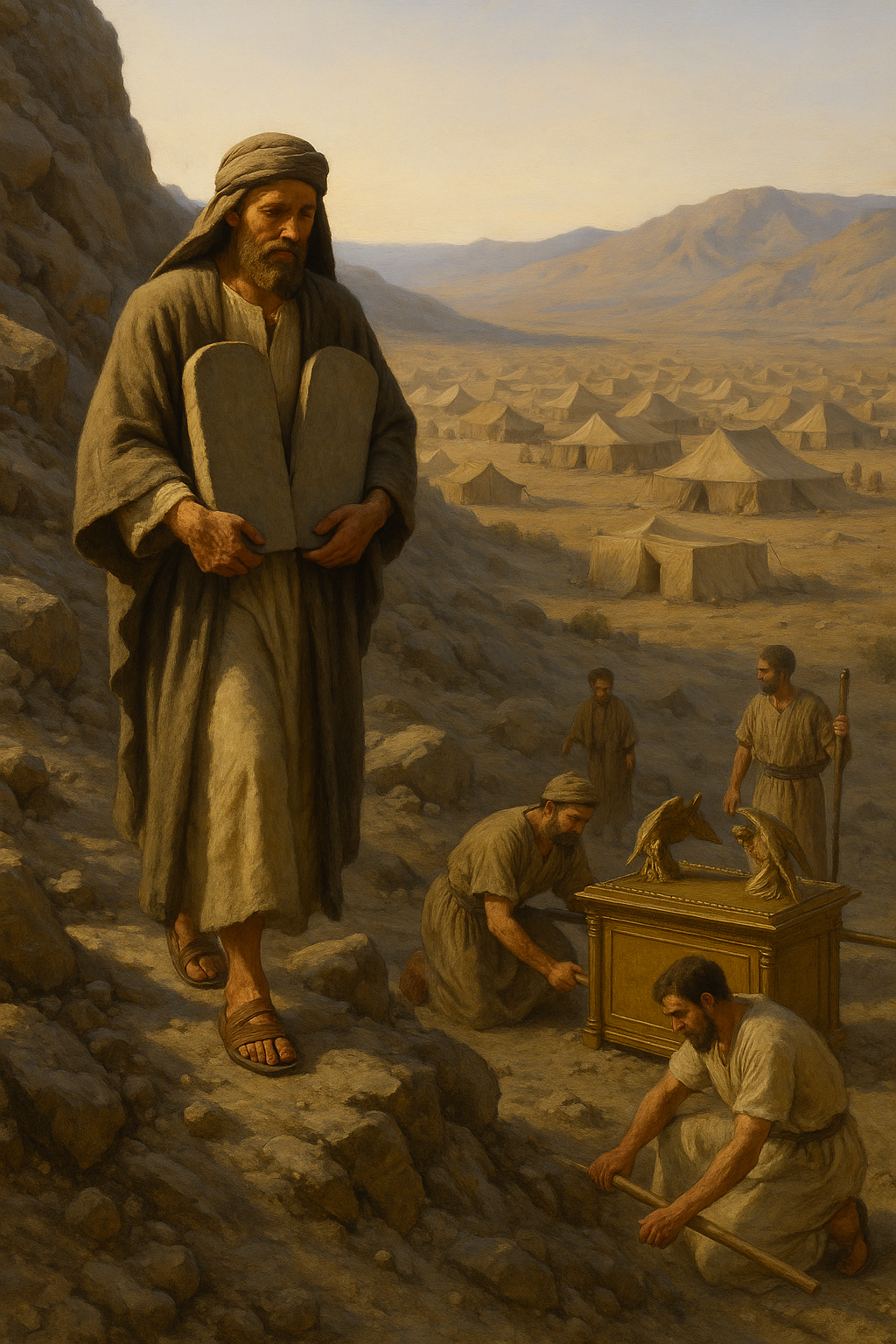
He calls them a “stiffnecked people” (v. 6) and recounts their rebellion at Horeb, where they made the golden calf (vv. 8–12). Moses interceded for forty days and nights, pleading for God’s mercy (vv. 18–20). He broke the tables of stone, symbolizing Israel’s broken covenant, and later ascended again in prayer for their forgiveness.
Moses also recalls other acts of rebellion — at Taberah, Massah, and Kibroth-hattaavah (v. 22). The repeated message: Israel’s preservation is not of merit but of divine mercy.
Summary Thought: Israel’s continued existence depends not on their worthiness but on God’s covenant faithfulness and Moses’ intercession.
Deuteronomy 10 — Renewal of the Covenant and the Call to Fear God
God commanded Moses to hew two new tables of stone and make an ark of wood to house them (vv. 1–5). This symbolized renewal — mercy after rebellion. The tribe of Levi was chosen for the priestly service (vv. 8–9), showing divine grace continuing among a sinful people.
Moses calls Israel to obedience: “What doth the Lord thy God require of thee, but to fear the Lord thy God, to walk in all his ways, and to love him” (v. 12). The Lord is the “God of gods, and Lord of lords” (v. 17), yet shows compassion to the stranger, widow, and fatherless (vv. 18–19). Israel is urged to love and serve Him with heart and soul (v. 12) and remember His mighty works in Egypt (v. 21–22).
Summary Thought: God’s mercy renews covenant fellowship, and His people must respond with reverent obedience and heartfelt love.
Key People and Places
-
Moses – God’s servant, mediator, and intercessor for Israel.
-
The Lord (Jehovah) – Covenant-keeping God of Israel, holy and merciful.
-
Abraham, Isaac, Jacob – Patriarchs to whom God swore the covenant promise.
-
Horeb (Sinai) – Place of the covenant and the golden calf rebellion.
-
Canaan – The Promised Land of blessing and testing.
-
Levi – Tribe set apart for priestly service.
Main Doctrinal or Spiritual Themes
-
Dependence upon God’s Word — True life flows from obedience to God’s Word, not material sustenance (8:3).
-
Humility in Prosperity — Pride in one’s own success leads to spiritual downfall (8:11–18).
-
Grace over Merit — Israel’s election was by divine mercy, not human goodness (9:4–6).
-
Intercession and Forgiveness — Moses typifies Christ’s mediatorial work, pleading for sinners (9:18–20).
-
Fear and Love of God — A right heart before God joins reverence with affection (10:12).
-
God’s Sovereignty and Justice — The Lord rules as “God of gods” yet delights in righteousness and mercy (10:17–18).
Practical Applications or Lessons
-
Remember God in Every Season — Prosperity often dulls spiritual sensitivity; continual gratitude preserves humility.
-
Beware of Self-Reliance — Spiritual decline begins when believers attribute success to their own hand rather than God’s providence.
-
Confess Sin and Seek Mercy — Israel’s history teaches that repentance and intercession restore fellowship.
-
Serve from the Heart — External observance means little without love and reverence toward God.
-
Reflect God’s Character — As God defends the fatherless and stranger, so should His people exhibit compassion and righteousness.
-
Renew Covenant Commitment — Believers must continually return to the Word, remembering that obedience is a response to grace, not a means of earning it.
Summary Statement
Deuteronomy 8–10 reveals a balance of divine blessing, human responsibility, and sovereign mercy. Israel’s wilderness discipline prepared them for prosperity; their rebellion displayed their need for grace; and their renewal through Moses’ intercession reflected God’s enduring covenant love. For the believer, this portion of Scripture calls to remembrance, humility, obedience, and heartfelt devotion to a merciful yet holy God.
Comments are closed