Chapter Summaries
 2 Kings 19 — The Lord Delivers Jerusalem
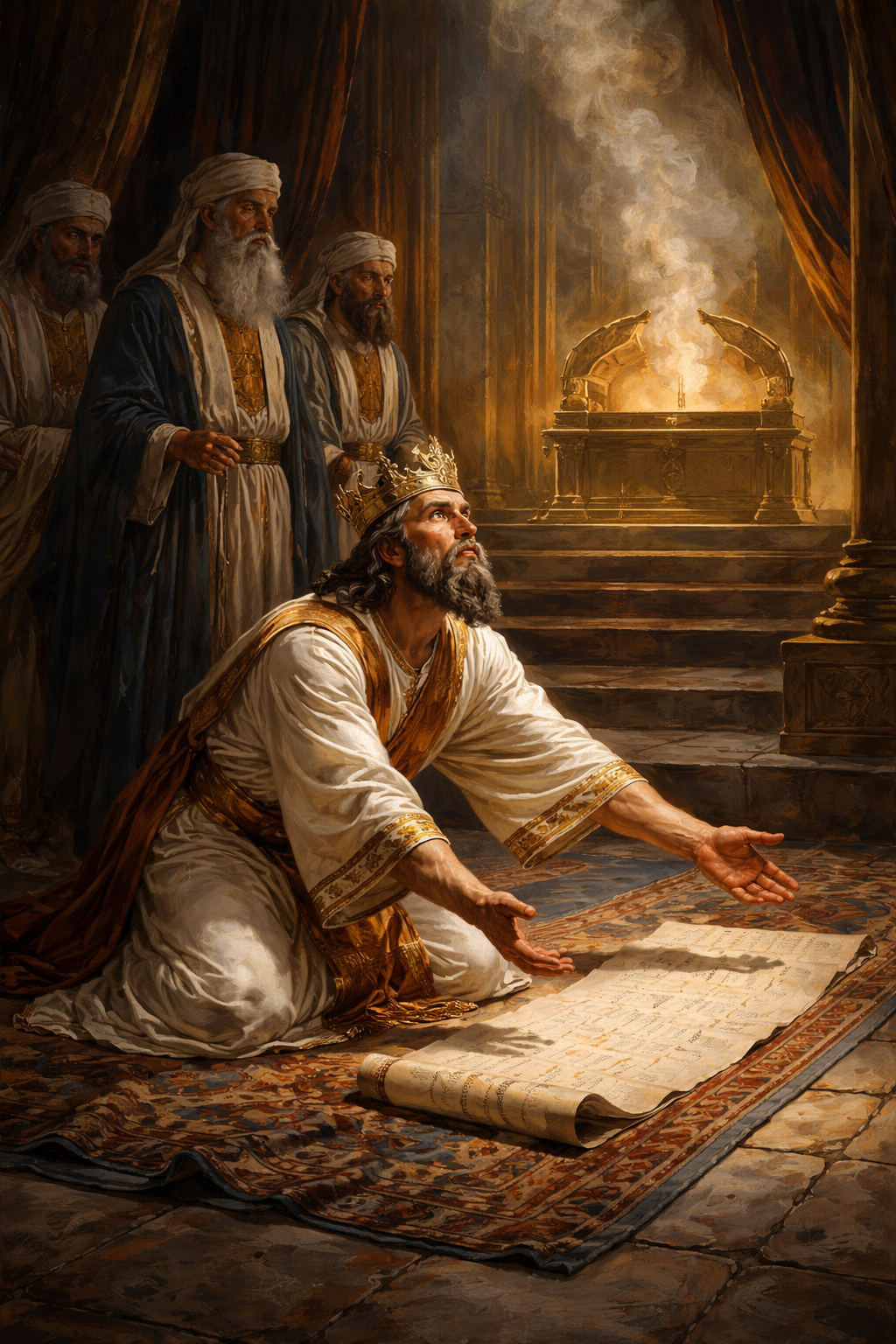
After receiving Sennacherib’s blasphemous letter, Hezekiah goes up into the house of the LORD, spreads the matter before God, and prays (19:14–19). His prayer centers on God’s honor, sovereignty, and uniqueness, not merely national survival.
The LORD answers through Isaiah the prophet, declaring that the Assyrian king has reproached the Holy One of Israel and will not enter Jerusalem nor shoot an arrow there (19:22–34). That very night, the angel of the LORD smites 185,000 Assyrians, and Sennacherib retreats to Nineveh, where he is later killed by his own sons (19:35–37).
Doctrinal emphasis: God alone defends His covenant people. Deliverance comes through prayerful dependence, not military strength. The LORD vindicates His own name.
2 Kings 20 — Hezekiah’s Healing and Pride
Hezekiah becomes sick “unto death.” When Isaiah tells him to set his house in order, the king prays, and the LORD mercifully adds fifteen years to his life (20:1–6). The shadow on the sundial goes backward as a confirming sign.
Later, Hezekiah foolishly shows the Babylonian envoys all his treasures (20:12–13). Isaiah rebukes him and prophesies that Babylon will one day carry Judah into captivity (20:16–18). Though humbled, Hezekiah accepts the word of the LORD.
Doctrinal emphasis: God is merciful and responsive to prayer, yet pride after blessing brings future judgment. Healing does not remove the need for spiritual vigilance.
2 Kings 21 — Manasseh and Amon: Judah’s Lowest Point
Manasseh, Hezekiah’s son, reigns fifty-five years and becomes the most wicked king Judah ever had. He rebuilds high places, practices witchcraft, sheds innocent blood, and even places idols in the house of the LORD (21:1–9, 16). Judah sins worse than the heathen nations God destroyed before Israel.
The LORD declares irreversible judgment: Jerusalem will be wiped “as a man wipeth a dish” (21:13). Though Manasseh personally repents later (recorded in Chronicles), the national damage is done.
Amon, his son, reigns briefly and continues in wickedness. He is assassinated, and the people make Josiah king in his stead (21:19–26).
Doctrinal emphasis: Persistent, generational rebellion brings unavoidable judgment. Even godly heritage does not guarantee obedience.
Key People and Places
- Hezekiah — God-fearing king of Judah; example of prayer, yet later pride
- Isaiah — Prophet of the LORD; mouthpiece of divine judgment and deliverance
- Sennacherib — King of Assyria; blasphemer judged by God
- Manasseh — Most wicked king of Judah; led nation into deep apostasy
- Amon — Son of Manasseh; continued evil without repentance
- Jerusalem — City defended by God for His name’s sake
- House of the LORD — Central place of worship, later defiled under Manasseh
- Nineveh — Assyrian capital where Sennacherib meets his end
Main Doctrinal or Spiritual Themes
- The Sovereignty of God — Nations rise and fall at His command
- Power of Prayer — Hezekiah’s prayer moves heaven
- God’s Honor and Holiness — Blasphemy invites divine judgment
- Human Pride After Blessing — Spiritual danger follows success
- National Accountability — Long-term rebellion brings inevitable judgment
- Influence of Leadership — Kings shape the spiritual direction of a nation
Practical Applications or Lessons
- Believers must bring threats and fears directly to God in prayer.
- Deliverance comes from God’s power, not human alliances.
- Spiritual victories must be guarded with humility and obedience.
- Parents’ faith does not automatically transfer to children.
- Sin tolerated over time hardens hearts and invites judgment.
- God may forgive personally, yet consequences can remain nationally.
Comments are closed