Chapter Summaries
1 Samuel 11 — Saul’s Spirit-Empowered Deliverance of Jabesh-gilead
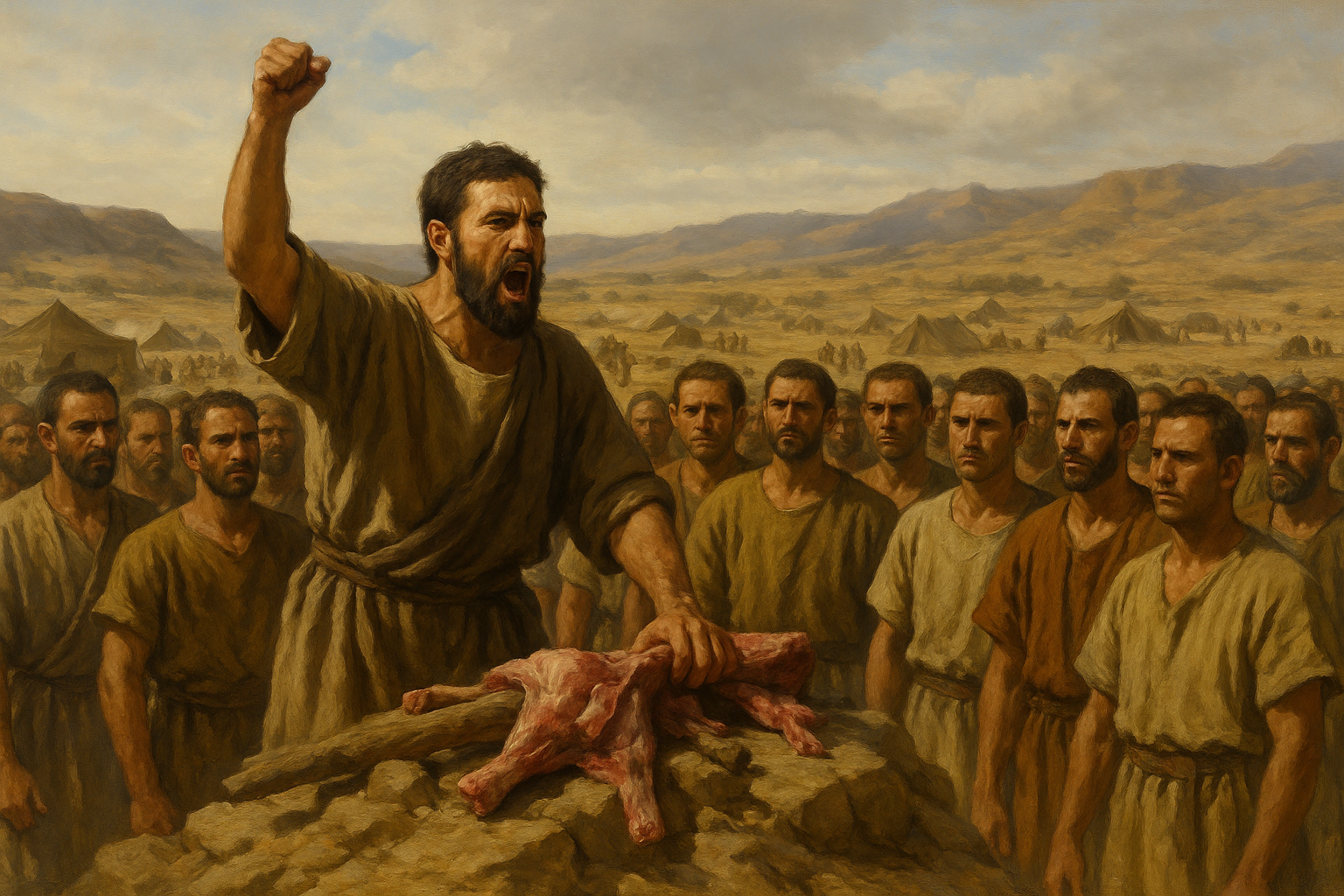
 Nahash the Ammonite besieges Jabesh-gilead and demands a covenant that would involve thrusting out the right eyes of the men (11:2), a humiliating act meant to reproach Israel. The elders of the city seek seven days to find help. When the report reaches Saul, “the Spirit of God came upon Saul” (11:6), stirring righteous anger. Saul slaughters a yoke of oxen and sends the pieces throughout Israel, rallying 330,000 men.
Saul defeats the Ammonites in a surprise morning attack, scattering them so thoroughly that “two of them were not left together” (11:11). Israel rejoices and renews Saul’s kingship formally before the LORD at Gilgal (11:14–15). This chapter shows Saul’s early humility and Spirit-empowered leadership.
1 Samuel 12 — Samuel’s Farewell Address and Covenant Warning
Samuel publicly testifies to his integrity and innocence as judge (12:1–5). Then he reviews Israel’s history, reminding them how the LORD delivered them from Egypt, the judges, and their enemies—yet they repeatedly forgot the LORD and turned to idols (12:9–11).
When Israel demanded a king, they rejected the LORD as their true King (12:12). Samuel warns that both king and people must “fear the LORD, and serve him” (12:14). As a confirming sign, Samuel calls upon God, and the LORD sends thunder and rain during wheat harvest—an event that terrifies the people (12:17–18). Yet Samuel assures them of God’s mercy if they will “turn not aside” to vain idols (12:20–22). He commits to continue praying and teaching them the good and right way (12:23).
1 Samuel 13 — Saul’s Disobedience and the Beginning of His Downfall
Jonathan strikes the Philistine garrison at Geba (13:3), provoking a massive Philistine response. Israel is outmatched, with many hiding in caves and thickets (13:6). Saul is instructed to wait seven days for Samuel at Gilgal (10:8), but when the people scatter, Saul presumptuously offers the burnt offering himself—stepping into priestly authority God never gave him.
Immediately after, Samuel arrives and rebukes him: “Thou hast done foolishly… thy kingdom shall not continue” (13:13–14). God will seek “a man after his own heart,” ultimately pointing forward to David. Israel’s weakness is highlighted by the fact that only Saul and Jonathan have swords (13:22), showing the spiritual and national consequences of Saul’s disobedience.
Key People and Places
People
-
Saul — Israel’s first king; used by God but already showing disobedient tendencies.
-
Samuel — Prophet and judge; God’s spokesman, calling Israel to faithfulness.
-
Jonathan — Saul’s son; courageous and spiritually sensitive.
-
Nahash the Ammonite — Enemy leader besieging Jabesh-gilead.
Places
-
Jabesh-gilead — City threatened by the Ammonites; delivered through Saul.
-
Gilgal — Site of national gathering, sacrifice, and Saul’s repeated testing.
-
Geba / Michmash — Strategic locations of battle with the Philistines.
Main Doctrinal or Spiritual Themes
1. The Necessity of Obedience to God
Saul’s failure reveals that partial obedience is still disobedience. Leadership without submission to God leads to ruin.
2. God’s Faithfulness Despite Israel’s Failures
Even after rejecting God’s direct rule, God does not forsake His people (12:22). His covenant love remains steadfast.
3. The Work of the Holy Spirit in Empowering God’s Servants
Saul’s victory in chapter 11 occurred only because “the Spirit of God came upon him.” Human effort alone is insufficient.
4. The Danger of Self-Reliance and Impatience
Saul’s sin at Gilgal was rooted in fear, impatience, and taking matters into his own hands instead of waiting on the LORD.
5. God Ultimately Seeks a Heart Loyal to Him
The promise of a “man after his own heart” foreshadows the contrast between Saul’s self-will and David’s devotion.
Practical Applications or Lessons
1. Believers Must Wait on God’s Timing
Saul’s impatience cost him the kingdom. Trust and obedience outweigh urgency or fear.
2. Obedience Is Better Than Religious Activity
A sacrifice offered in disobedience is sin, no matter how noble the intent.
3. God’s Spirit Enables Victory
Just as Saul’s early victory required the Spirit’s power, Christians today cannot serve effectively in the flesh.
4. God’s Leaders Must Possess Integrity
Samuel’s spotless testimony reminds believers that character is foundational to ministry.
5. Even When We Have Failed, God Invites Us Back to Faithfulness
Israel feared after the thunderstorm judgment, but Samuel told them: “Fear not… yet turn not aside.”
Comments are closed