Chapter Summaries
1 Chronicles 8 — The line of Benjamin (with focus toward Saul’s house)
- This chapter records the genealogy of Benjamin, listing key families, sons, and settlements. The Spirit of God is not “padding pages” here—He is preserving covenant history and tracing lines that will matter in Israel’s kingdom story.
- The genealogy narrows toward Saul’s family, naming Kish, Saul, and Saul’s sons, including Jonathan (8:33). This prepares the reader for the transition from tribal records to the monarchy and then to David’s rise.
- Doctrinally, God is showing that His dealings with Israel are rooted in real history, real people, and real accountability—names attached to God’s promises and God’s discipline.
1 Chronicles 9 — Israel restored, Jerusalem inhabited, and worship ordered
- The chapter opens by explaining that Israel was “carried away to Babylon for their transgression” (9:1), then moves to those who were first to dwell again in Jerusalem after the captivity (9:2).
- It lists priests, Levites, gatekeepers, and temple servants—showing that the restored community was not merely political, but worship-centered. God’s house and God’s order mattered immediately.
- Special attention is given to gatekeepers and those entrusted with oversight of chambers, treasures, vessels, and daily service (9:17–34). The message is simple: worship is holy work, and faithfulness in “small” duties safeguards the whole.
1 Chronicles 10 — Saul’s death and God’s stated reason
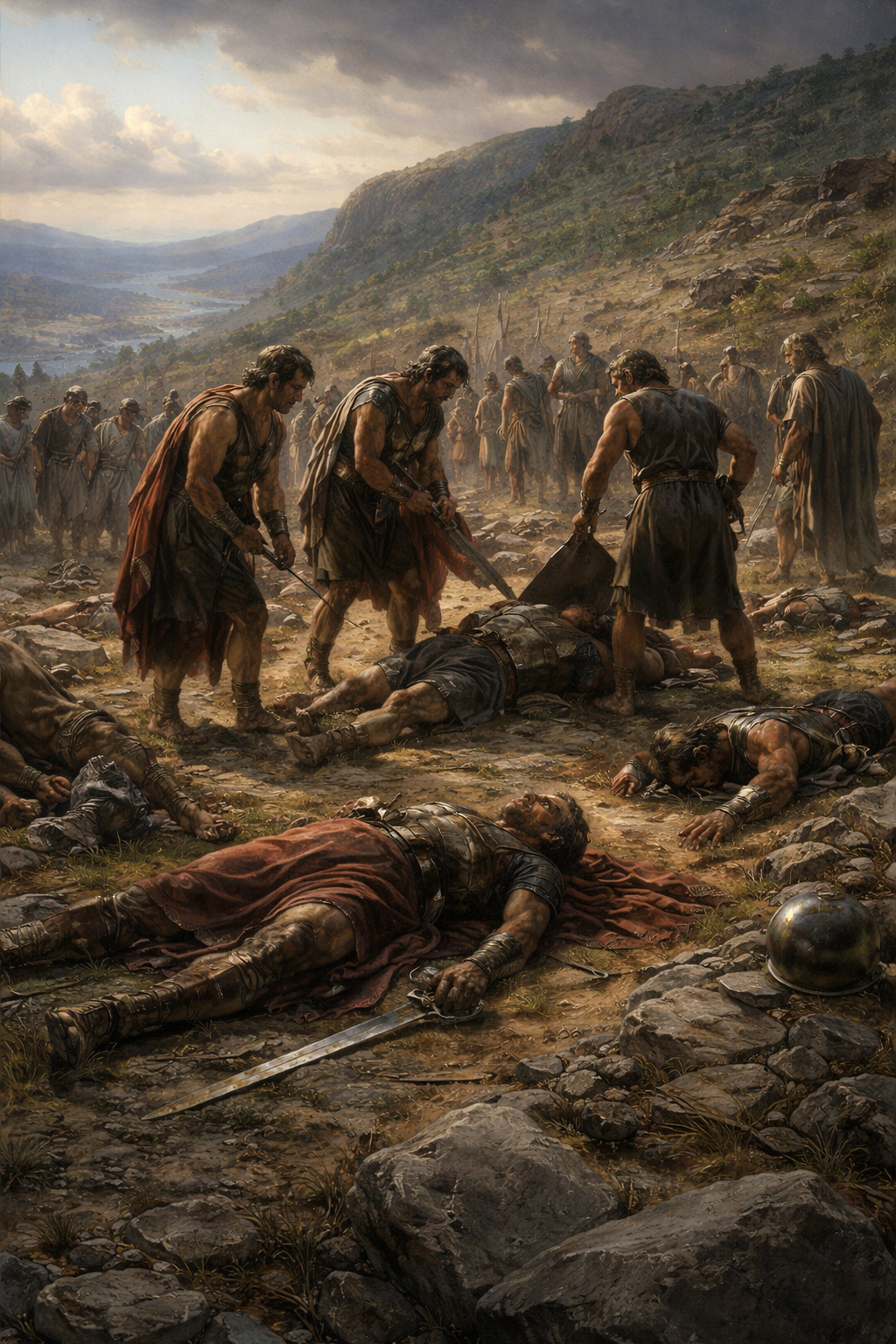
- The chronicler recounts Saul’s defeat by the Philistines at Mount Gilboa, the deaths of his sons (including Jonathan), Saul’s wounding, and his death (10:1–6).
- The Philistines’ dishonor of Saul’s body is recorded, and the men of Jabesh-gilead are noted for retrieving and honoring the bodies (10:11–12).
- The chapter then gives a direct divine explanation: “So Saul died for his transgression… and also for asking counsel of one that had a familiar spirit… and enquired not of the LORD: therefore he slew him, and turned the kingdom unto David**” (10:13–14). This is God’s own commentary on the fall of a king.
Key People and Places
 Benjamin — The tribe from which Israel’s first king came; the genealogies preserve tribal identity and continuity (ch. 8).
- Saul — First king of Israel; his end is tied to disobedience and spiritual rebellion (10:13–14).
- Jonathan — Saul’s son; dies with his father in battle (10:2).
- Kish — Father of Saul, named in the Benjaminite line (8:33).
- Levites / Priests — Central to restored worship life in Jerusalem; set in ordered service (ch. 9).
- Gatekeepers (porters) — Guardians of access to God’s house; pictured as trustworthy stewards (9:17–27).
- Babylon — Place of captivity “for their transgression” (9:1).
- Jerusalem — Center of restored community life and worship order (9:2).
- Mount Gilboa — Site of Saul’s final battle and death (10:1).
- Jabesh-gilead — Men who showed courage and loyalty in retrieving and burying Saul and his sons (10:11–12).
Main Doctrinal or Spiritual Themes
- God’s faithfulness to preserve His people and record
- The genealogies declare continuity: God remembers families, tribes, and His covenant dealings across generations.
- Sin has real historical consequences
- Captivity is explicitly linked to “transgression” (9:1). This is moral cause-and-effect under God’s government.
- Worship and service require God-ordered faithfulness
- The chronicler highlights priests, Levites, and gatekeepers to show God cares about holiness, stewardship, and reverent order—not chaos or convenience.
- Leadership is accountable to God
- Saul’s downfall is explained theologically, not merely militarily: disobedience and seeking forbidden counsel brought judgment (10:13–14).
- God is sovereign over the kingdom
- “He… turned the kingdom unto David” (10:14). God removes and raises rulers according to His purpose.
Practical Applications or Lessons
- Don’t despise “lists” God included
- Genealogies teach that lives matter to God, and history is not random. God works through generations, not merely moments.
- Judgment begins with spiritual unfaithfulness
- Israel’s captivity and Saul’s fall both trace back to transgression. Compromise is never “small” when it is against the LORD.
- Faithful service often looks ordinary
- Gatekeepers, stewards of vessels, overseers of chambers—quiet duties—but God honored them by recording their work. Churches still need faithful “hidden” servants.
- Seek the LORD, not forbidden substitutes
- Saul’s tragic warning is plain: when a man refuses God’s word, he becomes vulnerable to counterfeit guidance. The believer must be anchored in Scripture and prayer.
- The end of a life reveals what was truly guiding it
- Saul’s last chapter contrasts sharply with the rise of David. It is a call to finish well: obedience, humility, repentance, and dependence on God.
Comments are closed