Chapter Summaries
Deuteronomy 32 — The Song of Moses
 This chapter records the great “Song of Moses,” a divine message given to Israel as both a warning and a witness. Moses begins, “Give ear, O ye heavens, and I will speak; and hear, O earth, the words of my mouth” (v. 1). The song magnifies the greatness and perfection of God: “He is the Rock, his work is perfect: for all his ways are judgment: a God of truth and without iniquity” (v. 4). God is righteous and faithful, while Israel is described as “a perverse and crooked generation” (v. 5).
The song recounts how God chose Israel, guided them, and blessed them richly — “He made him ride on the high places of the earth” (v. 13). Yet Israel turned to idolatry, forsaking the Rock of their salvation. Because of this apostasy, God warns of chastisement by foreign nations, saying, “I will heap mischiefs upon them; I will spend mine arrows upon them” (v. 23).
Nevertheless, God promises eventual compassion and vindication for His people: “For the LORD shall judge his people, and repent himself for his servants” (v. 36). The song concludes with Moses exhorting Israel to “set your hearts unto all the words” of this law, for “it is your life” (v. 46–47).
After delivering the song, the Lord commands Moses to ascend Mount Nebo to view the Promised Land, knowing that he will die there because of his earlier disobedience at Meribah (v. 48–52).
Deuteronomy 33 — The Blessing of Moses
In this final blessing, Moses — as “the man of God” (v. 1) — pronounces prophetic blessings on the twelve tribes, similar to Jacob’s blessings in Genesis 49. He begins by exalting the majesty of God: “The LORD came from Sinai, and rose up from Seir unto them; he shined forth from mount Paran” (v. 2).
-
Reuben is blessed with survival and posterity (v. 6).
-
Judah receives strength in battle and help from the Lord (v. 7).
-
Levi is honored for faithfulness at Sinai and entrusted with teaching and sacrifice (v. 8–11).
-
Benjamin is called “the beloved of the LORD,” dwelling safely near God’s presence (v. 12).
-
Joseph is granted abundance and prosperity, “with the precious things of heaven” (v. 13–17).
-
Zebulun and Issachar are blessed in trade and worship (v. 18–19).
-
Gad, Dan, Naphtali, and Asher each receive fitting blessings of strength, courage, and abundance (v. 20–25).
The chapter concludes in glorious praise: “There is none like unto the God of Jeshurun, who rideth upon the heaven in thy help” (v. 26). Israel’s security is assured because the eternal God is their refuge (v. 27).
Deuteronomy 34 — The Death of Moses
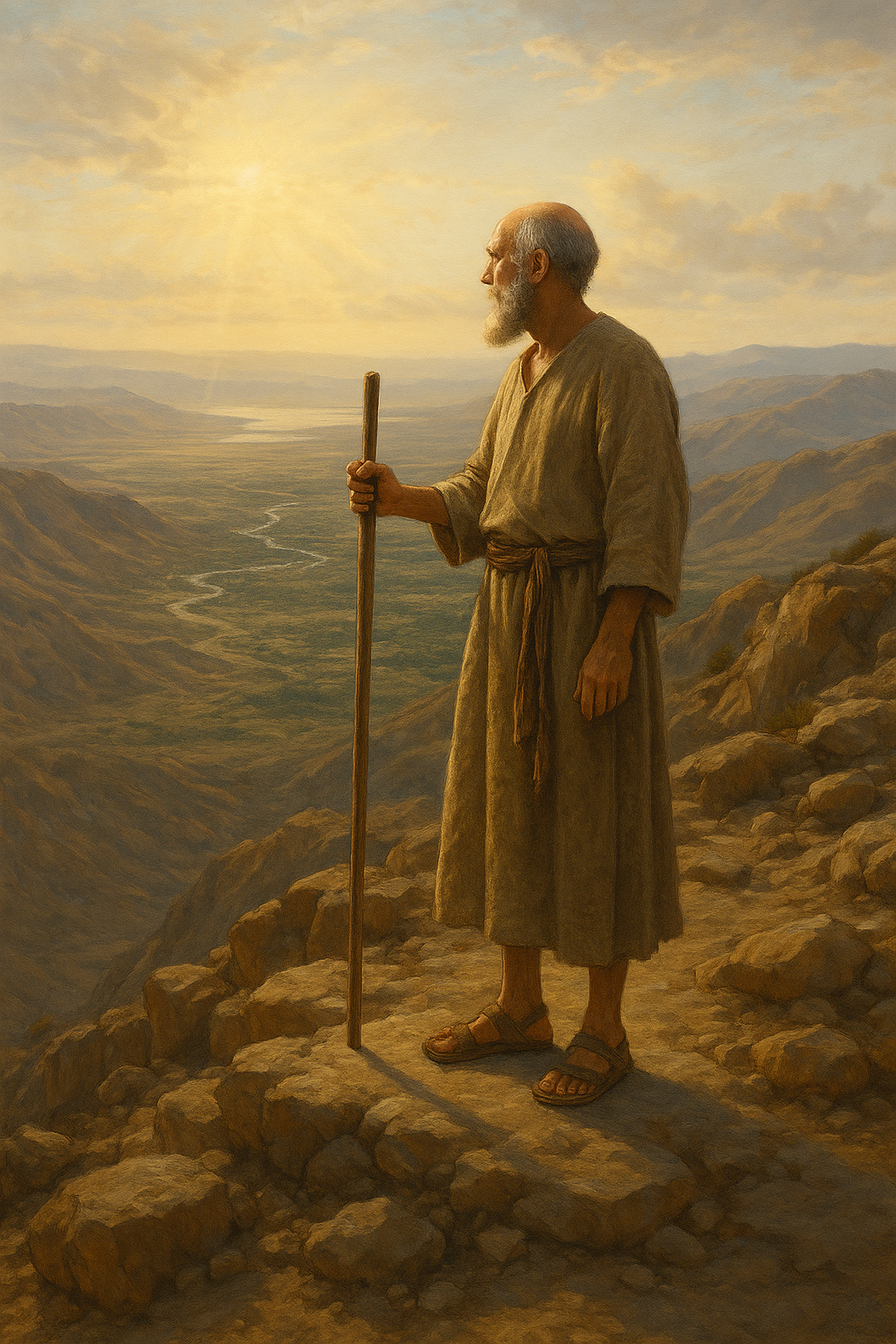
Moses ascends Mount Nebo to the top of Pisgah, where the LORD shows him the entire land promised to Abraham, Isaac, and Jacob — from Gilead to Dan, and as far as the Mediterranean Sea (v. 1–4). Though he could not enter, God graciously allows him to behold it with his eyes. “So Moses the servant of the LORD died there in the land of Moab, according to the word of the LORD” (v. 5).
The Lord Himself buried Moses in a valley of Moab, and “no man knoweth of his sepulchre unto this day” (v. 6). Israel mourned for thirty days, and Joshua succeeded Moses, filled “with the spirit of wisdom” (v. 9). The chapter — and the Pentateuch — closes with a fitting tribute: “And there arose not a prophet since in Israel like unto Moses, whom the LORD knew face to face” (v. 10).
Key People and Places
-
Moses – God’s faithful servant and prophet, who delivers God’s final song and blessings before his death.
-
Joshua – Moses’ successor, empowered by the Spirit to lead Israel into the Promised Land.
-
Mount Nebo / Pisgah – The mountain east of the Jordan from which Moses views the land before dying.
-
Moab – The region where Israel camps and where Moses dies.
-
Reuben, Judah, Levi, Joseph, and others – Tribes of Israel receiving prophetic blessings that foreshadow their future roles.
Main Doctrinal or Spiritual Themes
-
God’s Holiness and Justice — “A God of truth and without iniquity, just and right is he” (32:4). God must judge sin, even among His covenant people.
-
Faithfulness of God vs. Unfaithfulness of Man — Israel’s repeated backsliding contrasts sharply with God’s steadfast mercy.
-
The Sufficiency of God’s Word — Moses declares the Word is “your life” (32:47), showing its centrality for both faith and obedience.
-
Divine Sovereignty in Blessing — Each tribe’s future is sovereignly decreed by God; prosperity and safety come from Him alone.
-
The Hope of the Believer — Moses’ death outside Canaan pictures that earthly leaders and works are limited, but God’s promises continue through faith and obedience.
Practical Applications or Lessons
-
Heed the Warnings of God’s Word: The Song of Moses stands as a lasting reminder that rebellion brings chastisement. Believers must keep short accounts with God.
-
Rejoice in God’s Faithfulness: Though Israel failed, the Lord’s mercy endures. Christians can trust His covenant faithfulness even amid correction.
-
Serve Faithfully to the End: Like Moses, each believer should finish well, leaving behind a testimony of obedience and faith.
-
Honor Spiritual Leadership: Moses blessed the people and equipped Joshua — a pattern for godly transition and mentoring in ministry.
-
Look Forward to God’s Promised Rest: Moses’ view from Mount Nebo reminds us that full rest is found not in earthly Canaan but in heaven, the true “better country.”
Comments are closed