Chapter Summaries
Verses 1-14 (Blessings for Obedience): Moses addresses the nation of Israel just before entering the Promised Land and reiterates the covenantal call of Moses:
“And it shall come to pass, if thou shalt hearken diligently unto the voice of the LORD thy God, to observe and to do all his commandments which I command thee this day…” (v. 1) If Israel obeys God’s commandments and statutes, then God promises to exalt them (v. 1), pour out blessings, cause them to be blessed in the city and in the field (v. 3), bless their offspring, grain, cattle (v. 4), their basket and store (v. 5), their coming and going (v. 6), give victory over enemies (v. 7), bless their storehouses and all their undertakings (v. 8), establish them as a holy people (v. 9), make them a distinguished name among the nations (v. 10), make them fruitful, open heaven’s store, give rain in its season, enable them to lend to many and borrow from none (v. 11-12), make them the head and not the tail (v. 13), and warn them not to turn aside to other gods (v. 14).
Historical/doctrinal background: This chapter is part of Moses’ farewell discourses, restating the covenant originally instituted at Sinai and now about to be settled in Canaan. The blessings align with God’s promise of land, progeny, and national prosperity given to the patriarchs (e.g., Abraham, Isaac, Jacob). Theologically, the blessings underscore God’s faithfulness and the responsibility of covenant obedience (Deut. 7:12-11:1).
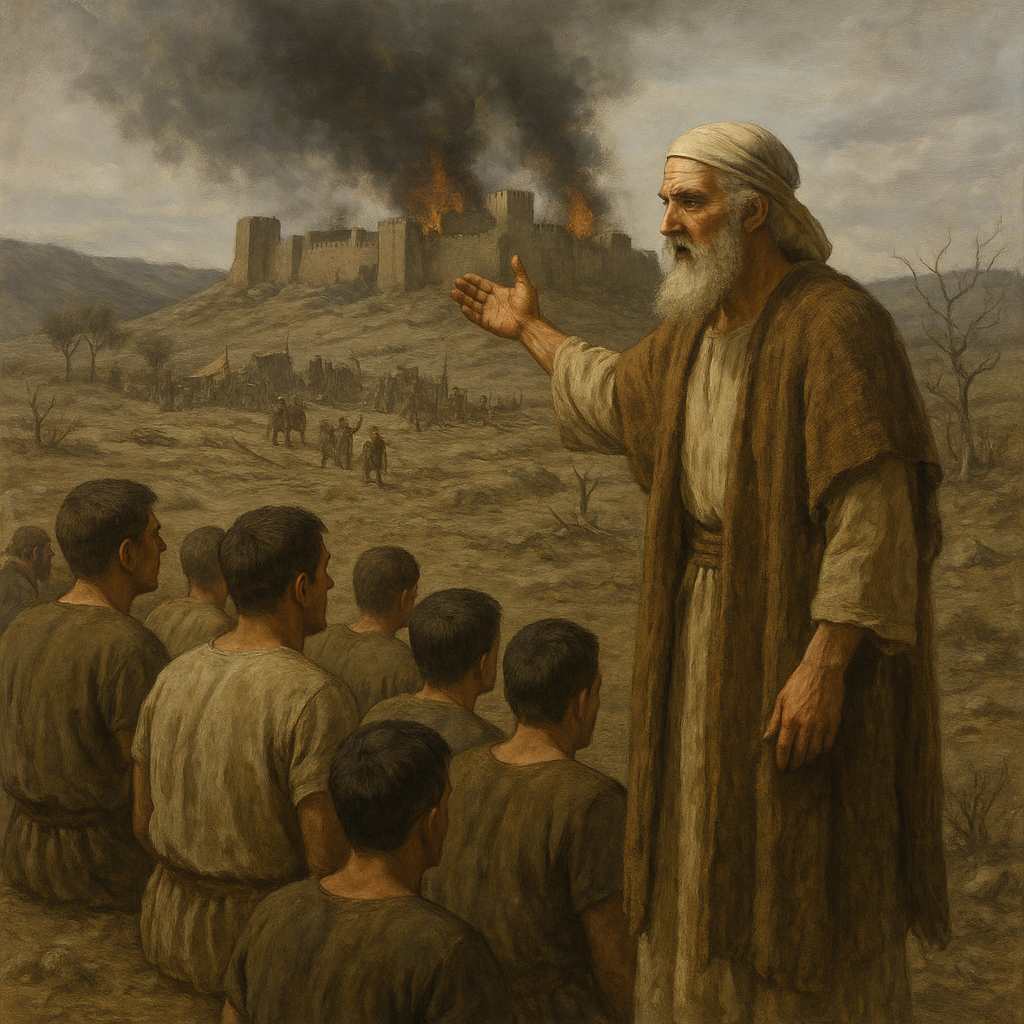
Verses 15-68 (Curses for Disobedience):
Starting at v. 15 the tone dramatically shifts:
“But it shall come to pass, if thou wilt not hearken unto the voice of the LORD thy God… that all these curses shall come upon thee, and overtake thee:” (v. 15)
The curses include: being cursed in city and field (v. 16); cursed basket and store (v. 17); cursed offspring and land yield (v. 18); cursed coming in and going out (v. 19); God sending cursing, vexation, rebuke in everything (v. 20); pestilence (v. 21); disease (v. 22); sky becoming brass, earth iron (v. 23); rain turning to powder and dust (v. 24); defeat by enemies (v. 25); carcasses food for birds and beasts (v. 26); diseases of Egypt (v. 60); left few in number (v. 62); God “will rejoice over you to destroy you, and to bring you to nought” (v. 63); scattering among all nations (v. 64); life hanging in doubt (v. 66); morning wishing it were evening, and evening wishing it were morning, because of fear (v. 67).Historical/doctrinal background: These curses portray the severe consequences of covenant unfaithfulness. In the context of Israel, disobedience meant exile, national defeat, hardship, and loss of the land. Doctrinally, they serve as a solemn warning of divine holiness, justice, and wrath against sin. They also foreshadow exile experiences and ultimately point to the need for redemption in Christ (though Deuteronomy itself is covenant?law era).
Flow and Major “Events”:
-
The “if” clause for obedience and the promise of blessing (v. 1–14).
-
The “but if” clause for disobedience and the pronouncement of curses (v. 15–68).
-
The underlying theological setting: God enters into covenant with Israel; they are to obey or face consequences.
-
Implicit transition from promise?land entrance to possible exile conditions (the warnings anticipate failure).
-
Implicit call to decision: Israel must choose obedience or suffer ruin.
Key People and Places
-
Moses – the speaker, mediator of the Law and covenant to Israel.
-
The LORD thy God – Jehovah, covenant?keeping God of Israel, speaking through Moses.
-
Israel (the nation) – the corporate covenant people of God, recipients of both blessing and curse.
-
The Land given to thy fathers – the Promised Land of Canaan, which God swore to grant Abraham, Isaac, Jacob and their descendants.
-
Enemies / nations – unspecified peoples who will oppose, besiege, scatter, or enslave Israel if unfaithful.
-
Cities and fields, basket and store, cattle and sheep – symbolic of urban and rural life, harvest & prosperity, representing everyday life of Israel in the land.
Main Doctrinal or Spiritual Themes
-
Covenant Relationship – God’s promise to Israel, conditioned upon obedience. The chapter emphasizes “if… then…” (v.1 & 15) showing conditional covenant structure.
-
Obedience and Holiness – The obedience of Israel to God’s commandments is central (v.9). To walk in God’s ways and keep the statutes reflects the call to holiness before God.
-
Blessing and Judgment – God’s character is both merciful and just: blessings for obedience, judgment for disobedience. These reveal God’s holiness and the seriousness of sin.
-
Land and Nation as Theological Symbols – The Promised Land frames the blessing/curse; national life is tied to covenant fidelity.
-
Corporate and Generational Responsibility – The curses include consequences for one’s children and descendants (v. 18, 45, 46).
-
Providence and Sovereignty of God – God controls rain (v. 12), enemies (v. 7, 25), and exile (v. 63–64). His sovereignty undergirds covenant outcomes.
-
Typology of Disobedience and the Need for Redemption – Though the chapter does not explicitly mention Christ, the pattern of failure and exile points forward to the need for ultimate obedience and redemption in Christ, aligning with conservative Baptist theology of sin, fall, and salvation.
-
Separation from Other Gods – The warning not to “go after other gods to serve them” (v.14) underscores exclusive loyalty to Jehovah and the doctrine of separation from idolatry.
Practical Applications or Lessons
-
Individual Obedience Matters: Though addressed to a nation, the principle stands for believers today: God’s will must be heard and obeyed. The “if” of v.1 applies: hearing + doing leads to blessing.
-
Holiness Is Non?Negotiable: The command to keep “all his commandments… not to go aside… to the right hand or to the left” (v.14) reminds us to walk in the ways God prescribes, avoiding compromise.
-
Be Aware of Consequences of Sin: The curses are vivid and severe—to warn believers that sin is not harmless. Restoration is possible, but the consequences of disobedience are real.
-
Gratitude for Christ?based Obedience: In Christ we are under a new covenant; yet the pattern of blessing through obedience reminds us to live in thankful obedience, not presuming upon grace.
-
Teach and Warn Others: Just as Moses taught Israel, we must teach our children, church families, and communities about the seriousness of sin, the blessings of obedience, and the importance of repentance.
-
Corporate Responsibility: The chapter highlights that the faithfulness or unfaithfulness of a community (church, family, nation) affects all. Christians should strive for godliness not only personally but corporately.
-
Hope Amid Discipline: While curses are pronounced, the chapter points to the faithfulness of God’s promises. For believers, though discipline may come, God remains just and faithful to restore those who return.
-
Land/Life Stewardship: The blessings involving “basket and store,” “fruit of thy ground,” and “increase of cattle” remind believers to steward what God gives—materially, spiritually, communally—for His glory.
-
Faith and Providence in Daily Life: God promises to bless “the work of thine hand” (v.12). In our vocations, ministries and daily tasks, we serve under God’s sovereign blessing when we obey.
-
Call to Repentance and Return: If one has wandered, the pattern invites returning to obedience, trusting God’s mercy. The severity of the curses should drive us to cling tighter to Christ.
Comments are closed