Chapter Summaries
1 Samuel 25 — Abigail’s Intervention and Nabal’s Death
 Samuel dies, and “all Israel… lamented him” (25:1), marking the end of the era of Israel’s godly judge and prophet. David then moves to the wilderness of Paran while still a fugitive from Saul.
Nabal, “churlish and evil in his doings” (25:3), refuses to show hospitality to David’s men, despite David’s prior protection of his shepherds. David prepares to take swift vengeance—“gird ye on every man his sword” (25:13).
Abigail, Nabal’s wise and virtuous wife, acts quickly to prevent bloodshed. Her humble approach—bowing before David and appealing to his conscience—turns David from sin. David admits, “Blessed be the LORD God of Israel, which sent thee this day to meet me” (25:32).
The LORD judges Nabal, smiting him so “that he died” (25:38). David recognizes God’s justice and takes Abigail as wife.
1 Samuel 26 — David Spares Saul Again at Ziph
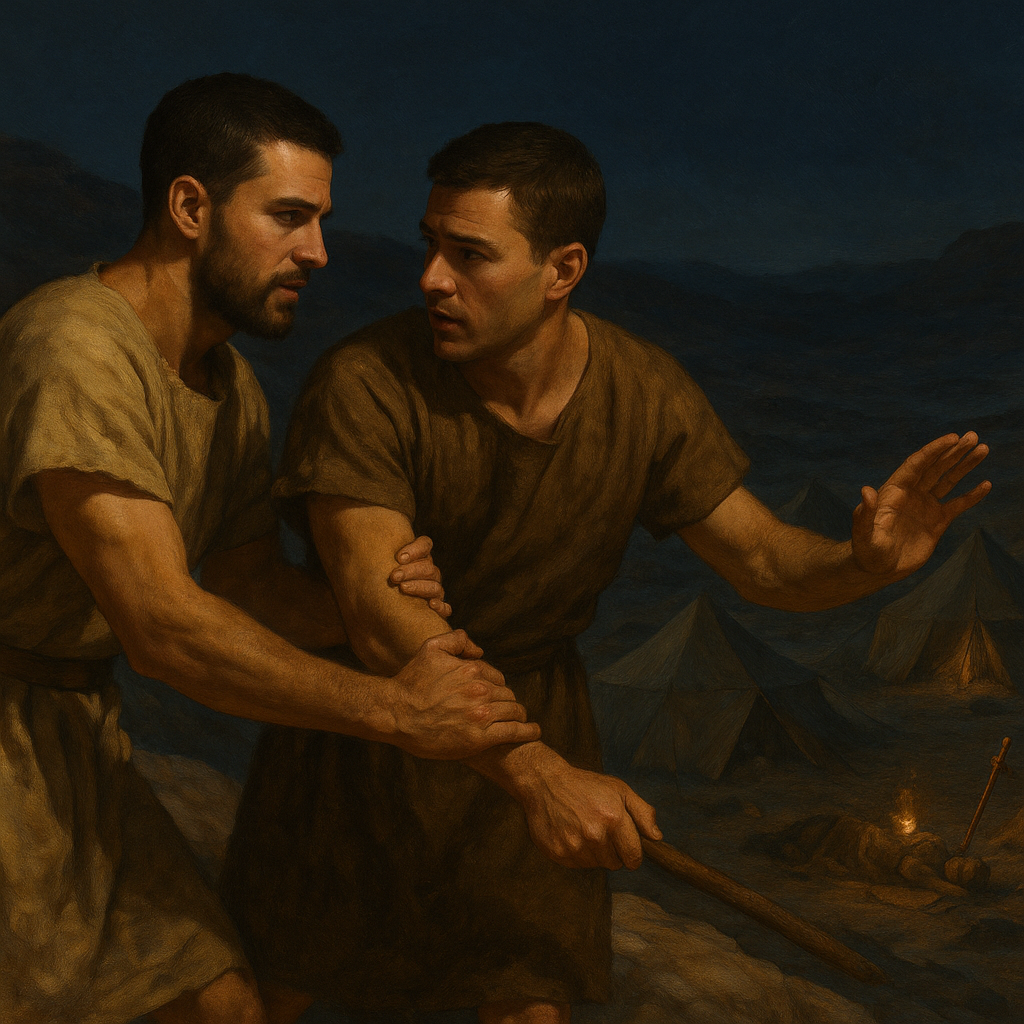
The Ziphites again betray David to Saul (26:1). Saul pursues him with 3,000 chosen men. David finds Saul sleeping in the camp with Abner. Though Abishai urges David to kill Saul—“God hath delivered thine enemy into thine hand” (26:8)—David refuses, stating, “The LORD forbid that I should stretch forth mine hand against the LORD’s anointed” (26:11).
David takes Saul’s spear and cruse of water as proof of his mercy. From a safe distance he rebukes Abner for failing to guard his king, and Saul acknowledges his sin, declaring, “I have played the fool” (26:21). Yet David does not trust Saul’s tearful words and maintains distance.
1 Samuel 27 — David Flees to Philistine Territory
Seeing Saul’s relentless pursuit, David reasons, “I shall now perish one day by the hand of Saul” (27:1). Though discouraged, he seeks refuge with Achish, king of Gath. Achish gives David the town of Ziklag.
David lives among the Philistines for sixteen months (27:7). He conducts raids on Israel’s enemies but leaves none alive to report his true activities. Achish is deceived into believing that David has turned against Israel permanently—“he hath made his people Israel utterly to abhor him” (27:12).
David’s moral compromise here highlights the dangers of despair and leaning on human strategy rather than fully relying on the LORD.
Key People and Places
People
David — God’s anointed king in training, learning restraint, faith, and patience.
Saul — The rejected king, unstable, repentant in words but unchanged in heart.
Nabal — A wicked and foolish man who despises God’s anointed and suffers divine judgment.
Abigail — A model of godly wisdom, humility, and peacemaking.
Abishai — David’s loyal warrior, eager but sometimes impulsive.
Achish — Philistine king of Gath, deceived by David’s strategy.
Places
Paran — Wilderness region where David seeks refuge after Samuel’s death.
Carmel — Nabal’s territory, site of David’s near-judgment on Nabal’s household.
Ziph — Repeated place of betrayal against David.
Gath / Ziklag — Philistine-controlled areas where David lives during his discouraged season.
Main Doctrinal or Spiritual Themes
1. God’s Providence and Judgment
God protects David from committing sin (25:26), judges Nabal (25:38), and preserves David in the midst of enemies.
2. Restraint Toward the LORD’s Anointed
David’s refusal to harm Saul shows respect for God’s order and timing, a major Old Testament principle of authority.
3. The Dangers of Discouragement
David’s move to Philistine territory (27:1–7) reflects a lapse of faith, showing how fear can lead believers to make compromises.
4. The Influence of Godly Wisdom
Abigail demonstrates how a righteous believer can avert disaster through humility, discretion, and appeal to conscience.
5. God’s Vindication
God vindicates David, avenges Nabal, and repeatedly shows that David’s kingdom will come by God’s hand—not human manipulation.
Practical Applications for Today
1. Guard Against Acting in Anger
David nearly shed innocent blood, but God used Abigail to prevent it. Believers must be slow to anger and open to godly correction.
2. Respect God’s Order of Authority
David honored Saul’s position even when Saul abused it. Christians should maintain reverence for God-ordained authority while refusing to partake in sin.
3. Trust God Instead of Crafty Human Solutions
David’s stay in Philistine territory shows how fear can produce unwise decisions. Trusting the LORD brings stability; leaning on human reasoning brings compromise.
4. Live With Discernment and Humility
Abigail’s example teaches that a soft answer, wise counsel, and humble action can prevent serious spiritual and relational damage.
5. God Judges the Proud and Protects the Faithful
Nabal’s fate warns that rejecting God’s truth and despising His servants brings judgment. God defends those who walk uprightly.
Comments are closed