Chapter Summaries
Judges 4 — Deborah, Barak, and the Defeat of Sisera
After the death of Ehud, “the children of Israel again did evil in the sight of the LORD” (Judg. 4:1). As a result of their sin, the Lord “sold them into the hand of Jabin king of Canaan” (v. 2), who reigned in Hazor. His military commander, Sisera, oppressed Israel mightily with nine hundred iron chariots for twenty years.
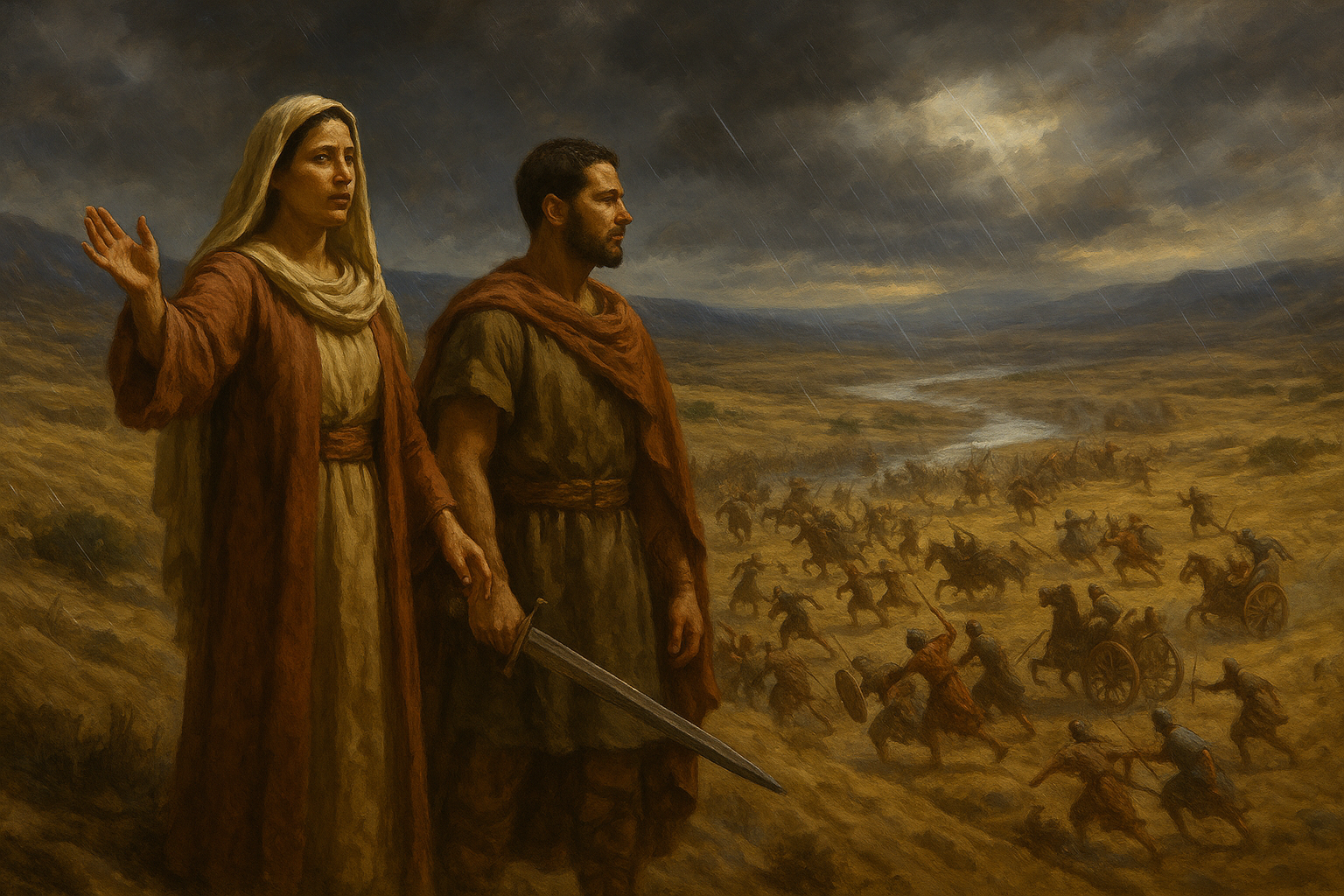
In this dark time, God raised up Deborah, a prophetess and judge who sat under a palm tree between Ramah and Bethel (v. 5). Through her, God summoned Barak of Kedesh-naphtali to gather ten thousand men from Naphtali and Zebulun and lead them against Sisera (v. 6–7). Barak hesitated, insisting Deborah accompany him; she agreed but warned that “the journey that thou takest shall not be for thine honour; for the LORD shall sell Sisera into the hand of a woman” (v. 9).
Barak assembled his troops at Mount Tabor, while Sisera brought his army to the river Kishon. The LORD discomfited Sisera and all his chariots; “Sisera lighted down off his chariot, and fled away on his feet” (v. 15). God gave Israel a mighty victory, for “all the host of Sisera fell upon the edge of the sword” (v. 16).
Sisera fled to the tent of Jael, the wife of Heber the Kenite, who was at peace with Jabin. Pretending hospitality, she covered him with a mantle and gave him milk. As he slept, Jael drove a tent peg through his temples, fulfilling Deborah’s prophecy (v. 21). Barak arrived shortly thereafter, and Jael showed him the slain Sisera. Thus “God subdued on that day Jabin the king of Canaan before the children of Israel” (v. 23).
Judges 5 — The Song of Deborah and Barak
Chapter 5 records a divinely inspired song of praise, a poetic recounting of Israel’s deliverance. Deborah and Barak sang, “Praise ye the LORD for the avenging of Israel” (v. 2). The song recounts God’s past acts and the courage of volunteers who rose up to fight. Deborah is called “a mother in Israel” (v. 7), showing her nurturing yet courageous role in leading God’s people.
The song celebrates how the LORD Himself fought for Israel — “the stars in their courses fought against Sisera” (v. 20). The river Kishon swept away the enemy (v. 21). The song rebukes tribes who refused to help (Reuben, Gilead, Dan, Asher) and praises those who came willingly (Zebulun and Naphtali).
Jael is blessed above women (v. 24) for her decisive act that brought the enemy’s defeat. The song ends with Sisera’s mother anxiously waiting for her son to return from battle, never knowing he lay dead in Jael’s tent — a striking contrast of pride and shame. The final verse declares: “So let all thine enemies perish, O LORD: but let them that love him be as the sun when he goeth forth in his might” (v. 31).
Key People and Places
-
Deborah — Prophetess and judge of Israel; a courageous leader who inspired national repentance and faith in God.
-
Barak — Military leader from Naphtali who obeyed God’s call through Deborah; victorious when trusting the LORD’s power.
-
Sisera — Canaanite general under King Jabin; relied on iron chariots but fell by the hand of a woman.
-
Jael — Wife of Heber the Kenite; used by God to bring final judgment upon Sisera.
-
Jabin — King of Canaan, oppressor of Israel for twenty years.
-
Mount Tabor — Site of Israel’s mobilization and God’s miraculous victory.
-
River Kishon — Battlefield where the LORD’s intervention swept away Sisera’s army.
-
Hazor — Capital of Jabin’s kingdom in northern Canaan.
Main Doctrinal or Spiritual Themes
-
God’s Sovereignty in Deliverance — The LORD raised up unlikely instruments (a woman judge and another woman in a tent) to show His power is not dependent on human strength or gender, but on obedience.
-
Faith and Obedience — Barak’s partial faith limited his honor; Deborah’s courage and Jael’s decisive action display faith in God’s promise.
-
Judgment and Mercy — God chastised Israel for sin but delivered them when they repented and trusted His appointed deliverers.
-
The Role of Women under God’s Direction — Deborah and Jael show that God may use faithful women for His purposes when men fail in leadership; yet this does not overturn God’s order, but fulfills His will in extraordinary times.
-
Victory Belongs to the LORD — The battle was won by divine intervention — storms, floods, and panic — proving that “the battle is the LORD’s.”
Practical Applications or Lessons
-
God honors faith more than position. Whether prophetess, soldier, or homemaker, those who trust and obey Him are His instruments.
-
Reluctance to obey can cost reward. Barak obeyed, but his hesitation led to lost honor; believers today should act promptly on God’s command.
-
Sin brings oppression; repentance brings deliverance. Israel’s cycle of sin and judgment warns the believer to remain steadfast and separated from the world.
-
Praise should follow victory. The song in chapter 5 teaches that thanksgiving is a necessary response to God’s deliverance.
-
The wicked may seem strong, but God’s power overwhelms them. Sisera’s chariots symbolize worldly might; yet the LORD destroyed them effortlessly.
Summary Thought
Judges 4–5 reveal how God works through willing hearts, not merely mighty hands. When faith falters, He still fulfills His plan. Deborah, Barak, and Jael remind us that obedience, courage, and praise are marks of those who love the LORD. “So let all thine enemies perish, O LORD: but let them that love him be as the sun when he goeth forth in his might” (Judg. 5:31).
Comments are closed