Chapter Summaries
Deuteronomy 29 — The Covenant Renewed in Moab
 Moses gathers all Israel — “your captains… your elders… your little ones… and thy stranger that is in thy camp” (v.10–11) — to reaffirm the covenant before entering Canaan. Though the original covenant was made at Horeb (Sinai), this renewal at Moab emphasizes continued obedience and separation from idolatry.
The people are reminded of God’s mighty acts: “your eyes have seen all that the LORD did in the land of Egypt” (v.2–3). Yet, Moses notes that “the LORD hath not given you an heart to perceive… unto this day” (v.4), showing that external miracles alone cannot change a heart — regeneration is a work of grace.
A solemn warning follows: any man, woman, family, or tribe that “turneth away… to go and serve the gods of these nations” (v.18) will bring a curse upon himself. The imagery of a “root that beareth gall and wormwood” (v.18) shows how sin poisons the whole nation. The Lord will judge such rebellion with all the curses written in this book (v.20–28), and “the secret things belong unto the LORD our God: but those things which are revealed belong unto us and to our children” (v.29) — a verse affirming both divine sovereignty and human responsibility.
Deuteronomy 30 — The Promise of Restoration and the Call to Choose Life
Here Moses foretells Israel’s dispersion and eventual restoration: “If any of thine be driven out unto the outmost parts of heaven, from thence will the LORD thy God gather thee” (v.4). God promises a future spiritual revival — “the LORD thy God will circumcise thine heart” (v.6), symbolizing true conversion and love for God.
Moses declares that God’s Word is accessible: “It is not in heaven… neither is it beyond the sea… but the word is very nigh unto thee, in thy mouth, and in thy heart” (v.12–14). This emphasizes the simplicity of faith and obedience.
He presents a choice: “See, I have set before thee this day life and good, and death and evil” (v.15). Choosing life means loving the Lord, obeying His voice, and cleaving unto Him — “for he is thy life, and the length of thy days” (v.20). This is a timeless gospel invitation: God desires His people to live in blessing through obedience.
Deuteronomy 31 — Moses’ Final Charge and the Transition of Leadership
Moses, now 120 years old, announces that he “can no more go out and come in” (v.2), and that Joshua will lead Israel across Jordan. He reassures the people that “the LORD thy God, he it is that doth go with thee; he will not fail thee, nor forsake thee” (v.6).
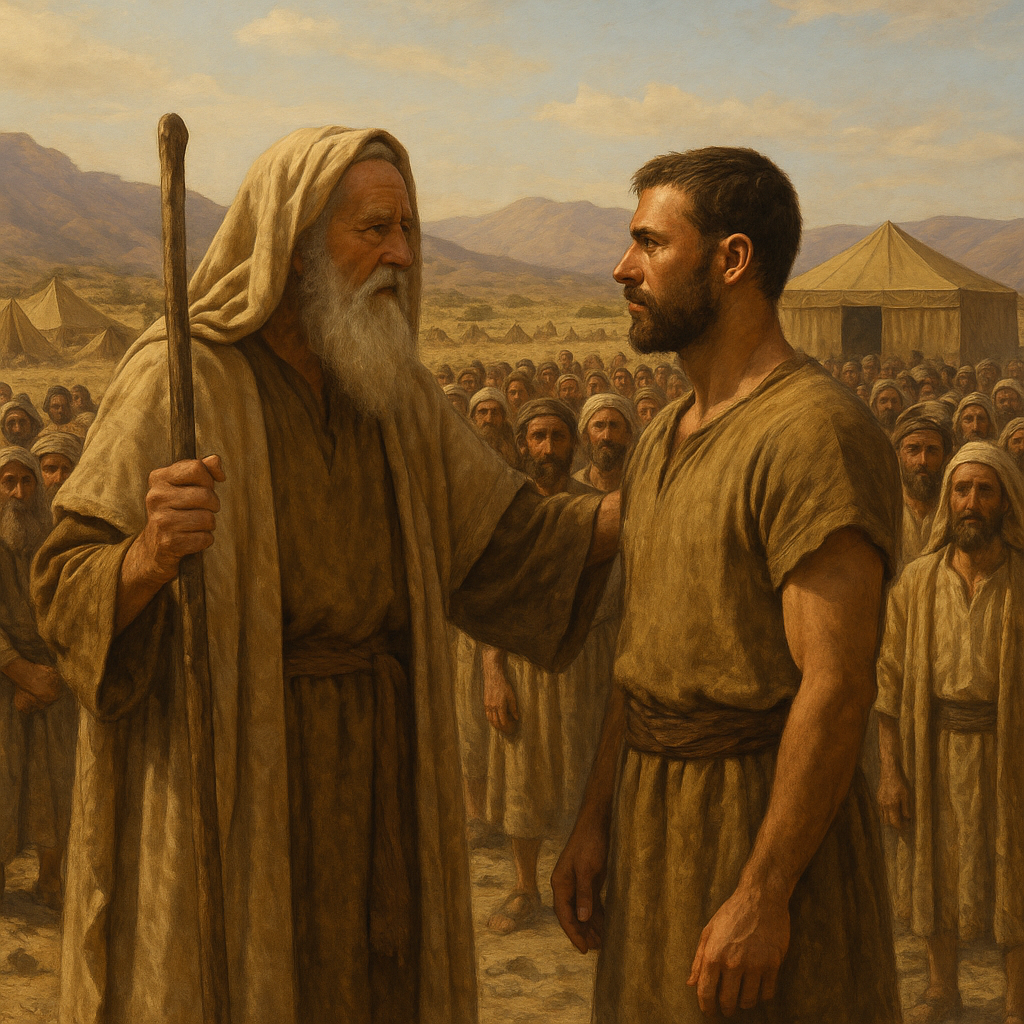
Before all Israel, Moses publicly charges Joshua with courage: “Be strong and of a good courage: for thou must go with this people” (v.7). He then delivers the written law to the priests and commands it to be read publicly “every seven years in the solemnity of the year of release” (v.10–13), so every generation might hear and fear the LORD.
God then calls Moses and Joshua into the tabernacle and foretells Israel’s future apostasy: “this people will rise up, and go a whoring after the gods of the strangers of the land” (v.16). The Lord instructs Moses to write a song as a witness against them — the Song of Moses in chapter 32. Moses places the law beside the Ark (v.26) as an enduring testimony.
Key People and Places
-
Moses – The aged servant of the LORD, concluding his leadership with covenantal renewal and prophetic foresight.
-
Joshua – Appointed successor, a type of Christ in leading the people into the Promised Land.
-
Israel – God’s covenant nation, warned against idolatry yet promised restoration through repentance.
-
Moab – The plains east of Jordan where this covenant renewal occurs.
-
Tabernacle of the Congregation – The meeting place where God manifests His presence and commissions Joshua.
Main Doctrinal or Spiritual Themes
-
Covenant Faithfulness and Human Responsibility – God remains faithful even when His people fail, yet they are accountable for their obedience (29:9, 30:15–20).
-
The Danger of Apostasy – Sin, when tolerated, corrupts the whole body; the “root of gall and wormwood” warns against hidden rebellion.
-
Heart Circumcision and Spiritual Renewal – True obedience arises from an inward work of God’s Spirit (30:6), anticipating New Testament regeneration.
-
The Sufficiency and Nearness of God’s Word – God’s revelation is plain and accessible, removing excuses for disobedience (30:14).
-
God’s Faithfulness in Leadership Transition – The LORD’s work continues through faithful men like Joshua; leadership changes, but the mission endures (31:7–8).
-
Scripture Preservation and Public Reading – The written Word is central to Israel’s spiritual survival (31:9–13, 26), showing God’s care in preserving Scripture for future generations.
Practical Applications or Lessons
-
Renew Your Covenant with God Daily – Just as Israel reaffirmed their covenant, believers must continually renew their commitment to holiness and separation from sin.
-
Guard Against Hidden Sin – A single “root of bitterness” can defile many; personal purity preserves the blessing of God.
-
Trust God’s Word and Act on It – Obedience is not distant or complicated; the Word is near, ready to guide if we will submit to it.
-
Choose Life – Every believer faces daily choices between obedience and rebellion, blessing and cursing. True life is found in walking with God.
-
Encourage the Next Generation – Moses’ charge to Joshua teaches us to strengthen and prepare new leaders for the work of God.
-
Read and Revere the Word Publicly – Families and churches should regularly read Scripture together, passing on the fear of the Lord.
-
Rely on God’s Presence, Not Human Strength – As Moses assured Israel, “He will not fail thee, nor forsake thee.” The same promise holds for every Christian worker.
Comments are closed