CHAPTER SUMMARIES
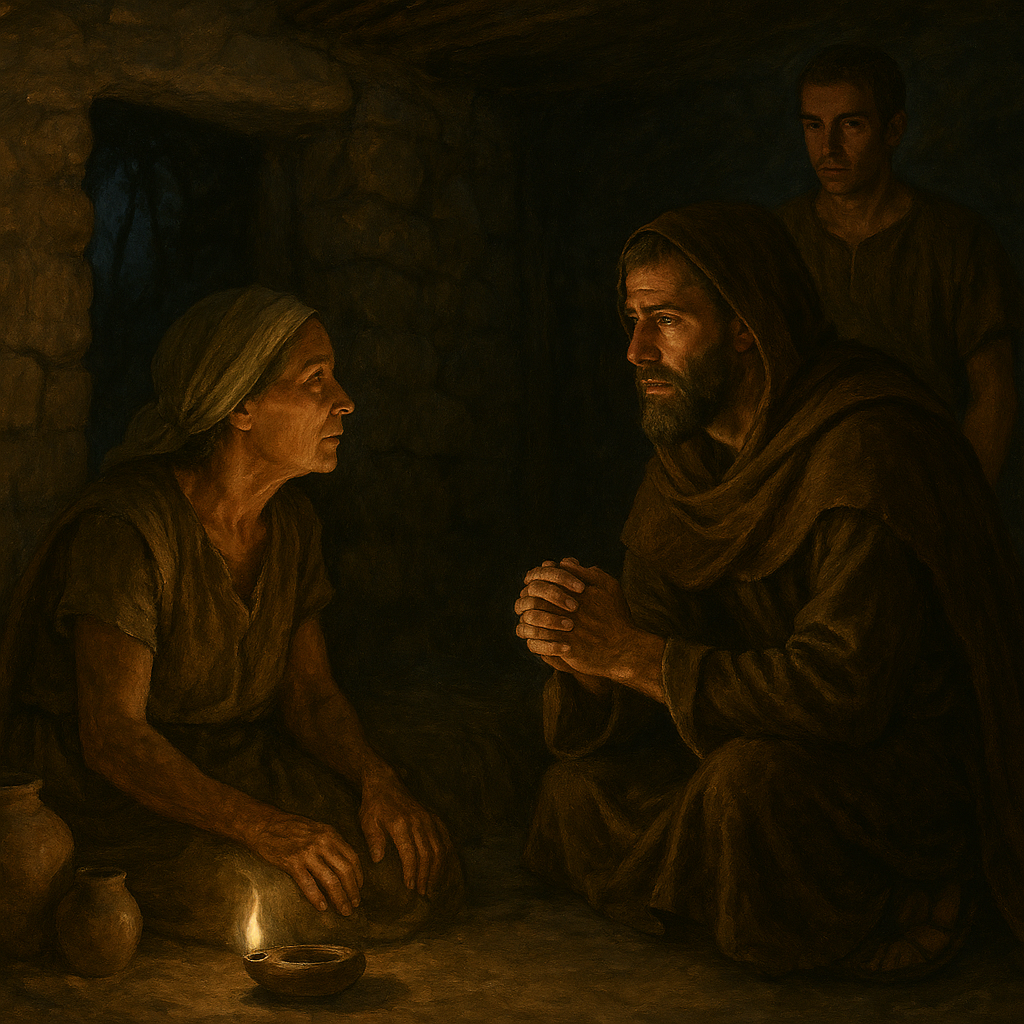
1 Samuel 28 — Saul and the Woman at Endor
 As the Philistines gather for war, Saul seeks the Lord, but “the LORD answered him not, neither by dreams, nor by Urim, nor by prophets” (28:6). This divine silence reflects Saul’s long pattern of disobedience and rebellion.
In desperation, Saul violates his own earlier decree against familiar spirits (28:3) and disguises himself to consult the woman at Endor. God sovereignly allows Samuel to appear and pronounce final judgment: “the LORD is departed from thee, and is become thine enemy” (28:16). Samuel foretells Israel’s defeat and Saul’s death, declaring, “to morrow shalt thou and thy sons be with me” (28:19)—meaning the realm of the dead, not a shared spiritual standing.
The chapter demonstrates the tragic consequences of rejecting God’s Word, turning instead to forbidden occult practices.
1 Samuel 29 — David Delivered from Joining the Philistines
David, still dwelling in Philistine territory, marches with Achish toward battle. However, the Philistine lords distrust David, fearing he may turn on them within the battle (29:4–5). God uses this distrust to protect David from participating in a conflict that would pit him against Israel.
Achish reluctantly sends David back to Ziklag. David’s removal from the battlefield shows God’s providential preservation of His servant from compromising situations.
1 Samuel 30 — David at Ziklag and the Victory Over Amalek
Returning to Ziklag, David finds the city burned and their families taken captive by the Amalekites (30:1–5). David’s men speak of stoning him, but David “encouraged himself in the LORD his God” (30:6), showing the heart difference between him and Saul.
Seeking divine direction from the ephod, he receives the promise, “Pursue: for thou shalt surely overtake them” (30:8). David pursues, aided by a providentially placed Egyptian slave who guides him to the Amalekites (30:11–15).
David defeats the enemy, recovers all that was lost, and institutes the principle that those who stay behind with the baggage receive an equal portion of spoils (30:24–25)—a picture of unity, fairness, and shared responsibility among God’s people.
1 Samuel 31 — The Death of Saul
Israel is defeated on Mount Gilboa. Saul’s sons, including Jonathan, fall in battle. Saul is wounded and chooses suicide rather than capture by the Philistines (31:4). His armor bearer follows suit.
The Philistines disgrace Saul’s body, displaying it on the wall of Beth-shan, but the valiant men of Jabesh-gilead retrieve and respectfully bury him (31:11–13). Thus ends Saul’s tragic reign—a life marked by disobedience, jealousy, fear of man, and neglect of God’s clear commands.
KEY PEOPLE AND PLACES
People
-
Saul — Israel’s first king; rejected by God due to persistent disobedience.
-
Samuel — God’s prophet who delivers the final pronouncement of judgment.
-
David — God’s anointed future king; preserved from moral compromise.
-
Achish — Philistine king who trusted David.
-
The Amalekites — Long-standing enemies of Israel, judged again in chapter 30.
-
Jonathan — Faithful son of Saul, loyal to David, slain in battle.
-
The Woman at Endor — A medium used by Saul in sinful desperation.
Places
-
Endor — Site where Saul sought forbidden spiritual counsel.
-
Ziklag — David’s temporary base, burned by Amalekites.
-
Brook Besor — Where some of David’s men remained due to exhaustion.
-
Mount Gilboa — Battlefield where Saul and his sons died.
-
Beth-shan — Philistine city where Saul’s body was displayed.
MAIN DOCTRINAL OR SPIRITUAL THEMES
1. The Consequences of Rebellion
Saul’s fall illustrates that persistent disobedience brings divine judgment. God’s silence toward Saul is the most severe form of chastening.
2. The Danger of Occult Practices
Chapter 28 strongly warns against sorcery, necromancy, mediums, and familiar spirits. These practices are sinful, deceptive, and under God’s condemnation.
3. God’s Providential Preservation
David is repeatedly shielded—kept from fighting Israel, guided to the Amalekite camp, strengthened by the Lord, and enabled to recover all.
4. Leadership Differences Between Saul and David
Saul collapses under crisis; David turns to the Lord. Their contrasting responses reveal their hearts.
5. The Faithfulness of God
Even in judgment, the Lord works out His purposes: Saul’s kingdom ends as God decreed, and David moves toward the throne.
PRACTICAL APPLICATIONS OR LESSONS
1. Turning to the Occult Is Sinful and Destructive
Believers must utterly reject horoscopes, mediums, spiritism, crystals, tarot, and all occult influences. These are spiritual counterfeits.
2. When God Seems Silent, Examine the Heart
Saul sought answers without repentance. God’s people must deal with sin rather than search for alternative voices.
3. Strength Comes When We Encourage Ourselves in the Lord
David found comfort in God’s character and promises—even when men turned against him. A believer’s stability must come from God, not circumstances.
4. God Guides Through His Word, Not Illicit Means
David sought guidance through God-ordained means; Saul turned to forbidden sources. The contrast is instructive for spiritual discernment.
5. Leadership Requires Faith, Not Panic
David strengthened himself, sought the Lord, acted decisively, and demonstrated fairness—all traits of godly leadership.
6. Sin Has Long-Term Consequences
Saul’s earlier disobedience to destroy Amalek (1 Samuel 15) directly sets the stage for the Amalekite raid in chapter 30. Choices echo across time.
Comments are closed